The search ends here for reliable, user-friendly liquid filling and sealing machines. This guide highlights five models suited for small-batch packaging, including automatic and manual options. Each product is evaluated for best-use scenarios, limitations, and who should consider them. Ideal buyers range from home-based producers and small-food startups to hobbyists needing precise filling with simple operation.
Summary of selected products:
| Product | Key Benefit | Best For | Notes |
|---|---|---|---|
| UYCVT Food-Grade Sealing Machine | Automatic filling, sealing, and cutting | Small sauce, oil, or milk producers needing higher throughput | 5-160 ml, 20-40 bags/min |
| VEVOR Manual Paste Liquid Filling Machine | Easy manual operation, adjustable 5-100 ml | DIY liquids, shampoos, cosmetics in small batches | Reinforced handle with scale |
| KIMTEM Manual Paste Liquid Filling Machine | Scale-based 5-50 ml filling | Precise manual filling for small bottles | Food-grade 304 stainless |
| INTSUPERMAI Automatic Liquid Paste Filling Machine | Automatic filling and sealing with microcomputer control | Small to mid-volume sauces and oils | 10-100 ml, 20-30 bags/min |
| PreAsion Automatic Liquid Paste Subpackage Machine | Three-side sealing with auto filling | Liquid sauces and dressings | 10-100 ml, easy cleaning |
UYCVT Food-Grade Sealing Machine With Weighing Filling
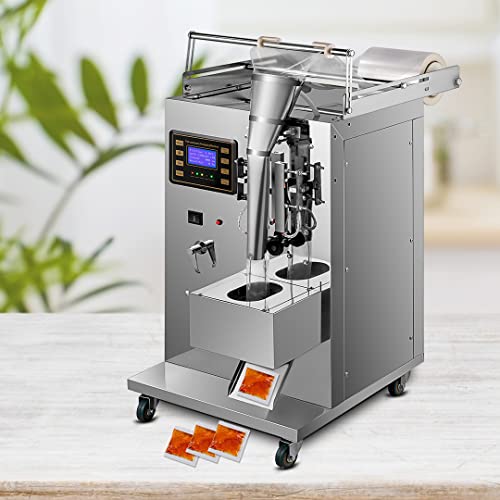
This automatic liquid packaging machine uses a self-priming pump for water filling and includes automatic stirring, filling, sealing, and cutting. It is constructed from stainless steel, offering corrosion resistance and easy cleaning. It seals three-side bags efficiently, achieving 5-160 g ranges at up to 20-40 bags per minute. Best for commercial-style sauce, oil, or milk packaging where consistent fill and fast sealing matter.
Best for: small commercial kitchens or micro-manufacturers needing continuous operation and higher throughput. Caution: ensure a compatible power supply and proper maintenance to prevent clogging in the pump system.
VEVOR Manual Paste Liquid Filling Machine

This manual filler offers a reinforced handle with a smart spring design, reducing fatigue during use. It provides clear scale markings for precise 5-100 ml adjustments and includes a height-adjustable shelf with two nozzle options for alignment. Best for small-batch products like liquids, shampoos, or cosmetics where manual control and repeatability are important. Limitation: speed depends on user effort, making it less suited for very high-volume needs.
KIMTEM Manual Paste Liquid Filling Machine A03

The KIMTEM A03 unit fills 5-50 ml liquids with a scale-based volume set. Made from food-grade 304 stainless steel, it is suitable for a range of liquids with good fluidity, including shampoos and gels. A shelf option helps place bottles directly during filling. Best for precise, small-batch bottling where no particulates are present. Caution: limited to smooth liquids without solids; not ideal for chunky sauces.
INTSUPERMAI Automatic Liquid Paste Filling Machine
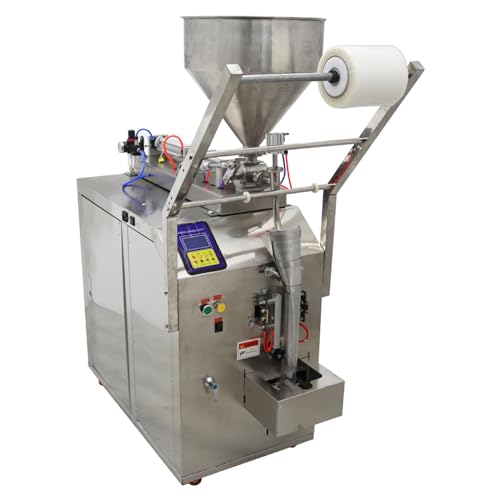
This microcomputer-controlled unit handles sauces, pastes, oils, and liquids with tiny particles. It offers 10-100 ml filling with automatic bag making, filling, sealing, cutting, and counting. It supports 110V power and stainless steel construction, with a claimed packaging speed of 20-30 bags per minute. Best for operators needing integrated automated filling and bagging. Limitation: setup may require more space due to the full packaging cycle.
PreAsion Automatic Liquid Paste Subpackage Machine

The PreAsion machine combines a liquid/paste filler with a packaging unit. It features a 10-100 ml filler and a three-side heat-sealing design. It is suitable for liquids such as milk, vinegar, water, fruit juice, and sauces, including thicker dressings. Best for medium-density liquids requiring reliable three-side sealing. Caution: cleaning and disassembly should be performed carefully to maintain seal integrity.
Buying Guide: Key Purchase Considerations
- Fill volume range: Match the machine’s fill range to your product size. Smaller ranges are more precise but may limit throughput for larger containers.
- Automation level: Choose automatic systems for higher throughput and manual models for lower-volume, cost-conscious operations.
- Material and hygiene: Stainless steel construction offers corrosion resistance and easy cleaning, important for food-grade products and cosmetics.
- Sealing method: Three-side sealing is common for liquids and pastes; ensure your pouch film compatibility and seal strength.
- Product consistency: For products with particulates, confirm the machine can handle texture without clogging or uneven fills.
- Maintenance and parts: Look for models with simple disassembly for cleaning and readily available spare parts.
- Footprint and power: Check the physical footprint and electrical requirements to fit your workspace and power supply.
Frequently Asked Questions
- What is the main difference between automatic and manual filling machines?
Answer: Automatic machines handle filling, sealing, and sometimes bagging with minimal human input, ideal for higher throughput. Manual machines require user action for each fill, better for low-volume, flexible production. - Which machine is best for small-batch sauces?
Answer: Machines offering adjustable 5-100 ml or 10-100 ml ranges with three-side sealing are well-suited for sauces and liquid dressings. - Can these machines handle oils and milk?
Answer: Yes, several models specify compatibility with oils and milks, especially those with stainless steel construction and corrosion resistance. - What maintenance is required?
Answer: Regular cleaning, inspection of seals, nozzle alignment, and proper disassembly for washing are recommended to prevent leaks and clogs. - Are there models suitable for cosmetics?
Answer: Some manual fillers support viscous liquids like shampoos and gels; verify the viscosity range and material compatibility before use.