Looking for reliable stainless steel fermentation tanks to elevate your home brewing or fermentation projects? This guide highlights five high-quality options and explains who should choose each one. These tanks are built from food-grade stainless steel, designed for easy cleaning, airtight sealing, and efficient fermentation. Ideal buyers include homebrewers seeking larger batches, hobbyists testing wines or yogurts, and those needing durable storage or secondary fermentation solutions.
| Product | Capacity | Material | Notes |
|---|---|---|---|
| VEVOR Fermentation Tank 16 Gal | 16 gal | 304 stainless steel | Conical bottom; large mouth; ideal for bigger batches. |
| VEVOR Fermentation Tank 8 Gal | 8 gal | 304 stainless steel | Sealable lid; top exhaust option; compact size. |
| VEVOR Pressure Fermenter 15 PSI, 8 Gal | 8 gal | 304 stainless steel | Pressure design; real-time temp control. |
| WYDDDARY 35L Stainless Steel Fermenter | 35 L (~9.2 gal) | 304 stainless steel | Lock-fastener seal; dual sealing options. |
| 60L Ai-C-Dibosh Fermentation Barrel | 60 L (~15.9 gal) | 304/316 stainless steel | Thicker walls; dual-material option. |
VEVOR Fermentation Tank 16 Gal, Lightweight Yet Sturdy

The 16-gallon VEVOR tank is designed for larger home-brewing batches. It features a widened mouth for easy feeding and thickened 304 stainless steel throughout—including barrel, handles, and lid—for durability. The conical bottom aids sediment collection and fermentation, with integrated beer and yeast valves for straightforward discharge. This tank is best for serious hobbyists who want bigger, cleaner runs and easier cleaning thanks to a smooth interior.
Best for: Home brewers scaling up from smaller carboys who need a roomy vessel and robust construction. Choose this if you routinely brew larger batches and value a conical bottom for sediment management.
Caution: Heavier to lift due to its size; ensure proper handling and support when moving.
VEVOR Fermentation Tank 8 Gallon

This 8-gallon stainless steel tank emphasizes a stainless body and lid with an embedded silicone seal for a tight, leak-proof seal. The lid design supports an exhaust option to promote sterile, breathable fermentation. It’s a compact, efficient choice for smaller-batch brewers or those experimenting with wine, beer, or other ferments. The vessel’s smooth interior reduces residue buildup and simplifies cleaning.
Best for: Beginners or testers who want a manageable vessel with reliable sealing and a breathable top cap option. Better for small-batch experimentation or quick turnarounds.
Caution: The top exhaust option requires simple setup; ensure you have the right accessory if you plan to vent.
VEVOR Pressure Fermenter 15 PSI, 8 Gal
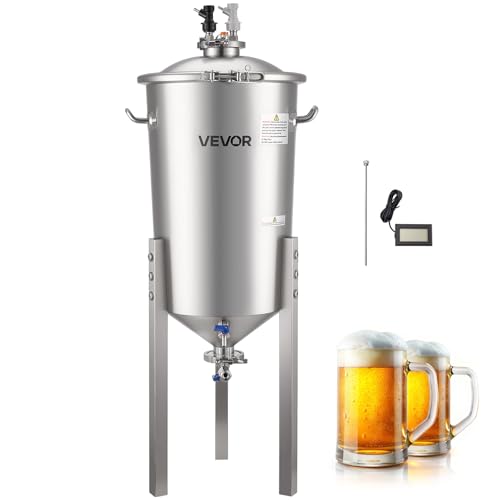
This all-in-one, 8-gallon pressure fermenter uses a pressure design to control fermentation and reduce CO₂ overflow. Real-time temperature monitoring helps maintain consistent flavor development, with a built-in electronic thermometer showing 32–104°F (0–40°C). The vessel uses 304 stainless steel with a 0.5 mm wall thickness for durability and ease of cleaning. A yeast bottle connection is available for consistent fermentation, though the bottle is not included.
Best for: Brewers seeking tighter pressure control and precise temperature management to shape flavor outcomes. Choose this when secondary fermentation under pressure is part of your process.
Caution: The yeast bottle is not included; you’ll need to source compatible attachments separately.
WYDDDARY 35L Stainless Steel Fermenter
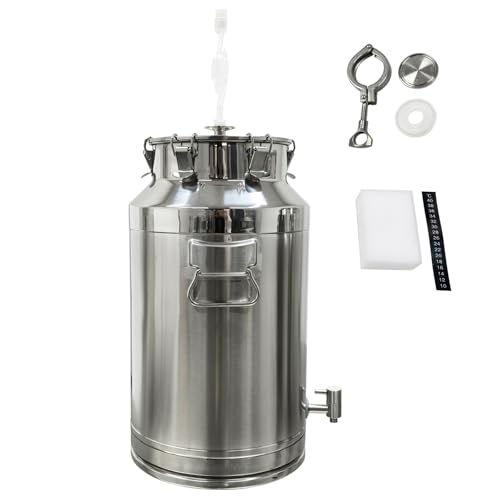
WYDDDARY offers a robust 35-liter capacity with thickened 304 stainless steel and excellent corrosion resistance. A lock-fastener seals the lid for a fully sealed environment, complemented by an embedded silicone ring to prevent overflow and leakage. The tank also supports optional sealing components, including a one-way vent and multiple buckles for enhanced sealing. It’s suitable for fermentation and storage, providing flexible sealing options as needed.
Best for: Those who want a versatile vessel that can be sealed tightly or vented, depending on the fermentation stage. Great for wine or larger-batch fermentation where leak prevention is a priority.
Caution: The dual sealing options require proper assembly to ensure an airtight seal; review the lid and fastener alignment before use.
60L Ai-C-Dibosh Fermentation Barrel

This 60-liter vessel uses a combination of 304 and 316 stainless steel for higher durability and corrosion resistance. It features thicker walls (1 mm) and a sturdy bottom (1.2 mm), making it more durable than standard fermentation barrels. The tank includes temperature patches and seals to aid safe fermentation. It’s designed for longer fermentation cycles and larger volumes, including wine and beer.
Best for: Brewers seeking a larger-capacity, heavy-duty fermentation option with robust stainless steel construction. Choose this if you anticipate longer fermentation timelines or need a strong, durable vessel.
Caution: The mixed stainless steel types may require careful maintenance; verify compatibility with your intended contents and cleaning regimen.
Buying Guide: Key Considerations For Stainless Steel Fermentation Tanks
- Capacity and batch size: Match the tank capacity to your typical brew volume or fermentation needs. Larger tanks reduce the frequency of transfers, but are heavier to handle.
- Material quality: Look for 304 stainless steel as a baseline for food-contact safety, with thicker walls for durability. Some models offer 316 or mixed metals for enhanced corrosion resistance.
- Sealing and venting: A good gasket or silicone seal plus a secure locking mechanism prevents leaks and contamination. Decide if you need a one-way vent or exhaust to control gas buildup.
- Conical bottom vs. barrel design: Conical bottoms aid sediment collection and easier conditioning of beer or wine. Barrel designs may be better for storage or longer-term fermentation without agitating.
- Temperature and pressure controls: Built-in thermometers help maintain stable temperatures. Some units offer pressure fermentation to manage CO₂ and flow.
- Cleaning and maintenance: Smooth interiors and accessible lids simplify cleaning. Look for units with fewer crevices where residues can accumulate.
- Accessories and compatibility: Consider the need for additional fittings (valves, exhaust pipes, bottle fillers) and whether the tank supports these extras.
Frequently Asked Questions
- What size fermentation tank should a beginner start with? A small to mid-size tank (5–20 gallons) is a practical starting point for learning without committing to large volumes.
- Is 304 stainless steel safe for wine and beer fermentation? Yes. 304 stainless steel is food-grade and commonly used for fermentation vessels; it resists corrosion and cleans easily.
- Do I need a sealed fermentation tank? Sealed tanks reduce oxygen exposure and prevent leaks. Some setups also offer venting to prevent backflow during fermentation.
- Can I use these tanks for yogurt or dairy fermentation? Some models mention multi-use sealing and heat tolerance; verify per product specifics before use.
- What maintenance is required for conical fermenters? Regular cleaning, sanitizing, and inspecting seals for wear help preserve flavor and prevent contamination.
- Are pressure fermentation tanks necessary for beginners? They are beneficial for controlling CO₂ and flavor, but not strictly required for basic beer or wine fermentation.