When selecting a butterfly valve with a tamper switch, the goal is reliable valve operation plus verifiable status monitoring for safety and compliance. This guide highlights five top options suitable for fire protection, industrial piping, and system supervision. Each pick prioritizes tamper-enabled monitoring, durable construction, and installation ease. Best for facilities needing continuous visibility into valve status and quick integration with existing piping systems.
| Product | Best For | Key Feature |
|---|---|---|
| 1″ Mech Threaded Butterfly Valve with Tamper Switch | Small-diameter, easy retrofit | UL/FM approved; threaded ends |
| 4″ Mech Grooved Butterfly Valve with Tamper Switch | Grooved piping systems; rapid installation | Normally open; tamper switch |
| 4″ Mech Wafer Butterfly Valve with Tamper Switch | Compact installations between flanges | Wafer design; tamper switch |
| 2-1/2″ Mech Lugged Wafer Butterfly Valve with Tamper Switch | Space-constrained networks | Lugged/wafers; tamper switch |
| 2″ Butterfly Valve with Tamper Switch, GxG | Grooved end, versatile networks | Normally open; durable housing |
Each product below is chosen for clear tamper monitoring, robust construction, and straightforward installation. Compare how they fit your piping layout, supervision needs, and maintenance practices to decide which valve best matches your environment.
1″ Mech Threaded Butterfly Valve With Tamper Switch

Best for compact, threaded-pipe installations in smaller systems. The valve is UL/FM approved for safety compliance and includes an integrated tamper switch for supervisory monitoring of open/closed status. The threaded end connections simplify retrofit projects on existing piping without larger fabrication work. Best for facilities needing straightforward installation with clear status indication. Caution: threaded connections may require precise threading and sealant application to avoid leaks.
4″ Mech Grooved Butterfly Valve With Tamper Switch

Best for grooved piping networks that require quick, secure coupling. The tamper switch provides monitoring and alerts for unauthorized operation, and the normally open design ensures continuous flow unless action is taken. This option suits facilities prioritizing ease of installation and ongoing visibility into valve state. Limitation: grooved couplings may require compatible pipe schedules and tools for correct fitment.
4″ Mech Wafer Butterfly Valve With Tamper Switch

Best for space-efficient installations between flange faces. The wafer-style design minimizes bulk, while the tamper switch adds status monitoring for secure operation. Normally open operation ensures uninterrupted flow until a manual action is required. Consideration: wafer valves require precise flange alignment; ensure gasket compatibility for leak-free performance.
2-1/2″ Mech Lugged Wafer Butterfly Valve With Tamper Switch

Best for compact networks requiring between-flange mounting with secure closure. The lugged/wafers provide a reliable seal and easier maintenance in tight spaces, with a built-in tamper switch for continuous supervision. Normally open operation supports persistent flow. Limitation: lugged designs can be heavier and may require more precise alignment during installation.
2″ Butterfly Valve With Tamper Switch, GxG, Normally Open
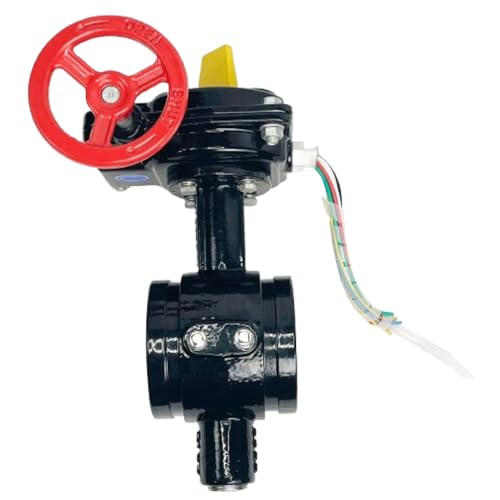
Best for versatile grooved end connections in mixed networks. The housing is ductile cast iron with an EPDM disc, offering durable resistance and visual cues with a red handle and yellow switch for quick identification. The grooved end design aligns with AWWA C606 standards, enabling quick, leak-free installation. Caution: appearance-specific color coding should not replace reading tamper-switch status for critical safety systems.
2-1/2″ Butterfly Valve With Tamper Switch, GxG, Normally Open
Best for flexible deployment in grooved systems with similar construction to the GxG variant above. This normally open valve maintains flow under normal conditions while providing tamper-based monitoring. The same durable ductile iron housing, EPDM disc, and visual cues aid identification in complex piping. Limitation: ensure compatibility with your specific grooved couplings and pipe schedules to avoid misfits.
4″ Mech Grooved Butterfly Valve With Tamper Switch, Normally Closed
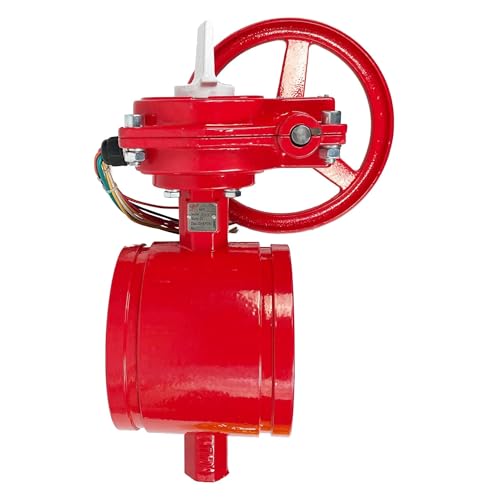
Best for safety-critical systems where default safety is required. The normally closed configuration ensures no flow unless commanded, with a tamper switch for status alerts. Grooved end design facilitates rapid installation in compatible piping. Consideration: review system requirements to confirm that a normally closed valve aligns with your control logic and protection strategy.
4″ Mech Wafer Butterfly Valve With Tamper Switch, Normally Closed

Best for space-limited installations needing a compact wafer profile with safety monitoring. The tamper switch provides continuous visibility into valve state, and the normally closed operation helps ensure controlled shutdown in emergencies. Caution: wafer valves require precise flange alignment and compatible gasket material to prevent leaks and maintain reliability.
Buying Guide
What is a tamper switch in a valve and why does it matter? A tamper switch provides supervisory signals about valve position (open or closed), enabling remote monitoring and alerting for unauthorized operation or system faults. This is critical in fire protection, emergency shutdown, and safety-critical piping networks.
Key considerations when choosing a butterfly valve with a tamper switch:
- End connection type: Threaded, grooved, or wafer. Choose threaded for retrofit simplicity, grooved for quick mounting, and wafer for compact spaces between flanges.
- Valve operation: Normally open vs normally closed. Normally open ensures continuous flow, while normally closed prioritizes safety by defaulting to a closed state.
- Material and disc: Ductile iron with EPDM discs is durable for many environments; verify chemical compatibility and temperature range for your application.
- Tamper switch integration: Ensure the switch is clearly labeled, wired to monitoring systems, and accessible for routine testing.
- UL/FM approvals: Validate that the valve meets local fire protection and safety standards relevant to your facility.
- Installation space: Wafer and lug designs optimize space, while grooved and threaded options suit different piping layouts and maintenance practices.
- Maintenance needs: Check whether seals, gaskets, and actuators require periodic replacement and whether remote monitoring reduces on-site visits.
FAQs
- What is the advantage of a tamper switch on a butterfly valve? It provides real-time monitoring of valve position, enhancing safety and enabling remote alerts for unauthorized operation.
- When should I choose a wafer versus a grooved butterfly valve? Wafer valves fit between flanges for compact installations, while grooved valves enable quick assembly with standard couplings in accessible piping.
- Are normally open or normally closed valves better for safety? Normally closed offers default safety by preventing unintended flow; normally open supports continuous operation unless an action is taken.
- Which end connections are easiest for retrofit projects? Threaded ends are typically easiest for retrofits in existing steel or PVC piping without extensive modifications.
- What standards should I verify before purchase? Look for UL/FM approvals and compatibility with local fire protection and industrial standards.
- Can tamper switches fail in a monitored system? Like any electrical component, tamper switches require periodic testing and maintenance to ensure reliable signaling.