Discover the best stainless steel belt conveyors for durability, reliability, and precise item handling. This guide highlights five top models well-suited for small workshops, packaging lines, and inkjet coding tasks. Each product is evaluated for who it’s best for, what makes it stand out, and potential limitations to consider.
| Product | Best For | Key Benefit |
|---|---|---|
| VEVOR Belt Conveyor, 59 x 7.8″ | Small-to-medium loads | Compact stainless steel build with adjustable speed |
| VEVOR Belt Conveyor, 59 x 15.7″ | Longer runs | Longer table length with same robust construction |
| VEVOR PVC Belt Conveyor 47″x 7.8″ | Space-limited lines | Compact, flexible for tight layouts |
| VEVOR PVC Belt Conveyor 71″x 7.8″ | Extended feed zones | Extra-long belt with adjustable speed |
| Happybuy Belt Conveyor 59 x 7.8″ | General-purpose coding and sorting | Sturdy stainless frame with high-efficiency motor |
VEVOR Belt Conveyor, 59 x 7.8 Inches
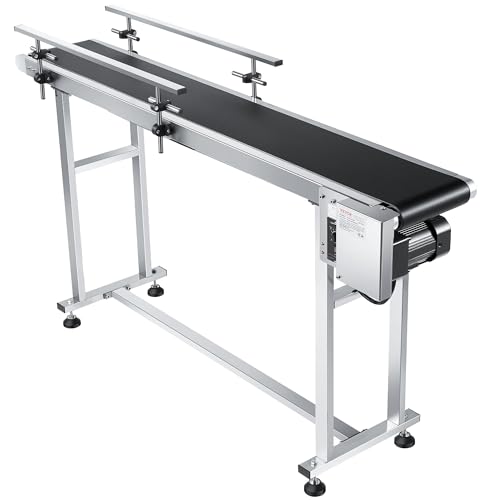
Industrial-grade stainless steel provides durability in workshop environments. The PVC belt is wear-resistant and anti-static, supporting items of various sizes. A rotating screw allows precise belt tension adjustment, and height-adjustable feet stabilize the system in uneven spaces. The 30–120 RPM speed range supports both forward and backward movement for flexible workflows. Best for lightweight production lines, packing stations, and small inkjet coding tasks. Caution: Ensure adequate clearance for belt movement and guardrails during setup.
Who this is best for
- Small factories needing a compact yet sturdy conveyor.
- Workstations requiring adjustable speed and direction.
Why chosen
- Strong stainless frame for longevity.
- Simple tension and height adjustments for varied tasks.
Limitations
- Shorter belt length may limit processing for longer items.
VEVOR Belt Conveyor, 59 x 15.7 Inches

This longer version shares the same industrial-grade stainless steel frame and anti-static PVC belt. It accommodates longer items or higher throughput in one pass. The belt tension is precisely controlled via a rotating screw, and stable operation is supported by adjustable feet. Best for medium-length production lines and coding tasks where extra belt length reduces indexing steps. Caution: Larger footprint requires more floor space and secure anchoring.
Who this is best for
- Lines needing extended belt length without compromising durability.
Why chosen
- Maintains uniform tension across a longer belt for consistent feed.
Limitations
- Requires more space than shorter models.
VEVOR PVC Belt Conveyor 47″x 7.8″

Designed for space-limited lines, this 47″ by 7.8″ belt balances a compact footprint with a robust stainless frame. The anti-static PVC belt supports a range of items, and the rotating screw allows quick belt tensioning. Speed is adjustable from 30–120 RPM and can run in both directions. Best for small packaging lines, labeling, and light assembly. Limitation: shorter belt may require item transfer between multiple conveyors in longer processes.
Who this is best for
- Operators with limited floor space who still need reliable handling.
Why chosen
- Good balance of size, durability, and configurable speed.
Limitations
- Lower throughput for very long feeds compared to longer models.
VEVOR PVC Belt Conveyor 71″x 7.8″

This extended belt adds length while retaining a compact width. The stainless steel frame supports heavy-duty applications, and the corrosion-resistant belt is designed for continuous duty. The same multi-adjustment system allows speeds from 30 to 120 RPM with bidirectional operation. Best for extended transfer zones, large-volume coding, and packaging lines. Caution: Ensure guardrails are properly adjusted to prevent item slippage on longer belts.
Who this is best for
- Facilities needing longer transfer sections without a bulky machine.
Why chosen
- Long belt length improves efficiency by reducing item handling steps.
Limitations
- Again, space planning is essential due to the longer footprint.
Happybuy Belt Conveyor, 59 x 7.8 Inches

Happybuy emphasizes stainless steel stability and a robust, wear-resistant PVC belt. A high-efficiency copper motor contributes to reliable operation with improved energy use. The belt tightness is adjustable through the tension screw, facilitating different loads. Best for general-purpose processing, sorting, and light-to-medium coding tasks. Caution: Motor power is moderate; for heavy or continuous high-load tasks, assess required duty cycle.
Who this is best for
- Facilities needing dependable, everyday conveyor performance.
Why chosen
- Solid all-around performance with easy belt tensioning and guardrails.
Limitations
- Motor power may limit extremely high-throughput scenarios.
Buying Guide: Key Considerations
What size belt and length do I need?
Choose belt width based on item width plus safety margins. Longer belts reduce transfer frequency but require more space. If you run long items, a 59″ or 71″ length can minimize refeeding steps; for compact layouts, 47″ or 59″ lengths are often ideal.
What material and belt type should I choose?
Stainless steel frames offer corrosion resistance and durability in demanding environments. PVC belts provide wear resistance and anti-static properties. For sensitive items, ensure the belt finish and tensioning mechanism won’t damage products.
How important is speed and bidirectional operation?
A multi-adjustment system that supports 30–120 RPM and bidirectional motion supports varied tasks such as sorting, coding, and in-line transfers. Higher speeds increase throughput but may require tighter guardrails and precise item alignment.
How much does space and mounting matter?
Guardrails, height-adjustable feet, and mounting points influence installation. Ensure adequate clearance for belt movement and guardrails to prevent item loss. Confirm the machine’s footprint fits your workstation or line layout.
What about maintenance and longevity?
Look for corrosion-resistant components, easy tension adjustment, and accessible drive components. Regular inspection of belt wear, tension, and guardrails helps maintain consistent performance over time.
Power, wiring, and safety considerations
Most models operate on standard 110V supplies. Plan for power wiring, grounding, and electrical safety measures in your facility. If conveyors are used near liquids or dust, ensure proper enclosure and protection to prevent hazards.
FAQ
-
What is the main difference between shorter and longer stainless steel belt conveyors?
Longer belts offer extended transfer zones for fewer item handoffs, while shorter belts save floor space and fit tighter layouts. Choose based on line length and footprint.
-
Can these conveyors operate in reverse?
Yes. The multi-adjustment systems typically support bidirectional operation, which can be useful for sorting or redirecting items.
-
Are all belts anti-static?
Most listed models use anti-static PVC belts to reduce static buildup on common packaging items. Verify belt properties in product specs for your materials.
-
What maintenance should I perform regularly?
Check belt tension, inspect guardrails for wear, confirm fasteners are tight, and clean the belt surface to prevent buildup that could affect tracking.
-
Which model is best for inkjet coding applications?
Conveyors with longer belt lengths and sturdy stainless frames—such as the 59 x 15.7″ or 71″ belts—offer stable platforms for inline coding tasks.
-
Do these conveyors require special installation?
Most can be installed on a flat surface with adjustable feet. Secure guardrails and ensure power connections comply with local electrical codes.