The right industrial carbon monoxide detector protects crews, facilities, and equipment in demanding environments. These five models balance rugged construction, reliable alerts, and practical features for industrial, commercial, or field use. They’re suited for workers in warehouses, manufacturing, garages, boats, or RVs who need rapid CO readings and clear alarms. Below, each product is explained with who it’s best for, why it was chosen, and any important limitations to note.
Product Comparison
| Product | Best For | Key Benefit |
|---|---|---|
| Sensorcon Industrial CO Monitor | Industrial facilities and technicians needing visual, audible, and vibration alerts | Waterproof, intrinsically safe for harsh environments |
| TOPTES CT-580 Portable CO Detector | Field inspections, contractors, and portable use | 0–1000 PPM range with quick 0.3s response |
| Kidde AA Battery Powered Portable CO Detector | Travel and temporary setups, off-grid sites | Battery-powered with easy portability |
| First Alert CO606 Plug-In Alarm | Home or small workspace with backup power options | Plug-in with battery backup and 85 dB alarm |
| TOPTES CT-913 Portable CO Detector | Professional inspections and long trips | 60+ hours on a single charge with upgraded sensor |
Sensorcon Industrial CO Carbon Monoxide Monitor

Features: Designed for industrial and commercial applications. Visual, audible, and vibrating alerts add redundancy in loud environments. Measurements note that 0 ppm can occur even with CO present. It includes low and high alerts at 35 ppm and 200 ppm and is certified Intrinsically Safe.
- Best for: Industrial facilities needing multi-sensory alerts and intrinsic safety.
- Why selected: Rugged design, explicit alert channels, and certification suitable for hazardous areas.
- Caution: Displayed CO readings can vary in complex environments; rely on the alarm thresholds for quick decisions.
TOPTES CT-580 Portable CO Detector

Features: Manual inspection tool with high-sensitivity DDS sensor; 0–1000 PPM range; three alarm modes and a color TFT display. Quick out-of-box operation and advanced menu options for calibration and alarm history.
- Best for: Field inspections and business users needing detailed alarming history and calibration controls.
- Why selected: Fast response and multiple alarm modalities improve reliability in varied environments.
- Caution: More functionally rich than basic portable detectors; may require familiarity with menus for full use.
Kidde AA Battery Powered Carbon Monoxide Detector
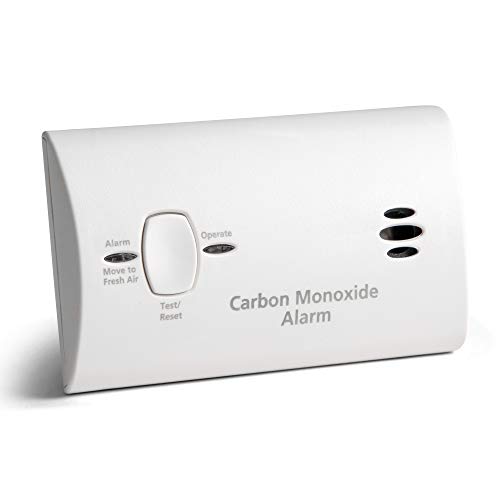
Features: Electrochemical sensor detects CO; easy wall or tabletop placement; operates on 2 AA batteries (included); 85 dB alarm and a green power LED.
- Best for: Travel, temporary sites, or back-up monitoring during outages.
- Why selected: Battery-powered convenience makes it versatile where power isn’t reliable.
- Caution: Battery dependency means periodic battery checks are essential to ensure operation during outages.
TOPTES CT-913 Portable CO Detector

Features: Portable CO analyzer with upgraded UK DDS sensor; 0–1000 PPM range; real-time readings and trend graph; USB-C charging; over 60 hours of operation per charge.
- Best for: Professional inspections and extended field work requiring long battery life.
- Why selected: Long run-time plus fast, reliable sensor makes it suitable for prolonged tasks.
- Caution: Higher feature set may require more battery management and occasional calibration checks.
Buying Guide: Key Considerations for Industrial CO Detectors
What environment will the detector face?
Industrial settings may require rugged housings, waterproof or splash-resistant cases, and intrinsically safe construction. Choose models rated for hazardous environments if you work near chemicals or heavy machinery.
How important are alarms and alerts?
Consider models with audible, visual, and vibration alerts for loud facilities or noisy sites. Redundancy helps ensure you notice dangerous CO levels even in background noise.
What detection range and speed do you need?
Many industrial tasks benefit from a wide 0–1000 PPM range and rapid response. Quick readings support timely decisions during inspections or field surveys.
Power and portability considerations
Wired plug-in detectors work well where power is reliable; battery-powered or rechargeable units excel in off-grid locations or travel. Plan for backup power and recharge cycles accordingly.
Calibration and maintenance
Detectors with calibration options help maintain accuracy over time. Keep a schedule for sensor checks and replace parts per manufacturer guidance to avoid drift.
Data and history features
Some models offer alarm history, trend graphs, and calibration logs. These are useful for documenting conditions during inspections or for compliance reporting.
FAQs
- What makes an industrial CO detector different from a home unit? Industrial detectors generally offer more rugged construction, intrinsic safety features, and broader alarm and calibration options to handle harsh environments and long-term field use.
- Do I need a detector with a battery backup? Battery backup is recommended for areas with possible power interruptions or outages to ensure continuous monitoring.
- How accurate are portable CO detectors for professional use? Portable detectors with upgraded sensors and fast response times provide reliable real-time readings, but regular calibration and sensor maintenance are essential for accuracy.
- Can these detectors be used in vehicles or boats? Yes, portable detectors with wide ranges and clear alarms are suitable for vehicles, boats, garages, and workshops where CO may accumulate.
- Should I rely on a single detector for a large area? For larger areas, deploy multiple detectors at key locations and consider models with data logging to monitor trends across the space.
- Is intrinsic safety important for industrial sites? Intrinsic safety reduces ignition risk in certain hazardous environments, making such detectors preferable in those settings.