Answering the top buyer’s question: these skid steer log splitter attachments and standalone splitters are designed to speed up firewood production, improve safety, and fit a range of equipment from skid steer loaders to tractors. The best picks below cover dedicated skid steer attachments, multipurpose grapples, and powerful gas or electric splitters. Best for commercial woodyards, small farms, and family homesteads that need steady, efficient log processing without manual labor.
| Product | Type | Best For |
|---|---|---|
| YHT 35T Skid Steer Firewood Processor Attachment | Skid Steer Attachment | Small to mid-size operations needing a dedicated wood processor on a skid steer |
| MIVA 66″ Arm Skid Steer Hydraulic Log Grapple | Skid Steer Grapple | Moving and stacking large logs with precision and stability |
| Full Boar 38 Ton Horizontal/Vertical Log Splitter | Gas-Powered Log Splitter | Heavy hardwood processing with vertical and horizontal splitting |
| WEN Electric Log Splitter | Electric Log Splitter | Light-to-medium wood piles and portable setups |
| BILT HARD 35-Ton Gas Powered Log Splitter | Gas-Powered Log Splitter | Rugged, tow-ready splitting for large batches |
YHT 35T Skid Steer Firewood Processor Attachment

Best for: Small to mid-size operations using a skid steer who need a dedicated firewood processor. The attachment claims 35 tons of capability with a 17.7″ log capacity and includes 4- and 6-way wedges for flexible cut patterns. This makes it suitable for handling mixed hardwoods efficiently, reducing manual cutting steps.
Why selected: Integrates directly with a skid steer, enabling quick alignment, feeding, and processing of logs into split firewood. The design emphasizes practical wedge options and a customizable setup, which helps tailor splitting to wood size and species.
Caution: Ground clearance must be maintained—the product requires a minimum distance from the ground to operate safely, and user must verify hydraulic plumbing configuration (three oil lines + optional relief pipes) matches their machine’s hydraulic system.
Full Boar 38 Ton Log Splitter

Best for: Users needing high-tonnage, fast-cycle wood splitting in a vertical/horizontal capable unit. This model advertises a 38-ton force and a rapid 13.8-second cycle, suitable for heavy hardwoods.
Why selected: The heavy-duty H-beam design and auto-return control valve with detent support fast, consistent splitting. It’s designed to handle demanding workloads with a robust engine platform.
Caution: Data notes focus on performance features; verify fuel source, engine maintenance requirements, and compatibility with ancillary hydraulic lines before use in a skid-steer deployment or yard workflow.
WEN Electric Log Splitter
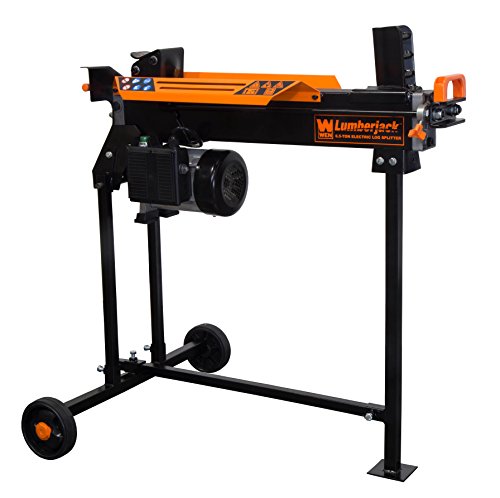
Best for: Small crews or homeowners who need a portable, low-noise splitter for light-to-medium piles of logs without a fuel source.
Why selected: A 15A electric motor provides substantial splitting pressure, and portable transport is convenient with included wheels and stand. It’s a straightforward option when mobility and ease of storage are priorities.
Caution: Electric splitters generally lack the raw power of gas units for very large logs; ensure log dimensions fit the machine’s 13,000+ pounds of pressure capability and the work site’s electrical capacity.
BILT HARD 35-Ton Horizontal/Vertical Gas Powered Log Splitter
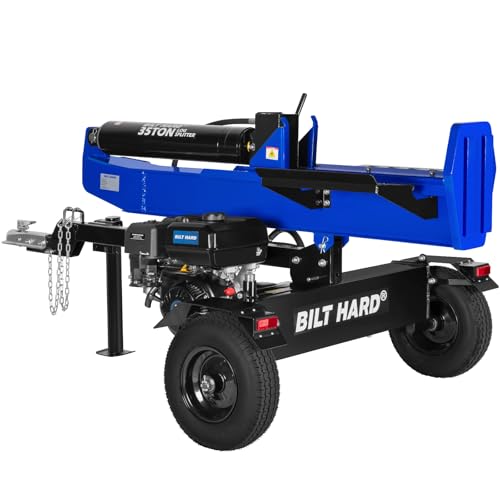
Best for: Roadworthy, tow-ready splitting tasks where large batches of firewood are processed across different sites or terrains. It supports horizontal and vertical splitting modes with a 35-ton force.
Why selected: The combination of a robust engine, dual-position capability, and trailer-ready mobility broadens its use across farms, logging yards, and remote work sites.
Caution: High power means extra operator attention; ensure proper hitch setup and safety chains for towing, and confirm tire ratings align with the planned transport speeds and loads.
Buying Guide
Key questions to help you choose the right skid steer log splitter setup:
- What will you primarily process? Heavy hardwoods require higher tonnage; lighter piles may do with mid-range power.
- Can your current equipment support a dedicated attachment? Check hydraulic flow, PSI, and mounting compatibility for skid steers or tractors.
- Do you need horizontal, vertical, or dual-mode operation? Vertical modes are helpful for heavy rounds; horizontal modes speed up processing of standard logs.
- Is portability important? Gas-powered units are tow-worthy, while electric units are easy to store and quieter.
- What safety and maintenance considerations apply? Ensure proper guards, hydraulic fittings, and routine engine/pump service is feasible on-site.
Practical comparison at a glance
- Best for quick processor work on-site: YHT 35T Skid Steer Firewood Processor Attachment
- Best for bulk log handling: MIVA 66″ Skid Steer Log Grapple
- Best for heavy hardwood splitting: Full Boar 38 Ton and BILT HARD 35-Ton units
- Best portable option for light piles: WEN Electric Log Splitter
FAQ
Can a skid steer operate a log splitter attachment directly?
Yes, many skid steer log splitter attachments are designed to mount on compatible skid steer loaders, providing powered operation and higher maneuverability.
What log diameter can these attachments handle?
Log diameter capacity varies by model; verify the maximum log length and wedge options listed by the manufacturer for each attachment.
Is a gas-powered splitter easier to move between sites than a hydraulic attachment?
Gas-powered units are usually tow-ready and portable, whereas hydraulic skid attachments rely on the host machine’s hydraulics but stay fixed to the loader during work.
Do I need special hydraulic flow to use these attachments?
Yes. Each attachment has specific hydraulic requirements (flow, PSI, inlet/outlet lines). Match these to your machine’s hydraulic system.
Are there safety considerations with dual-mode splitters?
Yes. Switching between horizontal and vertical modes requires careful handling and adequate space to prevent kickback or pinching injuries.