Looking for an affordable welding fume extractor that still delivers solid cleanliness for soldering, DIY, or light welding tasks? This guide highlights budget-friendly options that effectively capture fumes and dust at the source. Each pick is suitable for small benches or home workshops, with clear reasons for why it’s best for certain buyers and a brief caution where applicable. The featured models prioritize portability, multi-stage filtration, and reasonable noise levels to help protect eyes and lungs without breaking the bank.
Below is a quick summary table of the selected products to help you compare at a glance.
| Product | Best For | Main Benefit | Typical Limitation |
|---|---|---|---|
| FumeClear FC100A | Small benches, hobbyists | 3-stage filtration with high iodine carbon and strong 99.97% purification | Not ideal for large laser engraving setups |
| KQZ-B1 Solder Fume Extractor | Compact studios, beginners | Dual-layer design with HEPA and activated carbon cartridge | Smaller air volume than larger units |
| Helucidy 3-Stage Filtration | Precise work, small shops | High-efficiency 99.97% filtration with 250m³/h suction | Filter replacement cycle can be shorter under heavy use |
| KOTTO Strong Suction Smoke Absorber | DIYers, students | Strong suction with adjustable speed and portable design | Noise and suction balance varies by setting |
| ToolBud Upgraded Solder Fume Extractor | Portable, flexible coverage | Removable magnetic flaps to expand capture area | Two-filter kit may require extra replacements |
FumeClear Solder Fume Extractor FC100A
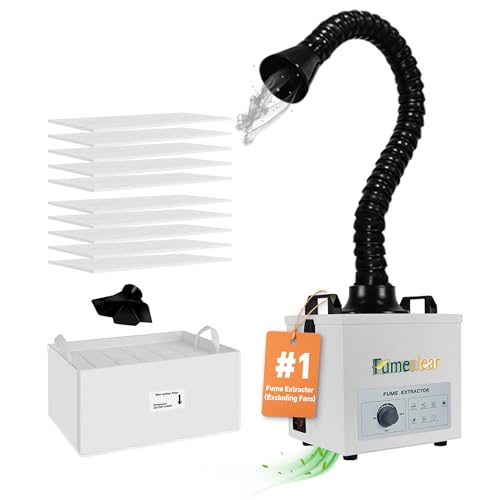
The FC100A model from FUMECLEAR is designed for small bench soldering tasks and delivers up to 100W no-load power with strong filtration for particles down to 0.3 microns. It uses a 3-layer filtration system plus 10 pre-filters to handle dust and fumes. It emphasizes a cost-to-performance balance, making it a good pick for hobbyists or light-duty workspaces. Best for compact workstations where airflow needs are modest and filtration longevity is appealing. A notable caution is that it’s not intended for heavy laser engraving fume extraction; larger units may be required for that use case.
Who it’s best for: compact hobbyist setups, desktop soldering, and small electronics work where space and budget are priorities. Why chosen: it provides a robust filtration stack with iodine-enhanced carbon for longer service life and strong particulate capture without large footprints.
KOTTO Strong Suction Smoke Absorber
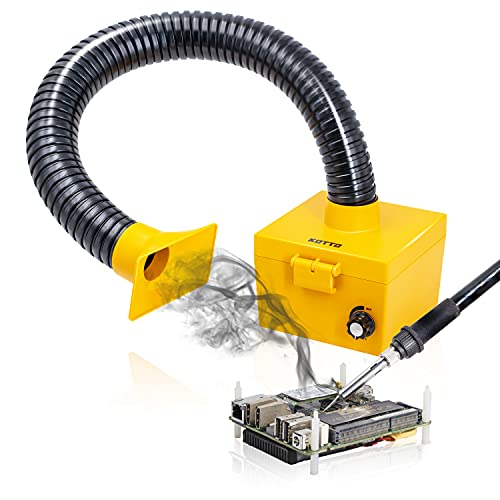
The KOTTO model targets soldering and light welding fumes with a strong suction fan and a 24-inch flexible tube. It includes a long-life 60Hz (approximately 6000 RPM) motor capable of drawing fumes up to 5-6 inches away. The design emphasizes portability with a compact footprint and a lightweight form factor, making it a solid choice for students or home workshops. Best for: small workstations needing adjustable, close-range fume capture. Caution: suction power can be lower at longer tube extensions, so position close to the smoke source for optimal results.
Helucidy 3-Stage Filtration Fume Extractor

Helucidy’s unit uses a three-stage filtration system with an activated carbon main filter, HEPA, and 12 pre-filter cottons. It claims 99.97% purification with a 250m³/h suction and a noise level under 55dB. This makes it suitable for precision soldering and small-scale welding tasks where clean air at a reasonable price matters. Best for: clean-air needs in compact spaces where higher filtration capacity is desired without excessive noise. Caution: main filter life is estimated at 120-180 days under normal use, so schedule replacements accordingly.
KOTTO Solder Smoke Absorber Remover
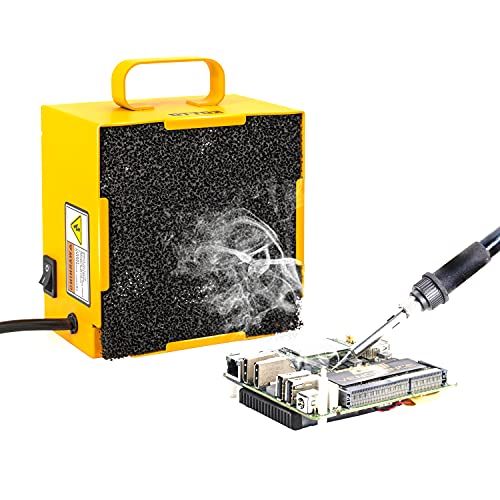
This KOTTO model emphasizes portability and a compact footprint with a 0.4-inch-thick activated carbon filter to absorb fumes from solder and related chemicals. The fan offers optimized suction around 3000 RPM, designed for near-field capture up to 5-6 inches away. It includes a sturdy base with anti-slip feet and a carrying handle for easy relocation. Best for: mobile setups or tight benches where quick deployment is essential. Caution: performance may vary with distance from the source; keep fumes close to the intake for best results.
KQZ-B1 Solder Fume Extractor

The KQZ B1 model offers 168 m³/h airflow with a dual-layer cartridge design that includes a pre-filter, H13 HEPA, and a carbon stage. It captures 99.99% of dust and fumes, including particles as small as 0.3 μm, and uses coconut shell activated carbon with iodine-enhanced content for stronger adsorption. Best for: compact workshops needing a higher filtration grade at a reasonable price. Caution: a higher-capacity unit may be preferable for frequent heavy-duty use or larger work areas.
Buying Guide: What To Consider When Choosing A Cheap Welding Fume Extractor
Filter Type And Purification: Look for multi-stage filtration (pre-filter, HEPA, and activated carbon) to capture both particulates and gases. Higher iodine content in carbon filters can improve adsorption and longevity.
Airflow And Coverage: Match the unit’s airflow (m³/h) to your work area and the distance you’ll operate from the fumes. Smaller benches require less airflow; larger or prolonged tasks may need more robust suction.
Noise Level: For homes and shared spaces, aim for units rated under 55dB during normal operation. Consider whether you’ll be operating near the device for long periods.
Filter Life And Replacement Cost: Check expected filter life under typical use and the cost of replacements. Longer service life lowers ongoing costs, especially for busy workshops.
Portability And Footprint: If space is limited, prioritize compact units with easy setup or mobile options. If you need flexible capture, look for models with adjustable intake or hoses.
Intended Use: Ensure the unit is appropriate for soldering fumes, dust, and light welding smoke. Some units are optimized for small-scale electronics work rather than laser engraving or heavy-duty metalwork.
Frequently Asked Questions
- What is a good airflow rating for a small soldering workspace?
A: In a small bench setup, 120–250 m³/h is typically sufficient, with higher values useful for denser, longer sessions. - Do all fume extractors work for laser fumes?
A: Not all; some are designed for solder smoke and dust only. For laser fumes, choose models explicitly marketed for laser or with higher filtration capacity. - How often should filters be replaced?
A: Replacement depends on usage; heavy use may require more frequent changes, typically every 3–6 months for primary filters in many compact units. - Is noise level important for a home workshop?
A: Yes, lower noise enhances comfort during extended work periods. Look for models under 55dB for a balance of suction and quiet operation. - Can I use a fume extractor while soldering in a small cabinet?
A: It’s best to position the intake close to the smoke source and ensure adequate clearance around the unit for airflow and heat dissipation. - Are carbon filters better than HEPA alone?
A: Activated carbon targets gases and odors; HEPA captures fine particles. A three-stage system with both provides broader purification.