Finding the right mold release is essential for cleanly releasing concrete from forms and achieving flawless, professional results. This guide highlights reliable concrete form releases suitable for plywood, metal, plastic, and other molds. Each option reduces sticking, speeds up removal, and minimizes staining or residue. Below you’ll find five top picks with key features and practical considerations to help you choose the best mold release for your project.
Product Overview
| Product | Brand | Size | Notes |
|---|---|---|---|
| Akona Concrete Form Release (1 Gallon) | Akona | 1 Gallon | Versatile, non-staining, easy spray or pour application |
| Formcoat WB250 Concrete Form Release Agent | DCP | 1 Gallon | Non-staining, VOC-compliant, safe for various molds |
| Quality Chemical Q-Cote (128 oz) | Quality Chemical | 128 oz | Paraffin-based, slip-resistant surface, easy application |
| Akona Concrete Form Release (28 Ounce) | Akona | 28 oz | White release (goes on white), non-stick, easy use |
| Quality Chemical Q-Cote (128 oz, Pack of 2) | Quality Chemical | 128 oz (2-pack) | Same paraffin-based release, extended supply |
Below are concise reviews of each option, focusing on practical benefits and typical use cases for concrete forming, molds, and casting. Each section stays objective and informative, aiming to help you compare performance, safety, and application ease.
Akona Concrete Form Release (1 Gallon)

Akona’s 1-gallon form release is designed for versatility across various forming materials, including plywood, fiberglass, aluminum, steel, urethane, and other forms. It’s formulated to release cleanly from concrete without staining, making it suitable for architectural concrete, precasts, and DIY projects. The product applies easily via spray or pour, with a white appearance that helps confirm even coverage and reduces the risk of missed spots. A non-residue formula supports straightforward cleanup after demolding, keeping work areas tidy.
Formcoat WB250 Concrete Form Release Agent
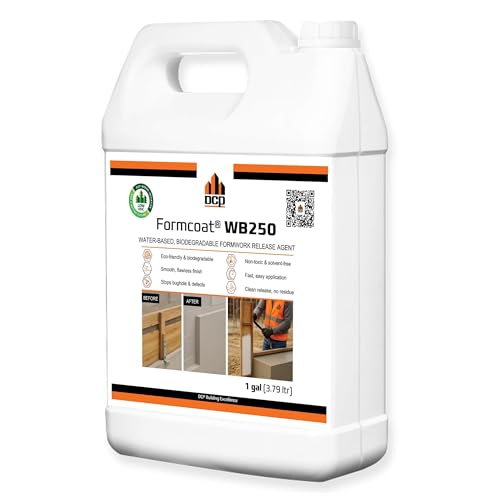
Formcoat WB250 aims to deliver smooth, stain-free concrete finishes with minimal residue. The formulation is designed to work across wooden, plastic, and metal molds, making it adaptable for precast plants, commercial jobs, and home projects. It’s free from common solvents and silicones, supporting safer use in varied environments and helping reduce post-demolding cleanup. The product emphasizes architectural-quality results with reliable release for intricate surfaces.
Quality Chemical Q-Cote (128 oz)

Q-Cote is a paraffin-based release agent designed to form a slip-resistant barrier on molds while enabling easy removal. It’s straightforward to apply—pour and spread with a brush or roller—without requiring special skills or thinning. In addition to facilitating demolding, the paraffin content can help create distinctive textures on finished stones, stepping stones, or stamped concrete surfaces. The product is positioned for Use with stone molds, garden walkways, and other decorative applications while maintaining ease of use.
Akona Concrete Form Release (28 Ounce)

The 28-ounce Akona release mirrors the 1-gallon option in form versatility and performance, packaging a compact size for smaller projects or testing purposes. It releases concrete cleanly from a variety of forming materials, goes on white to aid even coverage, and leaves no residue behind. While smaller, it shares the same non-stick, non-staining properties that help streamline demolding and minimize cleanup time on projects ranging from architectural pieces to decorative casts.
Quality Chemical Q-Cote (128 oz, Pack of 2)

This pack extends the Q-Cote option with two 128-ounce containers, suitable for larger projects or frequent mold releases. The paraffin-based formula continues to deliver a slip-resistant, nonstick surface and easy application—pour, spread, and demold. The product’s texture-enhancing capabilities are highlighted for decorative concrete work, and the packaging is designed for ongoing production lines or long runs at job sites.
Buying Guide: Key Considerations And Comparisons
When selecting a concrete mold release, consider the following factors to match your project needs and workspace conditions:
- Material compatibility: Ensure the release is suitable for your molds (wood, metal, plastic, urethane) and concrete formulations ( Portland cement mixes, decorative overlays, stamped textures).
- Residue and staining: Choose non-staining, low-residue formulas to minimize cleanup and preserve surface quality of the final piece.
- Application method: Sprays, pours, and brush-on options affect coverage ease, especially for large forms or intricate molds. White-release formulations help verify even coating.
- Safety and VOCs: For enclosed spaces or commercial settings, solvent-free or VOC-compliant products may be preferred to meet regulatory requirements and improve worker comfort.
- Texture and finish: Paraffin-based releases may contribute texture results in decorative work, while silicone or universal releases emphasize smooth demolding with minimal texture alteration.
- Reuse and storage: Packaging size and shelf life impact long-term projects. Packs of 2 or larger containers can be cost-effective for frequent use.
- Cleanup impact: Some releases simplify post-demold cleanup by leaving little residue; others may require washing or solvent-based removal.
- Environmental and safety notes: Check for silicates, silicones, or other additives that might interact with your mold materials or curing processes.
In practice, for architectural or precast concrete applications, a high-performance, stain-free, VOC-compliant release with easy spray-on or pour-and-go application is desirable. For decorative arts or stepping stones, paraffin-based releases that create textures can be advantageous. For smaller projects or trial runs, compact bottles provide a convenient entry point to evaluate results before committing to larger quantities.