Answer: When selecting industrial water storage tanks, prioritize durability, chemical resistance, and suitability for your liquid type and environment. This guide highlights five durable options and explains who each is best for, plus practical buying tips to help you compare quickly and confidently.
| Product | Best For | Key Benefit |
|---|---|---|
| RomoTech 125 Gallon Tank | Small-to-medium loads, remote sites | UV-stable, BPA-free, rustproof |
| RomoTech 550 Gallon Tank | Mid-size farms and industrial use | Heavy-duty polyethylene, long outdoor life |
| RomoTech 82124749 550 gal Vertical Tank | On-site storage and easy access | Vertical design for footprint efficiency |
| WaterPrepared 55 Gallon | Emergency kits and compact homes | Stackable, food-grade plastic |
| Emergency Water Tanks 30 Gallon | Small-space living and travel | Stackable and space-saving |
RomoTech 125 Gallon Polyethylene Tank

- Brand: RomoTech
- Volume: 125 gallons
- Material: UV-stabilized medium-density polyethylene
- Design: Heavy-duty, rustproof, BPA-free
Best for: Small to mid-size water, agricultural solutions, or non-flammable industrial liquids at remote sites. This tank’s UV resistance and BPA-free construction reduce contamination risk and outdoor degradation, making it suitable for long-term outdoor storage. Limitations: Not ideal for high-pressure intake without proper fittings.
RomoTech 550 Gallon Tank with Legs

- Brand: RomoTech
- Volume: 550 gallons
- Material: UV-stabilized polyethylene; rustproof
- Use: potable water, agricultural solutions, or non-flammable industrial liquids
Best for: Farms and mid-size operations needing substantial storage with outdoor resilience. It’s a strong choice when you require a larger capacity without high-rise tanks. Caution: Ensure secure anchoring for windy sites due to leg-mounted design.
RomoTech 82124749 550 Gal Vertical Tank

- Brand: RomoTech
- Volume: 550 gallons
- Material: UV-resistant, rustproof polyethylene
- Features: Wide fill cap, built-in drain, bulkhead fitting
Best for: On-site water storage where vertical footprint efficiency matters and easy refilling/emptying are priorities. This design supports quick siphoning and straightforward maintenance. Limitation: Vertical orientation may require more level space than horizontal tanks.
WaterPrepared Stackable 55 Gallon Tank

- Brand: WaterPrepared
- Volume: 55 gallons
- Material: Food-grade, UV-proof HDPE
- Features: Stackable, spigots, potable water safe
Best for: Emergency hydration kits, home usage, and compact storage. Its stackable design helps maximize space in garages or basements. Caution: For long-term outdoor exposure, ensure stacking stability and gravity-fed dispensing works for your setup.
Emergency Water Tanks 30 Gallon Stackable Tank
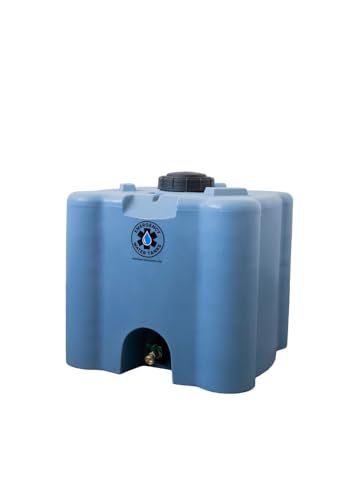
- Brand: Emergency Water Tanks
- Volume: 30 gallons
- Material: Rotationally molded polyethylene; BPA-free
- Design: Stackable for space-saving storage
Best for: Homes, RVs, and travel scenarios where space is limited but emergency storage is essential. It’s a good starter option for preparedness. Limitation: Smaller capacity means more frequent refills in prolonged outages.
Buying Guide: Key Considerations For Industrial Water Storage Tanks
- Liquid type compatibility: Confirm the tank material is suitable for potable water, agricultural chemicals, or industrial liquids you plan to store. BPA-free and UV-stabilized plastics reduce contamination and outdoor degradation.
- Capacity and footprint: Match tank volume to your daily or seasonal storage needs. Consider horizontal vs. vertical orientation based on space and access requirements.
- Durability: Look for UV resistance, rustproof construction, and impact resistance for outdoor installations. Heavy-duty polyethylene often balances cost with longevity.
- Access and drainage: Evaluate fill caps, drains, and hose connections. Built-in bulkheads or quick-siphon features simplify maintenance and transfers.
- Mobility and installation: Legs or skid-mounted frames can aid stability and leveling on uneven ground. Ensure the mounting aligns with site requirements and safety codes.
- Stackability and storage optimization: For limited spaces, stackable designs maximize capacity without expanding footprint. Verify stacking limits and stability.
- Safety and regulations: Verify compliance with local water storage guidelines and food-grade standards if storing potable water for human consumption.
Frequently Asked Questions
- What should I consider when choosing a water storage tank for agricultural use?
Assess chemical compatibility, UV resistance, capacity needs, and the tank’s ability to prevent contamination. For outdoor farms, rustproof and BPA-free materials offer longevity and safer storage.
- Are vertical tanks better than horizontal ones for space-limited sites?
Vertical tanks save floor space and can simplify gravity-fed systems, but horizontal tanks often provide easier access and lower center of gravity on uneven ground.
- Is stackability important for home emergency storage?
Yes. Stackable designs maximize storage density, especially in garages or closets, and can help organize multiple tanks by capacity or liquid type.
- How do I know a tank is safe for drinking water?
Look for BPA-free construction and food-grade HDPE. UV protection also helps maintain water quality during storage.
- What maintenance is needed for outdoor water storage tanks?
Periodically inspect for cracks or leaks, clean screens and vents, and verify seals and gaskets are in good condition. Ensure drainage is not blocked to prevent stagnation.