Choosing a heavy duty concrete mixer means prioritizing power, durability, and ease of use for demanding jobs. This guide highlights five top options, each suited to different buyers—contractors needing reliable daily performance, DIY enthusiasts tackling larger projects, and agricultural users mixing feed or plaster. Below you’ll find a quick product summary, followed by detailed sections to help you compare features, capacities, and potential limitations before buying.
Summary of featured products
- LDHTHOPI 5.3 Cu Ft Portable Concrete Mixer — best for compact, mobile mixing with strong motor and rust-resistant build.
- MGT North America Concrete Mixer — best for heavy-duty, on-site mixing with large drum capacity and rugged frame.
- YARDMAX YM0115 4.0 Cu. Ft. Concrete Mixer — best for easy setup and maintenance with solid build.
- BILT HARD 4 Cu. Ft. Cement Mixer — best value for small to medium projects needing portable power with a durable drum.
- IMAYCC 2100W Cement Mixer — best for high-speed, versatile mixing across multiple materials with overheating protection.
LDHTHOPI 5.3 Cu Ft Portable Concrete Mixer

Features a powerful 750W (1 HP) copper motor delivering efficient mixing at about 30 RPM, with 360° tilting to simplify dumping and cleanup. The steel frame includes a corrosion-resistant powder coat and a cast-iron toothed ring for durability. Best for small-to-medium projects requiring mobility and reliable performance. Choose this if you need a compact mixer that can be moved around a site and withstand frequent use.
Limitations: Smaller drum size may reduce batch volume, requiring multiple cycles for large jobs. Also, while corrosion-resistant, exposure to harsh outdoor conditions over extended periods should be considered.
BOSCH GBM9-16 9 Amp Mixer
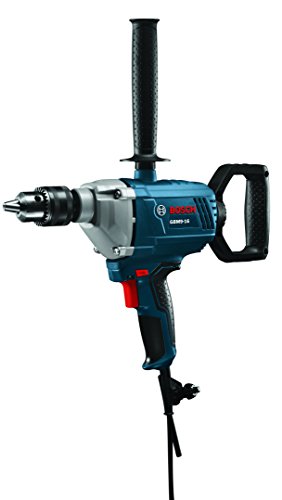
This mixer offers a high-torque 9.0 amp motor and a rotatable 360-degree D-handle for flexible operation. Best for mixing cement plaster and epoxy resin with consistent torque. Use this if you value a versatile drill-mixer for various materials and prefer adjustable control over speed and angle.
Limitations: It is a drill-mixer rather than a dedicated stand mixer, so bulkier batches may be less stable for true concrete mixing on larger projects.
MGT North America Concrete Mixer
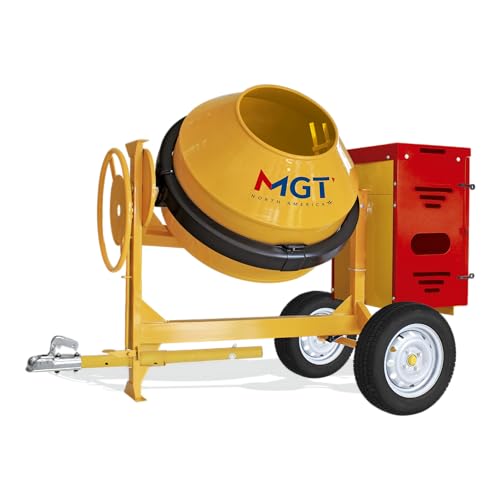
Powered by a Honda GX240 7.9 HP engine in an 11 cu ft drum, this unit targets demanding, on-site mixing with robust construction and stability on rough terrain. Best for contractors needing high capacity and reliable performance in challenging environments. Choose this if you require substantial daily mixing capacity and a proven heavy-duty chassis.
Limitations: Higher weight and size mean less portability; transportation and storage require more space and proper handling equipment.
BILT HARD Cement Mixer 4 Cu.Ft. Poly Drum

This mixer uses a 500W motor with a 4.0 cu ft poly drum and a 15-inch drum diameter for easy loading. It supports stucco, mortar, and concrete tasks with portability and a weather-resistant drum. Best for users needing a lightweight yet capable mixer for small-to-medium projects. Consider this if you want a cost-effective option with straightforward maintenance.
Limitations: The poly drum, while durable, may wear faster under rigorous, continuous use compared to metal drums over time.
BILT HARD 4 Cu. Ft Portable Concrete Mixer

Equipped with a 550W motor, this mixer reaches up to 1750 RPM and handles mixing at 26.7 RPM. It features a durable steel frame and a difficulty-friendly drum loading with a wide opening. Best for users needing a balance of power and portability for mixed batches of mortar or stucco. Use this if you want quick setup and reliable performance in small construction tasks.
Limitations: Limited drum capacity may require more frequent refills for large batches.
IMAYCC Cement Mixer, 2100W
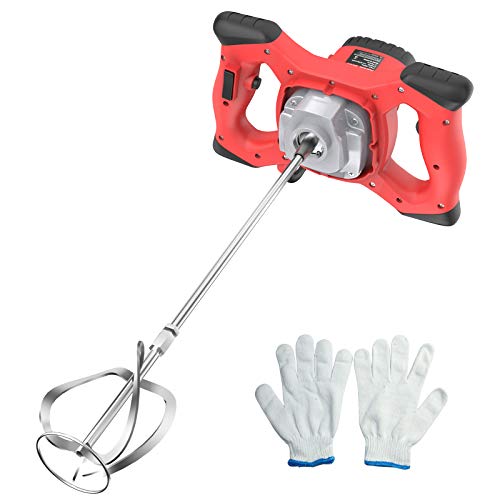
This handheld mixer uses a 2100W motor with 270-900 RPM and offers a 6-speed selection, ideal for oil paint, cement, fodder, mud, and plaster. Overheating protection with porous heat dissipation helps extend life in demanding work. Best for versatile, high-speed mixing across a variety of materials. Choose this if you need rapid, adjustable mixing for different projects.
Limitations: Handheld design may be less stable for larger batches and continuous heavy-duty use compared to a drum mixer on a stand.
Buying Guide
- Choose by drum capacity: Larger drums (11 cu ft) are suited for heavy daily use; smaller drums (4–5 cu ft) fit DIY projects or space-constrained sites.
- Power and speed: Higher wattage or HP engines deliver faster mixing for dense materials; consider RPM ranges to match the materials you mix most often.
- Drum material: Metal drums are durable but heavier; poly drums resist dents and corrosion but may wear faster under heavy use.
- Portability vs. stability: Casters and tilting mechanisms aid mobility; heavy-duty frames and wider bases improve stability on uneven ground.
- Durability features: Powder-coated finishes, reinforced frames, and sealed gear components extend service life in tough environments.
- Maintenance: Look for design features that simplify cleaning and loading, such as wide openings and easy-dump tilting.
- Safety considerations: Check for built-in overheating protection and stable mounting to prevent tipping during operation.
Frequently Asked Questions
- What is the best mixer for large construction jobs? Response: A mixer with a large drum (around 11 cu ft), heavy-duty engine, and rugged frame is best for high-volume work, like the MGT North America Concrete Mixer, which is designed for demanding conditions.
- Do I need a metal drum or a poly drum? Response: Metal drums are tougher for repeated heavy use, while poly drums resist dents and are lighter. Choose based on your typical material and handling needs.
- Is a handheld mixer suitable for concrete? Response: Handheld units offer versatility for small batches and non-concrete materials, but they are less stable for large volumes than stand mixers.
- Should I prioritize speed or torque? Response: Torque is crucial for dense mixtures like concrete; higher RPM helps with lighter materials like plaster but may cause splashing for thick mixes.
- How important is a tilting dump? Response: A 360° tilting mechanism simplifies unloading and cleanup, especially for sticky mixes, reducing operator effort.
- What maintenance tips help extend mixer life? Response: Clean after use, inspect for rust, lubricate moving parts, and store in a dry place to prevent corrosion and wear.