Answering the top buyer question: which vertical or prominent band saw models deliver reliable cutting for metal, wood, and mixed materials? This guide focuses on practical, industry-style vertical and near-vertical band saws you can use in workshops, metal shops, and fabrication environments. Each pick is evaluated for material versatility, table design, power, and longevity. The list targets buyers such as shop managers, fabricators, and DIY pros who need consistent straight, curved, and bevel cuts with solid tables and dependable blades.
Product Overview Table
| Product | Best For | Key Benefit | Notes |
|---|---|---|---|
| KAKA INDUSTRIAL VS-1611 | Professional metal and mixed-material cutting | Integrated blade welder and grinder for quick blade changes | 15.7″ x 11.2″ throat with tilting table |
| WEN 9-Inch Band Saw BA3959 | Compact bench-top projects | Versatile for small-scale metal/wood cuts | Vertical operation with compact footprint |
| QD-KYOHO Band Saw | Woodworking with metals in one tool | Dual-speed with cast iron table tilting up to 45° | 13″ throat, solid multi-angle capability |
| WEN Metal Band Saw with Stand BA4664 | Versatile metal cutting in shop setup | Vertical or horizontal operation with adjustable blade speeds | Stand-inclusive, solid industrial design |
| Milwaukee M12 Fuel Compact Band Saw | Portable cutting on job sites | Cordless, with long battery life and compact form | Best for fieldwork and light fabrication |
KAKA INDUSTRIAL VS-1611 Vertical Band Saw

The VS-1611 is a versatile vertical/tilting-band saw designed for metal, aluminum, plastic, and similar materials. It features a 16-inch cutting capacity and a blade speed range of 0-1680 RPM. The heavy-duty cast iron table tilts 45° right and 15° left, enabling precise angled cuts with a built-in miter gauge for quick setup. An integrated blade welder and grinder streamline blade maintenance and reduce downtime. Best for professional shops needing a single machine for varied materials and angles. A limitation is the need for adequate power supply and space for the tilting table in tighter rooms.
Who it’s best for: Metal shops and fabrication facilities requiring on-site blade creation and flexible cutting angles.
KAKA INDUSTRIAL Metal Horizontal Band Saw BS-712R
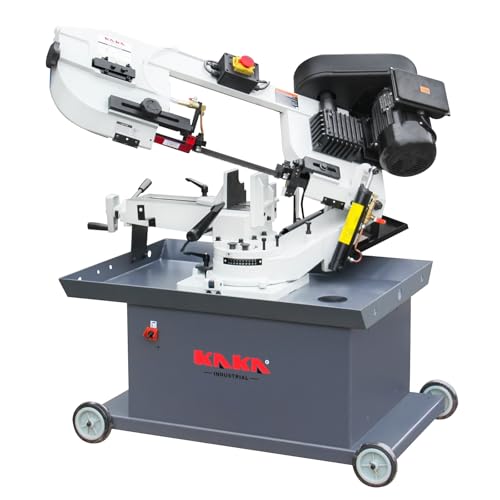
The BS-712R provides a dual-capacity cutting setup with a pivoting bow that supports 45°-90° cuts and a 7″ round capacity alongside 7″ x 8.25″ rectangular cuts. It includes a pre-wired 115V system with the option to convert to 230V and a coolant system for continuous operation. This model is better for shops that need precise multi-geometry cuts in metal with a focus on pipe and structural components. A potential limitation is its heavier footprint and the complexity of setup for new users.
Who it’s best for: Fabrication shops needing adaptable angles and steady coolant control for metal cutting.
KAKA INDUSTRIAL Metal Band Saw 7×12
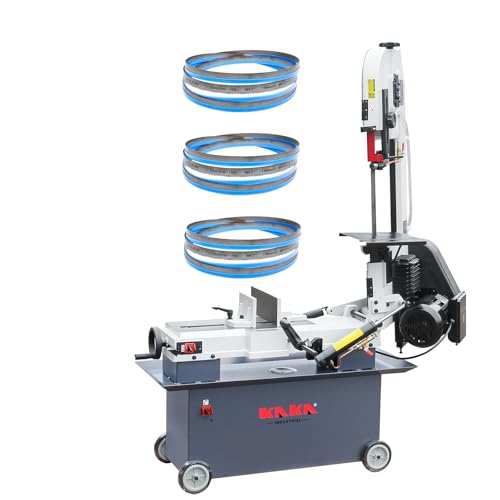
This 7×12-inch band saw is designed for heavy-duty steel and alloy work. It comes with three blades (bi-metal, 5/8 TPI) optimized for various material thicknesses, and a dual-voltage option (115V/230V) to suit different electrical setups. A robust base with vibration damping helps ensure straight cuts. Choose this if you regularly switch between thick structural members and thinner profiles. A caveat is that blade changes and setup may require more routine maintenance in busy shops.
Who it’s best for: Shops needing quick blade swaps and multi-material cutting with durable construction.
QD-KYOHO Band Saw for Woodworking

The QD-KYOHO saw delivers dual-speed performance at 1445 and 2950 FPM, suitable for woodworking and light metalwork. Its 14- and 13-inch cutting dimensions, a solid cast iron table, and tilting capability up to 45° right and 5° left enable complex shapes with stable support. It’s best for workshop wood projects that occasionally require metal-cutting compatibility. A limitation is that wood-focused builds may not match metal-specific machines in durability for continuous heavy use.
Who it’s best for: Medium-sized woodworking shops needing occasional metal-friendly speed options.
WEN Metal Band Saw With Stand BA4664
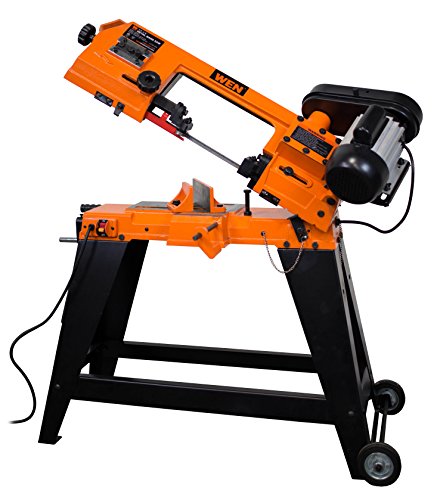
The BA4664 offers vertical or horizontal operation, a sturdy stand, and adjustable blade speeds for metal cutting with smooth performance. This model supports diverse metals and shapes with a robust base designed to dampen vibration. It’s well-suited for small to mid-sized shops needing a flexible setup that can adapt to different cutting tasks. A potential limitation is that some users may prefer a larger table or more aggressive speeds for heavy industrial workloads.
Who it’s best for: Shops seeking a versatile, stand-ready metal band saw for varied fabrication tasks.
Milwaukee M12 Fuel Compact Band Saw

The Milwaukee M12 Fuel is a cordless, compact band saw suited for fieldwork and lightweight fabrication. It emphasizes portability, quick cuts, and a long battery life mindset for job-site use. It’s best for on-site tasks or small, quick repairs where a power outlet isn’t readily available. Limitation includes lighter duty compared to full-size, powered stand units, which may affect heavy fabrication workloads.
Who it’s best for: Field technicians and smaller shops needing portable, battery-powered cutting capability.
Buying Guide: Key Purchase Considerations
- Cutting capacity and material range: Choose a model with a throat and height that match your typical stock. If your work involves thick metal or large profiles, prioritize larger capacity and robust frames.
- Power and speed: Horizontal and vertical band saws vary in motor horsepower and speed ranges. For steel and alloys, look for higher torque and multiple speed settings. For wood, softer speeds can reduce blade wear.
- Table design and orientation: Tilting tables expand angled cutting abilities. Ensure the table material is rigid and offers accurate alignment for repeatable results.
- Blade lifecycle features: Integrated blade welders and coolant systems can extend blade life and reduce downtime. Consider whether the model offers on-board blade maintenance or requires separate tooling.
- Mobility and footprint: Portable models suit contractors and cramped workshops; larger, stand-mounted units excel in dedicated shops with space.
- Electrical requirements: Some machines offer dual voltage or are wired for quick conversion. Verify compatibility with your electrical infrastructure.
- Maintenance and safety: Look for solid safety features, vibration damping, and easy blade changes to minimize downtime and risk.
- Intended use balance: If you mix metal and wood, select a model that handles both materials without compromising performance in either domain.
Frequently Asked Questions
- What is a vertical band saw best for? – It excels at precise straight, curved, and bevel cuts in metal, wood, and composites when a stable table and accurate guides are available.
- Should I choose a portable or fixed-band saw? – Portable saws are ideal for on-site cuts and light fabrication; fixed units offer higher precision and sustained power for heavy workloads.
- Do I need a coolant system? – Coolant helps extend blade life and reduce heat buildup on metal cutting. Integrated systems are convenient for continuous operation.
- Is dual voltage important? – If your shop uses varied power sources, a dual-voltage model reduces electrical strain and heat, improving longevity in some scenarios.
- How do I decide between wood-focused and metal-focused saws? – Consider your primary material and blade choice. For metal, prioritize rigidity, metal-compatible blades, and safety features; for wood, ensure blade speed and geometry align with softer materials.
- What safety practices should I follow with band saws? – Always use guards, keep hands clear of the blade, secure workpieces, and disconnect power during blade changes or maintenance.