Choosing the right fiberglass mesh for concrete reinforcement helps control cracking, improve impact resistance, and extend the life of cementitious systems. This guide highlights five strong options, spanning non-adhesive EIFS meshes, general plastering scrim, and fiber-reinforcement blends designed for concrete floors, walls, and foundations. Each product is evaluated for versatility, ease of use, and performance in common American construction scenarios. Use this overview to compare embeds, weave, and thickness against your project’s base coat, render, or mortar mix.
| Product | Best Use | Notes |
|---|---|---|
| Boen Non-Adhesive EIFS Stucco Mesh 38″ x 150′ | EIFS base coats, crack control | Alkali-resistant, flat embed, 4.5 oz |
| YIQUEDOK Fiberglass Mesh 39″ | Plastering, rendering, exterior walls | Non-adhesive, stable 5Y rated |
| Fibre Glast Scrim Mesh White | Concrete repairs, roofing, patches | Lightweight scrim, USA-made |
| Boen Non-Adhesive EIFS 9.5″ x 150′ | Crack repair, base coats | High strength, flame retardant, alkaline resistant |
| BOHUIZ Concrete Fiberglass 3/4″ Fiber | Concrete reinforcement, mortar mixes | Long glass fibers for mix reinforcement |
The following sections profile each option with practical details to help you select the best mesh for your concrete project. All sections keep a balanced, objective tone to support informed purchasing decisions.
Boen Non-Adhesive EIFS Stucco Mesh 38″ x 150′

Boen’s non-adhesive EIFS mesh is designed for base coats in exterior stucco systems. The alkali-resistant fiberglass weave embeds in cementitious layers to control cracking and add impact resistance in synthetic stucco applications. The standard field weight of 4.5 oz yields broad coverage at 38 inches by 150 feet, approximately 475 square feet gross, making it suitable for mid-sized wall sections and typical renovation work. The mesh lays flat with smooth embedment and requires 2–4 inch seam overlaps to ensure full encapsulation, minimizing telegraphing through the finish layer. Ideal for areas with moderate abuse where a durable, non-adhesive reinforcement is desired.
YIQUEDOK Fiberglass Mesh 39″
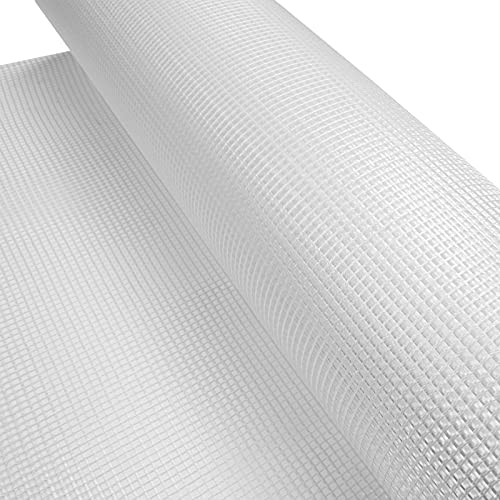
YIQUEDOK offers a 39-inch-wide fiberglass mesh described as non-adhesive with a 5Y rating for stability and cohesion. This mesh is positioned for plastering, rendering, tile substrates, and exterior wall insulation systems. The product emphasizes easy installation and compatibility with cement-based mixes, stone, gypsum, and interior or exterior wall applications. Its non-sticky characteristic reduces misalignment during embedment, while its robust weave supports crack resistance and moisture management in both residential and light commercial projects. Suitable when you need a reliable, general-purpose reinforcement for cementitious substrates.
Fibre Glast Scrim Mesh White

Fibre Glast Scrim Mesh is a heavy-duty white fiberglass cloth commonly selected for concrete repairs, roofing substrate, and window screen applications. The 1-2 oz weight is lightweight yet provides reliable reinforcement for patching and crack control in various substrates. It is marketed as First Quality Certified, ensuring consistency across batches. The mesh is described as easy to use, economical, and versatile for enhancing repair durability in concrete and masonry projects. This option is well-suited for DIY repairs and small to medium-scale projects where a robust reinforcing layer is beneficial without adding substantial bulk.
Boen Non-Adhesive EIFS 9.5″ x 150′
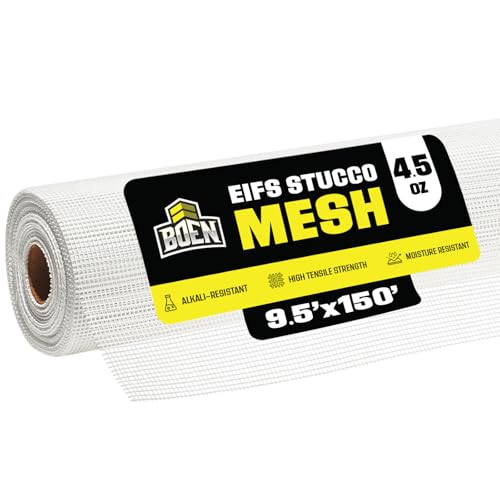
This Boen option expands the range of non-adhesive EIFS reinforcement with a 9.5-inch width by 150-foot length. The mesh emphasizes high strength and alkaline resistance, designed to seal cracks and reinforce holes in walls while offering flame retardant properties. While non-adhesive, it is cut to fit shapes and edges with scissors, enabling precise patching and crack repair. It’s suitable for both interior and exterior cementitious systems where a durable, crack-controlling reinforcement is required without adhesive backing. It is recommended for areas where neat application and robust base coat integration are priorities.
BOHUIZ Concrete Fiberglass 3/4″

BOHUIZ provides longer 3/4-inch fiberglass strands intended for concrete reinforcement within mortar mixes. The product notes emphasize improving impact resistance and earthquake resilience, reducing the likelihood of crack propagation in walls and floors. It is positioned for aquatic or wet environments and is designed to be mixed into cementitious blends to increase density and impermeability, improving long-term structural integrity. This option suits larger-scale projects or renovations where fiber reinforcement integrated into the mortar is desirable for enhanced durability and crack prevention。
Buying Guide
Key considerations when selecting fiberglass mesh for concrete reinforcement include mesh type (adhesive vs non-adhesive), embedment method, thickness, and compatibility with your base coat or mortar. For exterior stucco and EIFS systems, non-adhesive meshes that embed into the base coat can reduce telegraphing and deliver consistent crack control. When patching or repairing interior walls, non-adhesive scrim or self-adhesive tapes may offer easier handling and clean edges. For concrete mixes, consider adding chopped glass fibers or discrete reinforcement fibers to improve impact resistance and crack prevention in floors and walls. Always verify alkali resistance to withstand cement alkalinity, and confirm compatibility with the aggregate and polymer-modified mortars used in your project.
Thickness and weight influence performance in high-abuse zones. Heavier meshes (higher oz weight) tend to provide greater crack control in exterior applications or high-traffic areas, while lighter fabrics are often suitable for minor repairs or decorative work. When installing, ensure overlaps of 2–4 inches for seamless coverage and full encapsulation within the base coat. Consider the climate and exposure: moisture-prone regions may benefit from moisture-tolerant, alkali-resistant products. Finally, assess ease of cutting and shaping to fit corners, openings, and joints without creating weak seams.
Durability versus ease of use is a common trade-off. Non-adhesive meshes require careful alignment during embedment but reduce adhesive residue and telegraphing. Self-adhesive tapes offer quick application but may have limited thickness and substrate compatibility. For large-scale commercial projects, coordinating mesh type with the mortar admixtures, curing conditions, and panel systems is essential to ensure consistent performance across batches.