This guide helps shoppers pick the right fiberglass vacuum bagging kit for composite parts, whether you’re a hobbyist, a repair technician, or a small shop. Each top pick supports different user needs—from basic starter sets to high-temperature, leak-proof components. The listed products are selected for clarity, practical use, and compatibility with common vacuum bagging workflows.
Summary table of chosen products
| Product | Best For | Why It Stands Out | Key Limitation |
|---|---|---|---|
| Wicks Aircraft Vacuum Bagging Composite Starter Kit | Beginner to intermediate layups | Comprehensive starter materials for multiple layups | Not a full hardware set on its own |
| Wicks Aircraft Deluxe Vacuum Bagging Hardware Kit | Complete hardware compatibility | Essential hardware to customize bagging setups | Requires compatible film and cloth separately |
| Fibre Glast Vac Bag Film (5 Yards) | Film for many small to mid-size parts | Durable polyethylene film with broad compatibility | Long rolls can be less convenient for small jobs |
| Fibre Glast High-Temp No-Leak Vacuum Seal Tape | High-temp resin and prepreg layups | Leak-proof sealing with heat resistance up to 400F | Specialty tape; may be overkill for simple pours |
| BrenixCraft Vacuum Bagging Connector | Fast and reliable bag connections | Twist-lock seal for quick setup and a high-temp gasket | Best used with compatible bag film and fittings |
Wicks Aircraft Deluxe Vacuum Bagging Hardware Kit

The Wicks Aircraft Deluxe Vacuum Bagging Hardware Kit provides essential hardware for making quality composite parts. It supports choosing your own vacuum bagging film, peel ply, release material, and laminate cloth. Includes: three vacuum bagging ports, one pressure gauge, two quick-release vacuum fittings, ten feet of tubing, and two barb fittings.
Best for: shops or hobbyists who want a complete hardware foundation and the flexibility to customize layups. Why selected: It ensures you have the core fittings and ports needed to run a vacuum bagging setup alongside compatible film and materials. Caution: Requires separate film and materials to complete a layup.
Vacuum Bagging Composite Starter Kit with Fiber Glass Cloth, by Wicks Aircraft
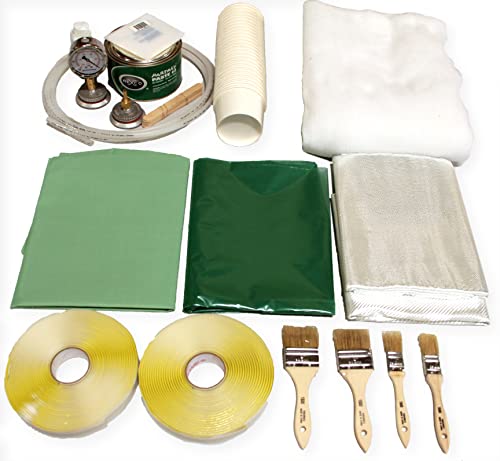
This starter kit bundles materials suitable for initial composite layups, including enough material for multiple applications. It’s best for beginners and hobbyists who want an all-in-one package to get started with fiber glass layups.
Best for: beginners and small hobby projects where a ready-to-use starter pack simplifies first attempts. Why selected: It provides a balanced mix of materials to begin practicing bagging without sourcing each item separately. Caution: Not a full hardware set; plan to pair with a dedicated hardware kit for scalability.
Fibre Glast High-Temp No-Leak Vacuum Seal Tape

Fibre Glast High-Temp No-Leak Vacuum Seal Tape is designed to seal vac bag layups to metal, fiberglass, or graphite. It is rated for up to 400F and helps prevent resin seepage during cure. Includes pro-level guidance with instructions and videos.
Best for: users needing reliable, heat-resistant sealing for tough layups. Why selected: The tape’s high-temperature tolerance and clean removal help maintain part quality. Caution: Use as part of a complete sealing strategy; not a stand-alone solution for all bagging scenarios.
Fibre Glast Vac Bag Film, 5 Yards

Fibre Glast Vac Bag Film is a polyethylene film suitable for degassing chambers and vac purge kits. The 5-yard length balances cost with multiple uses, and its compatibility with common composites makes it a practical choice for many projects.
Best for: medium to large parts where longer film sections reduce resealing needs. Why selected: It pairs well with standard bagging setups and yields consistent seal quality. Caution: Rolls can be bulky for small projects; consider smaller film options for tight spaces.
BrenixCraft Vacuum Bagging Connector

The BrenixCraft Vacuum Bagging Connector features a leak-free twist-lock design that creates an airtight seal on 6-mil and thicker bags. It supports fast setup without tape or clamps. CNC-machined 6061 aluminum construction helps withstand curing temperatures up to 500°F when paired with compatible gaskets.
Best for: users who value quick assembly and solid, reliable seals. Why selected: The twist-lock action simplifies setup in busy workshops. Caution: Ensure bag film compatibility and gasket integrity for high-temp applications.
Buying Guide
What type of buyer should choose a fiberglass vacuum bagging kit?
Beginners should start with a comprehensive starter kit to learn the basics of resin removal, bagging, and curing. Intermediate users benefit from adding hardware components for flexibility and repeatability. Pros seeking high-temperature or leak-proof results should prioritize seal tapes, connectors, and film designed for tougher cures.
What are the essential components in a bagging setup?
- Vacuum film or bags that fit your part size
- Sealant tape or leak-proof sealing options
- Vacuum ports, fittings, and a reliable pump
- Peel ply, release films, and resin-compatible cloth
- Optional pressure gauges and manometers to monitor vacuum levels
How to choose between starter kits and individual parts?
- Starter kits are best for learning and small projects with a balanced set of materials.
- Individual parts are better for scaling up, customizing setups, and handling larger parts or high-temp cures.
What are common limitations to expect?
- Some kits don’t include all hardware; you may need to source film and cloth separately.
- Long film rolls can be cumbersome for small jobs; pick appropriate sizes for your typical parts.
- High-temperature applications require compatible gaskets and tapes; verify temperatures before use.
Maintenance and safety tips
- Inspect seals and gaskets for wear before each use.
- Follow manufacturer guidelines for curing temperatures and times.
- Keep work areas well-ventilated and use appropriate PPE when handling epoxy and resins.
FAQ
- Q: What is vacuum bagging used for in composites? A: It removes air pockets and excess resin to create stronger, lighter parts with improved fiber alignment.
- Q: Do I need a pump for bagging? A: Yes, a vacuum pump is essential to create and maintain the vacuum during cure.
- Q: Can I reuse vacuum bags? A: Reuse depends on bag material and damage; inspect for leaks or delamination before reusing.
- Q: Is high-temperature tape necessary? A: For high-temp resins or prepregs, a heat-rated seal helps prevent leakage during cure.
- Q: What should I consider when choosing film and cloth? A: Match thickness, resin compatibility, and part size to ensure good layup quality.
- Q: Are these kits compatible with all resins? A: Most kits support common epoxies and resins; verify resin compatibility with film and cloth.