Choosing the right electric motor for a kart or small DIY vehicle involves balancing voltage, power, and durability. This guide highlights five reliable motors that fit common 24V–36V setups, from compact go-kart builds to lightweight electric drift karts. Each section includes a quick product snapshot, key specs, and practical usage notes to help you compare options for performance and longevity.
| Brand | Model | Voltage | Power (W) | Approx. Speed | Best For |
|---|---|---|---|---|---|
| Vevitts | 24V | 350 | 3000 RPM | Lightweight scooters and go-karts | |
| XUFOPLY | 36V | 1000 | ~3000 RPM | Mini bikes, karts, scooters | |
| Kunray | 48V | 2000 | ~4300 RPM | High-performance builds | |
| RQG | 24V | 350 | ~2750 RPM | Razor-compatible upgrades | |
| Kunray | 36V | 1000 | ~3100 RPM | Go-karts and lightweight e-bikes |
Note: Specifications vary by configuration and voltage supply. Always match a motor to your controller, battery, and gearing for safe operation.
Vevitts Small Brushed Permanent Magnet Electric Motor for E Scooter Drive Speed Control
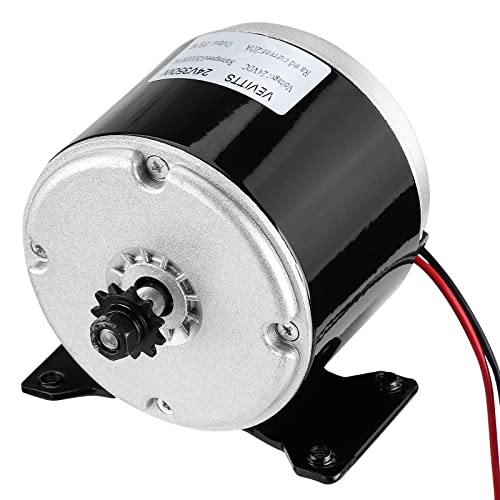
The Vevitts motor combines a compact aluminum body with a full copper coil designed for air cooling and low-noise operation. Its 24VDC supply and 3000 RPM rating position it well for lightweight go-kart projects or scooter upgrades where a high-speed, modest-torque setup is desired. The motor emphasizes reliability with heat resistance and long life, aided by natural air cooling. Recommended applications include small electric carts and educational DIY builds that require a simple brushed motor solution.
Brushed DC Electric Motor, 36V 1000W MY1020 Type

This 36V, 1000W brushed motor uses a MY1020 form factor with a 25H-11T chain drive. With a documented maximum speed around 3000 RPM, it’s suited for mini bikes, small go-karts, and electric scooters. Its robust construction supports moderate load applications and can be a solid upgrade for brands using compatible mounting and gearing. The packaging notes compatibility with various brands that share the same motor specs, making it a flexible choice for mid-range builds.
KerryYoo K61 Go Kart Electric Drift Kart

The KerryYoo K61 is a complete go-kart system designed for kids aged 6–12, with a 24V, 300W motor and four-speed modes (up to 8.5 mph). It features a length-adjustable seat and LED lighting for an immersive, realistic racing experience. While primarily a ride-on toy, the included motor and drive setup show how compact 24V configurations can still deliver engaging performance and safe operation for younger users. It’s a practical reference point for understanding low-power, kids-focused kart designs.
Kunray 36V 1000W BLDC Mid Motor Kit

This Kunray mid-drive kit pairs a 36V, 1000W brushless motor with a controller, delivering a high-performance mid-drive option for go-karts, e-bikes, and scooters. The BLDC design offers higher efficiency, reduced maintenance, and better torque characteristics compared to brushed alternatives. It emphasizes compact dimensions and mounting ease, aided by a robust aluminum shell. The kit supports multiple gearing setups and is suitable for builders aiming for a responsive, smooth ride.
BRINGSMART 12V 16rpm DC Worm Gear Motor

This geared DC motor uses a worm gear design for high torque at low speeds, rated at 12V and 16 RPM. Its self-locking feature is beneficial for applications requiring holding torque without continuous power, such as door locks or small actuated mechanisms. While its low speed and modest voltage make it less suitable for high-speed go-karts, it demonstrates how gear reduction can dramatically increase torque for robotics or security equipment in DIY projects.
350W 24V Brushed Electric Motor For Small Vehicles

The 350W, 24V brushed motor is designed for Razor-compatible upgrades and small DIY projects. With a rated speed around 2750 RPM, it fits lightweight go-karts and E-bikes requiring a compact, reliable motor solution. The unit’s straight-forward wiring and familiar brushed design make it a practical choice for builders seeking a simple, replaceable powerplant with predictable performance and broad compatibility.
Buying Guide: Key Considerations For Choosing A Go-Kart Motor
- Voltage and compatibility: Match motor voltage with your battery and controller. Common setups include 24V and 36V for smaller builds, with 48V options for higher performance kits.
- Motor type: Brushed motors are simple and cost-effective but require more maintenance; brushless motors (BLDC) offer higher efficiency and longer life at a higher upfront cost.
- Power and torque: wattage indicates power output; torque depends on gearing and weight. For go-karts, consider your target speed and load rather than peak wattage alone.
- Speed control and gearing: Ensure your controller and drive train (gears, chain, sprockets) support the motor’s rpm and torque curve. Proper gearing can maximize acceleration and top speed without overloading the motor.
- Cooling and durability: Air-cooled designs work in well-ventilated builds; high-performance kits may need additional heat sinking or active cooling to prevent thermal throttling during use.
- Installation compatibility: Check mounting holes, shaft diameter, and available adapters. Some motors are sold as kits with controllers, while others are standalone units.
- Safety and reliability: Look for motors with durable housings (aluminum), robust winding insulation, and reputable brands to minimize risk during sustained operation.
- Maintenance profile: Brushed motors require more frequent brush and commutator checks; BLDC motors demand less frequent maintenance but may need specialized motor controllers.
- Support and documentation: Availability of manuals, wiring diagrams, and replacement parts can simplify setup and future repairs.
- Budget vs. performance: Determine whether you prioritize cost savings with brushed designs or longer-term efficiency and performance with BLDC systems.
When evaluating options, create a short matrix of your intended use, available voltage, weight constraints, and desired top speed. Use this framework to filter motors that align with your build goals and safety standards.