When preparing samples for scanning electron microscopy (SEM) and energy-dispersive spectroscopy (EDS), choosing the right carbon tape is crucial. The ideal tape should provide strong conductivity, stable adhesion, and a clean background to minimize X-ray noise and distortions. This guide highlights five top carbon tape options commonly used in SEM/EDS work, with real-world features and practical notes to help you select the best match for your setup.
| Product | Brand | Key Focus |
|---|---|---|
| KERALI 25M Carbon Double-Sided Tape (3mm x 25m) | KERALI | SEM/EDS background substrate; high conductivity |
| Double Sided Carbon Tape (12mm x 20m) | Electron Microscopy Sciences | Versatile conductive substrate with strong adhesion |
| KERALI 25M Carbon Double-Sided Tape (15mm x 25m) | KERALI | Large-width backing for broad samples |
| KERALI 25M Carbon Double-Sided Tape (10mm x 25m) | KERALI | Compact, precise sample mounts |
| VViViD Black Carbon Fiber Vinyl Tape Roll | VViViD | Alternative carbon-containing tape for non-SEM uses |
Note: The table highlights representative options across common widths and applications. For SEM/EDS work, the first four entries are specifically designed to minimize background signals while ensuring robust sample adhesion. The VViViD tape offers carbon-fiber aesthetics for broader fabrication tasks and is included for context on carbon-tape versatility.
KERALI 25M Carbon Double-Sided Tape (3mm x 25m)
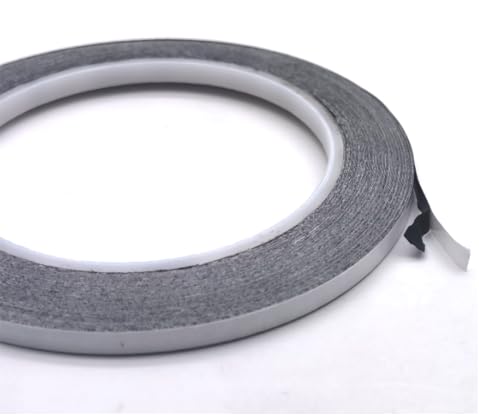
Application: This double-sided carbon conductive tape is designed for fixed observation samples in SEM and X-ray EDS/EDAX analyses. It combines good conductivity with strong adhesion and an indistinguishable background, making it suitable as a background substrate for observing entire samples. In EDS work, it helps reduce background X-ray values, improving observation accuracy and lowering detection limits. The base material is insulated non-woven fabric, with carbon powder as the conductive component.
Double Sided Carbon Tape, 12mm x20m

This tape provides a reliable background on aluminum bases, aiding stable mounting for SEM samples. The adhesive layer supports good background structure without adding excessive interfering signals to sensitive EDS measurements. This option is well-suited for broader sample sizes where a wider tape width reduces handling steps during preparation.
KERALI 25M Carbon Double-Sided Tape (15mm x25m)
Highlights: This larger-width tape maintains the same conductive performance and indistinguishable structure as the smaller variants. It is intended for fixed observation samples in SEM/EDS, offering robust adhesion and consistent background performance across a broader contact area. The base material remains insulated non-woven fabric with carbon powder as the conductive layer.
KERALI 25M Carbon Double-Sided Tape (10mm x25m)
Notes: This compact width provides precise mounting for smaller samples or regions of interest. It upholds strong conductivity and good adhesion, with the same base materials and carbon powder composition designed for SEM/EDS workflows. The tape’s double-sided design makes it straightforward to secure samples without introducing disruptive substrates into the imaging field.
VViViD Black Carbon Fiber Vinyl Tape Roll

Overview: This roll delivers a durable carbon fiber finish suitable for automotive or architectural detailing and other non-SEM applications. It features air-release adhesive for clean and easy application, allowing repositioning during installation. While not a dedicated SEM substrate, it demonstrates the versatility of carbon-based tapes in broader fabrication contexts.
Buying Guide: Key Purchase Considerations For SEM Carbon Tape
Choosing the best carbon tape for SEM/EDS involves balancing conductivity, background cleanliness, and practical handling. Consider these perspectives to guide your decision:
- Conductivity and background noise: For SEM and EDS, the tape should conduct electricity efficiently and minimize background X-ray signals. Tapes labeled for SEM/EDS typically optimize this balance with carbon powders and non-woven bases.
- Adhesion and substrate compatibility: Strong, stable adhesion prevents sample movement during imaging and reduces artifacts. Tape widths should match the sample footprint and the stage size of your microscope.
- Sample type and observation needs: Fixed observation samples benefit from uniform conductivity across the entire substrate. For delicate or irregular samples, larger-width tapes can simplify mounting, while thinner tapes preserve edge details.
- Ease of handling: Double-sided tapes streamline mounting by allowing straightforward sample fixation from either side. Consider the tape’s flexibility and how it conforms to curved or irregular surfaces.
- Durability and storage: Tape should hold its properties across the typical lab environment, with resistance to humidity and temperature fluctuations during preparation and imaging.
- Cost and availability: While specialized tapes can be pricier, consistent availability and roll length matter for routine workflows. Bulk options may reduce per-sample costs.
Practical tip: When selecting a width, start with a tape that fits your largest typical sample and then consider narrower options for finer features. For high-precision EDS work, ensure the tape’s manufacturer specs emphasize background minimization and compatibility with your SEM chamber and detector settings.