Choosing the right beveling machine can streamline pipe fabrication, improve bevel consistency, and shorten project timelines. This guide highlights five highly relevant options for American buyers, covering portable handheld models and track-assisted torches. Each entry summarizes key capabilities, compatible pipe ranges, and notable design features to help you compare performance in welding, construction, and plumbing applications.
| Product | Brand | Pipe Range | Key Benefit |
|---|---|---|---|
| Sawyer Pipe Cutting and Beveling Machine (3″ – 8″) | Sawyer Mfg Company | 3″ to 8″ | Hinged saddle setup; fast, spacer-free operation |
| Sawyer Pipe Cutting and Beveling Machine (8″ – 14″) | Sawyer Mfg Company | 8″ to 14″ | Same quick setup and slide-arm configuration for larger diameters |
| VEVOR CG2-11Y Manual Pipe Beveler | VEVOR | 0.2″ to 2″ thick pipes | 87″ chain; adjustable 0°–45° bevel |
| Bevel Pro PVC Pipe Beveling Tool | Bevel Pro | All-Purpose 2″ PVC, Schedule 40/80 | Ten-second bevels; no hand filing |
| H & M Model HM00 Pipe Cutter/Beveler | hm | 2″ to 4″ | Cuboid spacer system; four pipe sizes ready |
Below are five product-focused sections with practical details, structured to help buyers compare capabilities, setup, and intended use cases across common pipe beveling tasks.
Sawyer 3″ to 8″ Beveling Machine

The 3″ to 8″ Sawyer beveling machine emphasizes easy setup with a hinged saddle, enabling quick placement on varied pipe diameters. Its sliding arms streamline configuration, reducing the time from unboxing to beveling. The design is described as field-friendly, with no spacer requirements, helping technicians stay organized on the job site. This model is well-suited for welding and construction scenarios where speed and reliability matter most.
Sawyer 8″ to 14″ Beveling Machine

This Sawyer model mirrors the 3″-8″ variant with the same quick setup features, expanded to larger pipes. The hinged saddle and sliding arms remain the core advantages, delivering rapid, hassle-free operation on construction sites or industrial plants where bigger diameter bevels are required. Its portability and straightforward design support on-the-go welding and pipe fabrication tasks.
VEVOR CG2-11Y Manual Pipe Beveler

The CG2-11Y offers a manual approach with a robust 87-inch chain to secure tubing during beveling. It supports thicker pipe options (0.2″–2″ wall) and provides adjustable bevel angles up to 45 degrees. Three replaceable tips optimize performance across materials and flame requirements, making it a versatile choice for shop and fieldwork where manual precision is essential.
Bevel Pro PVC Pipe Beveling Tool

Bevel Pro is designed for quick, consistent PVC bevels on Schedule 40/80 piping. The tool fits snugly over pipe ends, enabling precise bevels in about 10 seconds. It aims to reduce hand filing and support safer, faster joint preparation for gasketed connections. This option is ideal for plumbing, irrigation, and low-pressure piping projects where PVC is predominant.
Sawyer 1.5″ to 4″ Beveling Machine

This Sawyer model provides a compact solution for smaller pipe sizes with the same reliable setup features: hinged saddle for easy on-pipe placement, fast sliding arms for quick configuration, and a no-spacer design that keeps job sites tidy. It is well-suited for technicians performing frequent bevels on 1 1/2″ to 4″ conduits or service lines in tight spaces.
H & M HM00 Pipe Cutter/Beveler
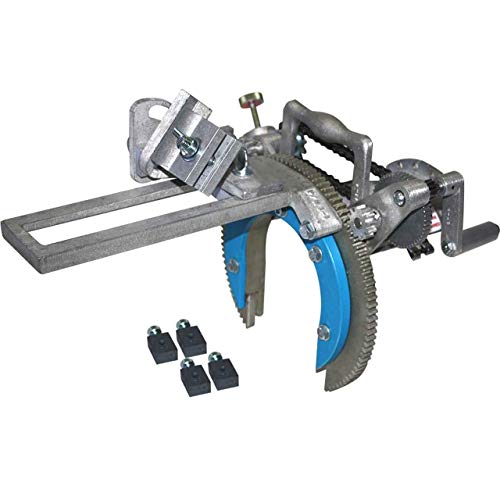
The HM00 model supplies a dual-function solution with a 2″ to 4″ range and a cuboid spacer system designed to minimize downtime when changing pipe sizes. The saddle and cuboids provide defined cut sizes, which can improve repeatability in batch runs or multi-size projects. This approach can be advantageous in shop environments where quick changeovers are common.
VEVOR Track Torch Burner

This track-based option offers a straight-track cutting setup with a 12-foot track and three tips for different flame characteristics. It supports 0.2″–4″ thick pipes and speeds of 2–30 in/min. The track design facilitates precise straight-line beveling and cutting on longer runs, useful for fabrication shops and pipelines in construction projects requiring reliable alignment over extended lengths.
Buying Guide: Key Considerations for Pipe Beveling Equipment
- Pipe size compatibility: Match the device’s supported diameters and thickness ranges to your typical job scale, whether 1/2″ to 4″ or larger diameters.
- Bevel angle options: Determine if you need fixed angles or adjustable ranges (commonly 0°–45°) to accommodate different fittings and welding requirements.
- Setup speed vs. precision: Evaluate how quickly you can set up on-site versus how finely you can control the bevel finish. Hinged saddles and sliding arms often speed up production without sacrificing accuracy.
- Mobility and weight: For fieldwork, consider portable, lightweight units with robust construction; larger, track-based systems suit shop or pipe rack environments.
- Power and fuel type: Decide between electric/manual versus flame-assisted methods. Gas-assisted bevelers offer rapid bevels on thick-walled pipes but require careful handling and ventilation.
- Tips and consumables: Check the availability and compatibility of replacement tips (e.g., propane tips) and whether the unit ships with multiple options for different materials.
- Reliability and support: Look for brands with field service support, spare parts availability, and clear warranty terms to reduce downtime.
When selecting a beveling machine, align the tool with your typical pipe sizes, project type, and work environment. For shop settings with frequent size changes, modular or multi-diameter systems can minimize downtime. For field welding tasks, lightweight, quick-setup models help maintain productivity without sacrificing joint quality. In many workflows, a combination of a handheld beveler for small-diameter work and a track or heavy-duty option for longer runs provides the best overall efficiency.