Choosing the right 50 gallon hydraulic tank depends on your truck configuration, mounting space, and cooling needs. This guide highlights five well-regarded options and explains who they’re best for. Each product is evaluated for durability, installation, and practical use in dump trucks, trailers, and live-floor systems. The goal is to help you pick a reservoir that maintains hydraulic pressure, prevents overheating, and fits your vehicle’s layout.
Buyer profiles:
– Fleet managers and operators needing upright behind-cab mounting for space-saving layouts.
– Road service and hauling professionals seeking durable aluminum reservoirs with good thermal management.
– Technicians requiring multiple NPT ports or specialized mounting brackets for custom installations.
- Recommended products: UR50A Upright Aluminum Reservoir (Buyers Products), SMC50A Side Mount (Buyers Products), 50 Gallon Upright Aluminum (Dreamdragon/National Drivetrain variants), UR50A (Mytee Products), SMC50AR (Buyers Products).
| Product | Mount Type | Best For | Key Benefit |
|---|---|---|---|
| Buyers Products UR50A | Upright | Limited rear space; need upright behind-cab mounting | Lightweight aluminum with enhanced oil cooling |
| Buyers Products SMC50A | Side Mount | Truck or trailer with side access | Dual 2″ ports for flexible plumbing |
| Dreamdragon 50 Gallon Upright | Upright | Space behind cab where height is available | Fully baffled for turbulence control |
| Mytee UR50A | Upright | Dump trucks and trailers needing sight/temperature gauges | Smooth oil fluid tank with gauge |
| Buyers SMC50AR | Rear-Port Saddle/Bracket | Semi trucks needing rear return ports | Internally baffled; corrosion-resistant |
Buyers Products UR50A 50 Gallon Upright Aluminum Hydraulic Reservoir Tank

Type: Upright aluminum reservoir designed to be mounted behind the truck cab. Benefits include reduced weight and efficient heat dissipation for consistent hydraulic performance. This tank is best for operators with limited horizontal space and a tall clearance behind the cab. Caution: upright designs can limit access for service on very short wheelbase vehicles.
Buyers Products SMC50A Side Mount Cylindrical Aluminum Hydraulic Reservoir

Type: Side-mount aluminum reservoir with dual 2″ NPT suction/return ports and a bottom drain. Best for trucks or trailers requiring side access and flexible plumbing routes. It’s lighter and corrosion-resistant, offering a clean, professional look. Limitation: side-mount configurations may require additional brackets or brackets, depending on chassis design.
50 Gallon Upright Aluminum Hydraulic Reservoir Tank With Gauge
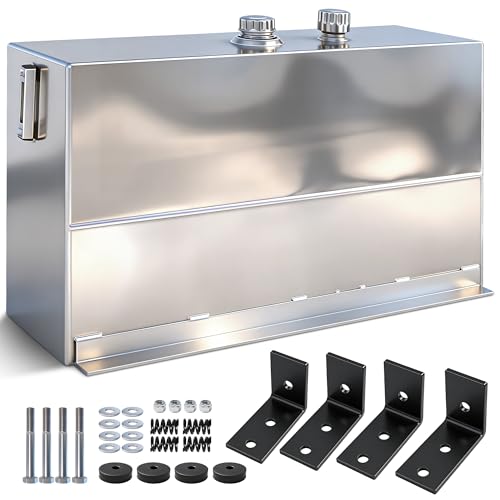
Type: Upright reservoir with a sight/temperature gauge and mounting hardware. Best for operators who need to monitor oil levels and temperature at a glance. The upright design saves space behind the cab and supports heavy-duty operation. Caution: color and finish may vary; ensure gauge compatibility with your system.
Mytee Products 50 Gallon Aluminum Upright Reservoir (A4000)

Type: Upright aluminum reservoir, 34x13x26 inches, includes a sight gauge for level and temperature. This option is well-suited for dump trucks and trailers needing a clear indicator of fluid status. Better for operators who value quick visual checks; caution: bottom and suction openings use 1-1/4″ threads, which may require compatible fittings.
Mytee Products SMC50A 50 Gallon Saddle Mount Reservoir
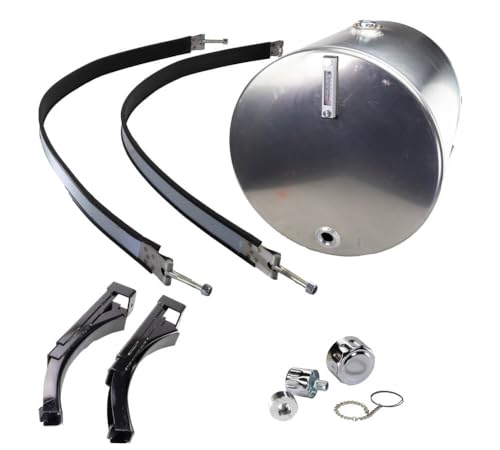
Type: Saddle-mounted aluminum reservoir with 2″ NPT return port and internal baffles. Best for semi trucks needing a compact, low-profile install with robust internal baffling to reduce sloshing. Limitation: installation may require precise saddle frame mounting hardware and brackets; verify compatibility with existing frame rails.
Buyers Products SMC50AR Aluminum Hydraulic Reservoir
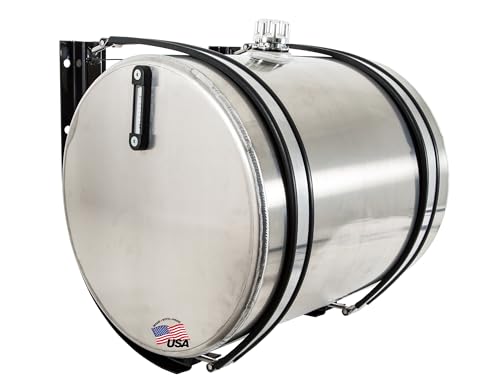
Type: 50 gallon aluminum reservoir with dual rear 2″ NPT ports, internal baffles, and mounting brackets. Best for semi trucks requiring convenient rear-port access and reliable baffling to minimize fluid movement. Useful for vehicles with rear engine access; caution: behind-the-cab mounting space must accommodate brackets and plumbing routes.
Buying Guide
Key purchase considerations include mounting geometry, port configuration, and cooling performance. Below are practical questions to help compare options.
- What mounting space do you have? Upright reservoirs save behind-cab space, while side-mount tanks use lateral room along the frame. Choose based on available clearance and service access.
- Which port configuration matches your hydraulic lines? Look for dual 2″ NPT ports if you need flexible plumbing or consider a model with extra bottom drain for easier maintenance.
- Is cooling important in your operation? Fully baffled designs reduce turbulence, improve oil cooling, and help maintain consistent hydraulic pressure under heavy use.
- What’s the maintenance visibility requirement? Tanks with sight gauges let operators monitor fluid levels without opening the system, reducing downtime.
- What is the expected life in harsh environments? Aluminum construction resists corrosion and is lighter than steel, which can impact fuel efficiency and mounting loads.
- Do you need integrated mounting hardware? Some models come with brackets and straps; others require separate components. Plan for compatibility with your truck or trailer frame.
FAQ
- What is the typical capacity of these tanks? These options are designed around 50 gallons, suitable for high-demand hydraulic systems on trucks and trailers.
- Why choose an upright versus side-mount reservoir? Upright tanks save height and back-cab space, while side-mounts can utilize side-frame space and offer easier plumbing access.
- Do all models come with mounting hardware? Some do, but several require you to source brackets or straps separately. Check the product listing for included hardware.
- What does “baffled” mean in hydraulic tanks? Internal baffles reduce fluid movement during vehicle motion, helping stabilize pressure and improve cooling.
- Are these tanks compatible with aftermarket O.E.M. systems? Many models are designed as universal replacements; confirm port size and mounting compatibility with your existing components.
- What maintenance is recommended? Regularly inspect fittings and seals, monitor fluid levels with sight gauges when available, and ensure vents or breathers are clean to prevent pressure buildup.