Answering the most common buyer question: which 1000 RPM PTO shaft is best for 1-3/8″ tractors and mid-sized implements? This guide focuses on durable, versatile PTO driveline shafts that support 1000 RPM operation, typical for tractors powering finish mowers, rotary cutters, and brush hogs. It highlights top picks for different needs, from adjustable lengths to slip-clutch options. Suitable buyers include small-to-midscale farms, landscapers, and hobby farmers seeking reliable, exchangeable drivelines and easy compatibility with 1-3/8″ 6-spline tractors and implements.
Summary of selected products:
- VEVOR PTO Shaft, 1-3/8″ 6 Spline, Series 4, 39″–55″ (1000 RPM)
- VEVOR PTO Shaft, 1-3/8″ 6 Spline, Series 4, 43″–61″ (1000 RPM)
- VEVOR PTO Shaft, 1-3/8″ 6 Spline, Series 5, 43″–57″ (1000 RPM)
- PTO Output Shaft, 1000 RPM (1-3/8″ Shaft, 20 & 21 Splines)
- PTO Shaft (1000 RPM) Fits Ford/New Holland
VEVOR PTO Shaft 1-3/8″ 6 Spline, 39″–55″ 1000 RPM
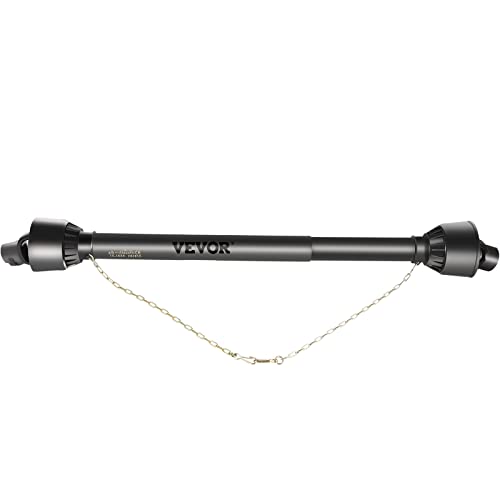
Best for: Small to mid-size tractors needing a compact 39″ (compressed) to 55″ (extended) PTO shaft. This Series 4 shaft uses a 20CrMnTi universal joint with a Q345 steel tube and 6-spline tractor end with a round implement end. It delivers strong torque at 1000 RPM with two-way speed compatibility. Selected for users prioritizing a robust, moderately long shaft with easy adjustability. Caution: Check your implement end type and ensure fit with your specific mower or rotary cutter model.
VEVOR PTO Shaft 1-3/8″ 6 Spline, 43″–61″ 1000 RPM
Best for: Users needing a longer extended length for larger implements while maintaining 1-3/8″ 6-spline compatibility. This Series 4 PTO shaft features a telescoping tube and universal joints, boosting adaptability for various woods, brush hogs, and finish mowers. It supports 1000 RPM with higher torque than some shorter models. Caution: Ensure the extended length fits the tractor rear PTO housing without interference.
VEVOR PTO Shaft Series 5, 1-3/8″ 6 Spline, 43″–57″ 1000 RPM

Best for: Those needing a slip-clutch equipped PTO shaft with 6-spline ends on both sides. The Series 5 design includes a slip clutch, improving engagement control and reducing shock on tractors and implements. This makes it a solid choice for heavier duties like rotary cutters. Caution: The slip-clutch adds complexity; proper adjustment is required to avoid clutch wear during operation.
PTO Output Shaft, 1000 RPM, 1-3/8″ Shaft, 20 & 21 Splines

Best for: Users needing a 1000 RPM output shaft with mixed spline configurations (20 & 21 splines). This can suit specific legacy tractors or implements that require a particular spline count. Caution: Verify spline compatibility with existing PTO yokes to ensure proper fit and safe operation.
PTO Shaft 1000 RPM, Ford/New Holland Fit

Best for: Ford/New Holland users seeking a straightforward 1000 RPM PTO shaft compatible with common 1-3/8″ interfaces. This option is a practical replacement choice when OEM parts are unavailable. Caution: Confirm the specific model year and PTO spline count of the tractor before ordering to avoid mismatch.
R38224 PTO Shaft 1000 RPM for John Deere

Best for: John Deere models requiring a 1000 RPM PTO shaft with a 21-spline 1-3/8″ configuration. This option is commonly used as a direct replacement for select Deere tractors. Caution: Verify exact John Deere model fit and spline orientation to ensure compatibility before purchase.
Buying Guide
- What spline count do I need? Most 1000 RPM units use 6-spline ends for standard tractors; check your tractor and implement ends (round vs. splined) to avoid incompatibility.
- What length should I choose? Compressed lengths around 39–43 inches and extended lengths around 55–61 inches cover many mid-range applications. Measure the distance between PTO yokes on your tractor and implement to pick the correct range.
- Should I select a slip-clutch? If you power heavy equipment (brush hogs, rotary cutters) with potential shock loads, a slip-clutch helps protect the drivetrain and reduces gearbox wear.
- End compatibility: Ensure both ends match your tractor PTO output and the implement input. Mismatched ends or spline counts can cause slipping or damage.
- Torque ratings: 1000 RPM shafts list higher torque capabilities than 540 RPM variants. Confirm the torque needs of your implement and tractor to avoid under- or over-engineering.
- Durability factors: Look for hardened universal joints (20CrMnTi) and robust steel tubes (Q345) for longer service life in field conditions.
- Maintenance: Regularly check for play, lubrication needs of universal joints, and inspect telescoping tubes for rust or deformation.
Frequently Asked Questions
- What is the common 1000 RPM PTO shaft size? Most common is 1-3/8″ diameter with 6-spline ends on both sides for standard tractors and implements.
- How do I know if a shaft fits my tractor? Verify the shaft diameter, spline count, and end type (round vs. spline) against your tractor model and implement. Refer to the tractor manual or manufacturer specs.
- What is a slip clutch and when should I use one? A slip clutch allows slip between the shaft and yoke under heavy loads to prevent sudden torque spikes. Use it when mowing large thick grass or brush with resistance.
- Can I mix spline counts? Mixing 20 or 21 splines with 6-spline ends is not recommended unless the implement and tractor are designed for those configurations.
- Are 1000 RPM shafts suitable for all implements? They are ideal for many mid-sized mowers and cutters, but some equipment still uses 540 RPM or alternative shaft designs. Verify your implement’s requirements.
- What maintenance is needed? Inspect joints and tubes for wear, keep components clean, and lubricate joints per manufacturer guidance to minimize wear.