Walk-in fume hoods provide expansive working space and powerful containment for chemical handling, welding, and particulate generation. This guide compares five reliable options to help American buyers choose the right model for a medium to large lab, workshop, or production space. The top picks emphasize strong airflow, durable construction, and easy maintenance. Best for: labs needing ample working room, versatile fume capture, and straightforward filter or pre-filter replacement schedules. The following table highlights key specs to compare at a glance.
| Product | Best For | Notable advantage | Limitations |
|---|---|---|---|
| VEVOR Ducted Fume Hood | Medium to large labs | Adjustable vertical airflow up to 3.9 m/s; built-in pre-filter | Requires regular filter replacement every 2–3 months |
| 40” Wide Ducted Fume Hood | Open workshops, chemical labs | Extra-wide 40″ opening; includes LED light | Curtains not included |
| Stainless Steel Square Fume Hood (39.4×19.7) | Industrial welding and laser tasks | Heavy-duty stainless steel; high-temp resistance | Smaller footprint than true walk-in designs |
| Stainless Steel Square Fume Hood (400x800mm) | Compact industrial spaces | Multiple size options; strong suction | Limited integration with large workflow areas |
| 360° Articulated Fume Extraction Arm | Localized smoke capture | Full 360° adjustability; flexible positioning | Not a standalone hood; arm requires mounting |
VEVOR Ducted Fume Hood With LED Light

Best for medium-sized laboratories needing adjustable airflow and integrated filtration. The VEVOR unit features a powerful centrifugal fan driving vertical airflow for efficient exhaust. A stepless speed knob allows precise fan control up to 3.9 m/s, reducing exposure to fumes. It includes a G1 pre-filter to capture 3–10 μm particles, helping keep the workspace cleaner. The frame uses powder-coated steel with a 304 stainless steel base for durability in high-usage environments. Best for: labs that require customizable ventilation without a bulky footprint. Caution: replace the pre-filter every 2–3 months to maintain efficiency.
40” Wide Ducted Fume Hood

Better for spaces that need wider capture without moving a larger hood. This unit features a 6″ exhaust collar and a 40″ wide opening, enabling broader coverage for multiple workstations or large projects. It includes an LED light for improved visibility during hazardous tasks. Note that vinyl curtains are shown in promotional images but are not included by default; they can be added separately if you need a more enclosed work area. Best for: labs performing broad fumes or multiple simultaneous tasks. Choose this if you require a wide intake with integrated illumination.
Stainless Steel Square Fume Hood (39.4×19.7)
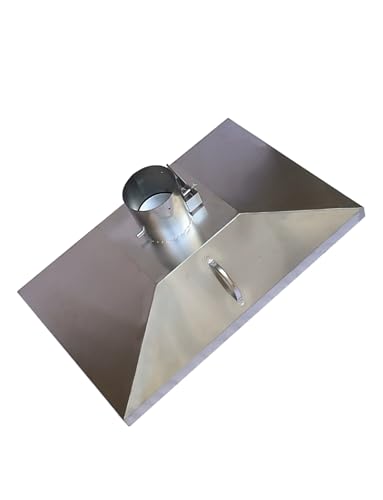
Industrial-grade choice for welding, laser cutting, and dust extraction. Constructed from stainless steel to endure high temperatures and corrosion. This hood offers a compact footprint with customizable sizes to align with existing ventilation design. Best for: smaller industrial setups needing robust corrosion resistance and heat tolerance. Limitation: may not provide the same expansive walk-in feel as larger models, but excels in focused containment.
Stainless Steel Square Fume Hood (400x800mm)

Another stainless option with multiple size choices to fit existing ventilation systems. The design emphasizes high-temperature resistance and efficient smoke extraction. Best for: applications requiring precise, localized fume capture within a modular lab layout. Limitation: selection variety may complicate matching to a specific exhaust system.
360° Articulated Fume Extraction Arm
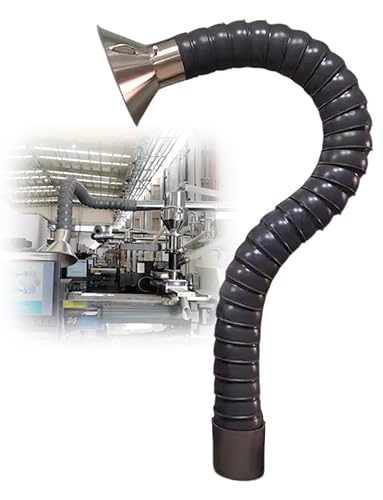
Best for focused smoke capture at the source in welding and fabrication environments. The arm offers a full 360° range of motion and a flexible gooseneck design to position the hood exactly where fumes originate. It is ideal for tasks that generate smoke or fine dust at a single workstation. Caution: this is an extraction arm, not a full stand-alone hood; requires mounting and integration with an exhaust system for optimal performance.
FIREGAS Range Hood (30 inch)

While designed for kitchens, this model demonstrates how ducted and ductless configurations can influence large airflow. It features a 450 CFM capability, three-speed exhaust, LED lighting, and a ductless option with a carbon filter. Best for: environments needing flexible mounting with a quieter operation and visible LED lighting. Limitation: primarily intended for culinary use and may not meet dedicated lab safety standards without proper adaptation.
Buying Guide: How To Choose The Right Walk-In Fume Hood
- What airflow do I need? Decide between adjustable vertical airflow and fixed high-volume exhaust. Consider room size, contamination levels, and required containment.
- Full-access workspace vs. built-in containment: Do you need a true walk-in with ample standing room, or is a large, wide hood sufficient for your tasks?
- Material and durability: Stainless steel frames resist heat and corrosion; check base materials and coatings for chemical compatibility.
- Maintenance needs: Pre-filters, filters, and routine part replacements affect long-term cost and downtime. Plan replacements and schedules.
- Installation considerations: Some units require dedicated ductwork; others offer ductless or convertible options. Confirm compatibility with existing ventilation.
- Safety and compliance: Ensure chosen models meet applicable lab safety standards and local regulations for chemical handling.
Frequently Asked Questions
- What is a walk-in fume hood? A walk-in fume hood is a large containment enclosure allowing operators to enter the workspace while materials are handled inside, providing vertical airflow and exhaust to minimize exposure to hazardous fumes.
- Do all walk-in hoods require ducting? Many ducted models require ductwork to exhaust fumes outdoors. Some units offer ductless configurations using carbon filters.
- How often should pre-filters be replaced? Replacement frequency depends on usage and contaminants but typically every 2–3 months for standard lab environments.
- Can I mix different fume capture solutions? Yes, for complex workflows you can combine a main hood with a localized capture arm to target specific fumes at the source.
- What maintenance checks are essential? Regularly inspect airflow, seal integrity, filter conditions, and ensure the exhaust system operates without unusual noise or vibration.
- Is a wider hood always better? A wider hood provides more working space and broader capture, but it also requires more room and power. Choose based on your workflow and space.