If you need reliable, easy-to-maneuver floor cleaning machines for large or small spaces, a walk-behind model is often the right fit. This guide highlights five top options, detailing who they’re best for and why they stand out. Each pick balances cleaning power, tank capacity, and maneuverability for different commercial environments—from warehouses to offices and retail spaces. The following quick-reference table shows the key strengths of each model to help you compare at a glance.
| Product | Best For | Key Strengths | |
|---|---|---|---|
| KARHDIR Walk-behind Floor Scrubber | Medium to large facilities with diverse hard floors | Wide cleaning path, large tanks, durable build | 15.9 gal solution / 18.5 gal recovery |
| SUNMAX 22″ Cordless Walk-Behind | Open areas and aisles in warehouses or retail | Cordless operation, long runtime, wide squeegee | Dual tanks 13.2/14.5 gal |
| Battery Powered Mini Auto Scrubber (Dapper) | Small offices, shops, tight spaces | Compact, fast recharge, easy to maneuver | 6.5 gal tank |
| KARHDIR C5 15″ Walk-Behind | Offices and small-to-medium spaces | Compact footprint, strong cleaning motor | 6 gal solution / 5 gal recovery |
| SUNMAX RT35 17″ Walk-Behind | Medium spaces needing complete set included | Comprehensive kit, sturdy 17″ path | 7.9 gal solution / 9.2 gal recovery |
KARHDIR Walk-Behind Floor Scrubber — 22″ Width
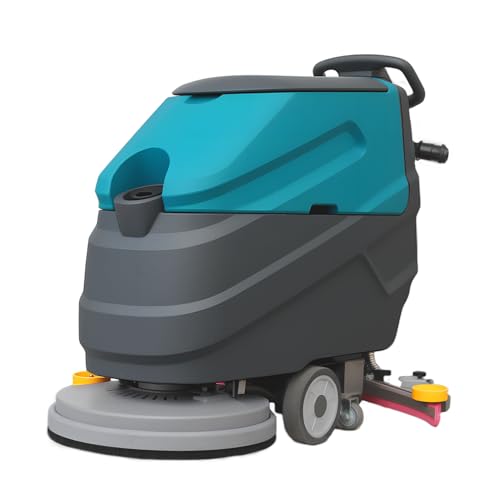
Best for facilities that require broad coverage without frequent refills. KARHDIR combines a 22″ cleaning path with a 31.5″ squeegee suction width, enabling efficient one-pass cleaning. It can handle up to an estimated 32,000 square feet per hour, making it suitable for mid-to-large areas with hard floors like concrete, tile, marble, epoxy, PVC, and sealed hardwoods. The large 15.9-gallon solution tank and 18.5-gallon recovery tank reduce downtime for refills. The corrosion-resistant housing and anti-collision design improve durability and maneuverability in busy cleaning cycles.
- Best for large open areas where one-pass coverage saves time.
- Better for diverse hard floors due to broad compatibility.
Caution: Ensure adequate space for turning and avoid tight corners where the anti-collision features may still require cautious navigation. The data indicates strong coverage, but maintenance is important for long-term reliability.
SUNMAX 22″ Cordless Walk-Behind Scrubber

Choose this for routine, daily cleaning in facilities with open aisles and limited electrical outlets. The 22″ scrubbing path works in tandem with a 31″ squeegee, allowing one-pass washing and water recovery. A 550W brush motor provides robust scrubbing action, and the 550W suction motor supports effective water pickup. Cordless operation removes cord-management hassles, making it ideal for warehouses, schools, hospitals, offices, and retail spaces that require mobility and steady runtime.
- Best for daily cleaning of large, open areas without cord constraints.
- Better for operators who need straightforward setup and maintenance.
Limitation: Runtime varies with battery condition and task intensity; plan for charging between heavy cleaning shifts to maintain consistent performance.
Dapper Supply Battery Powered Mini Scrubber (15″ Width)

Best for compact offices, retail spaces, and small restaurants where a small footprint matters. This compact scrubber features a 15-inch cleaning width, enabling easy navigation around furniture and tight corners. It delivers up to 12,900 ft² per hour, which is ample for many small-to-medium sites. The 24V power system supports up to 90 minutes of runtime with a 100-minute recharge time, making it practical for fast cleaning tasks without long downtime.
- Best for small spaces requiring high maneuverability.
- Choose this if you need a quick, target-cleaning tool without pulling larger machines.
Caution: While compact, consider floor area size; for very large spaces, a larger machine may be more efficient overall.
KARHDIR C5 15″ Walk-Behind Scrubber

This 15″ model balances compact size with solid cleaning power for offices, schools, and light industrial spaces. It features a 15″ cleaning width and 23″ squeegee width for even drying, making it suitable for smaller rooms where larger units would be unwieldy. The upgraded capacity tanks (6-gallon solution, 5-gallon recovery) reduce refills in mid-sized spaces. A 500W motor at 200 RPM helps lift dirt effectively on concrete, tile, and other hard floors up to roughly 24,000 sq ft per hour.
- Best for small-to-medium areas where space is at a premium.
- Choose this if you need reliable performance in tight layouts.
Caution: The 15″ width means more passes in very large spaces; pair with a larger-capacity unit for high-traffic areas.
SUNMAX RT35 17″ Walk-Behind Floor Scrubber

The RT35 kit is designed for facilities needing an inclusive cleaning package. It comes with a heavy-duty brush, pad holder, floor pads, squeegee assembly, battery, charger, and user manual. With a 17″ scrubbing path and a 22″ squeegee, it handles tile, concrete, vinyl, epoxy, terrazzo, and sealed wood floors in a single pass. A 7.9-gallon solution tank and a 9.2-gallon recovery tank keep cleaning momentum steady in medium-sized spaces, delivering up to 19,000 sq ft/h.
- Best for spaces that benefit from an all-in-one package straight out of the box.
- Better for facilities needing a ready-to-use solution with included consumables.
Limitation: Heavier bundled kits may require more storage space; ensure adequate room for the included components and battery charging.
Buying Guide
What size space will you clean? For large open areas, look for wider cleaning paths (20″–22″) and higher overall coverage per hour. For tight spaces, prioritize compact machines (15″–17″) with good maneuverability.
What tank capacity is needed? Larger solution and recovery tanks reduce refill downtime but add weight. Match tank sizes to your typical cleaning window and space size.
Corded vs. cordless: Cordless models offer easier movement and safer operation in wide aisles, but verify runtime aligns with your cleaning schedule. Corded units avoid charging downtime but require outlet access and cord management.
Floor types and maintenance: Check compatibility with your common floor surfaces (concrete, tile, epoxy, sealed wood, terrazzo). Anti-corrosion housings, durable squeegees, and reliable brushes extend life in busy facilities.
Economy of operation: Consider total cost of ownership, including refills, pad/brush availability, and replacement parts. A machine with easily sourced consumables minimizes downtime.
Best practice tips: Use the correct cleaning solution concentration for each floor type. Schedule routine maintenance checks on tanks and seals to prevent leaks and ensure consistent cleaning performance.
FAQ
-
What is a walk-behind floor scrubber best suited for?
Walk-behind scrubbers are ideal for medium to large area cleaning where a mop would be inefficient. They provide steady scrubbing action, consistent water pickup, and easier maneuverability in tight corridors compared with ride-on models.
-
How do I choose between cordless and corded models?
Cordless models reduce tripping hazards and cord wear, making them good for open spaces and aisles. Corded models can offer uninterrupted power for longer cleaning sessions, depending on cord length and outlet access.
-
Which tank sizes should I prioritize for high-traffic spaces?
Larger tanks (solution and recovery) minimize refills in busy environments. For small spaces, smaller tanks save weight and improve handling.
-
Are there safety considerations to address?
Always ensure cords are managed, operators wear appropriate footwear, and machines are turned off before refilling tanks. Test a small area first to avoid damage on sensitive floor surfaces.
-
How important is the squeegee width?
A wider squeegee improves water pickup in a single pass but can hinder maneuverability in cramped spaces. Balance squeegee width with your venue’s layout.
-
Can these machines handle porous or treated floors?
Most walk-behind scrubbers are designed for sealed and treated hard floors. Check manufacturer guidance for porous or unfinished surfaces to avoid damage or dye transfer.