Answering the practical question for professionals and serious DIYers: a walk-behind asphalt saw is the right tool for clean, straight cuts in asphalt and concrete. This guide highlights five top options, explains who each one suits best, and shows how to choose based on blade size, power, and ease of use. Ideal buyers include paving crews, road maintenance teams, and homeowners tackling large driveway or sidewalk projects. The quick-reference table below summarizes each pick at a glance.
| Product | Best For | Blade Size |
|---|---|---|
| Skil 7″ Walk Behind Worm Drive Skilsaw for Concrete – SPT79A-10 | General small to medium jobs, controlled cuts | 7″ (worm drive) |
| Skil 7″ Walk Behind Worm Drive Skilsaw for Concrete with Diamond Blade (SPT79A-10 & SPT4004) | Versatile cuts with diamond blade for hard materials | 7″ (diamond segment) |
| Stark USA 6.5HP Walk-Behind Concrete Floor Cutter | Smaller sites, easy maneuverability | 14″ blade |
| Tomahawk 6″ Early Entry Concrete Saw | Smaller, tight-entry cuts | 6″ blade |
| Husqvarna Walk Behind Concrete Saw, 14″ | Reliable, mid-size commercial work | 14″ blade |
Skil 7″ Walk Behind Worm Drive Skilsaw for Concrete – SPT79A-10
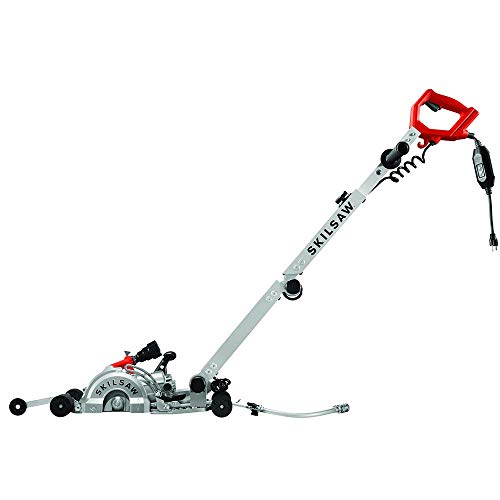
The SKIL SPT79A-10 is a purpose-built worm-drive walk-behind concrete saw designed for durability and consistent cuts. It features an adjustable, folding handle that can reach optimal height and then fold for transport, reducing setup time. A two-finger trigger helps reduce fatigue during longer jobs, while a wet/dry dust management system keeps cuts cleaner and extends tool life. This model is best for contractors who need a reliable, mid-range saw for straight, cleaner cuts in concrete and asphalt corridors, sidewalks, and pavements.
Who it’s best for: small to mid-size crews and serious DIYers who value a complete concrete cutting system with integrated dust control and ergonomic handling. Caution: ensure you have appropriate water management on site to maximize dust suppression and comply with local regulations.
Skil 7″ Walk Behind Worm Drive Skilsaw With Diamond Blade

This option pairs the same worm-drive core with a segmented diamond blade, expanding its capability on harder materials, including reinforced concrete. The adjustable, folding handle and two-finger trigger maintain the same ergonomic benefits as the standard SKIL model while providing enhanced cutting performance with a diamond blade. Best for users who frequently encounter tough, dense concrete or require longer continuous cuts without blade changes. Caution: diamond blades may require closer inspection for wear and proper mounting to prevent runout.
Who it’s best for: projects demanding tougher material handling and longer, straighter cuts. Choose this if you anticipate frequent diamond blade use or cutting through harder mixes. Limitation: higher blade cost and careful maintenance are recommended to preserve the blade’s life.
Stark USA 6.5HP Walk-Behind Concrete Floor Cutter
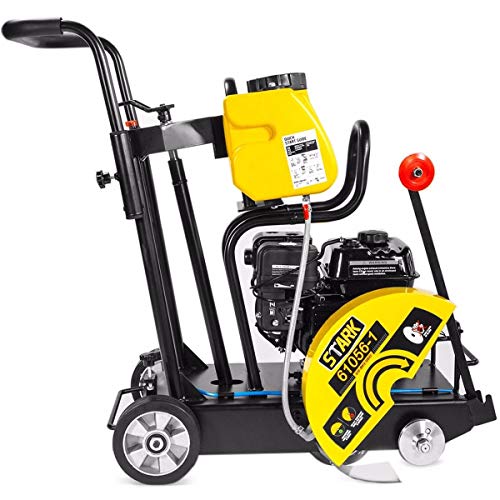
The Stark USA 6.5HP model targets smaller jobs with strong weight distribution and stable maneuverability. Its 14″ blade and a water-tank system support targeted cuts through concrete and asphalt, making it suitable for sidewalks and city streets. A dedicated saw position guide helps ensure straight cuts, and a rotating handle allows quick changes in cutting depth. This unit is best for operators needing straightforward operation and steady performance on compact or narrow projects.
Who it’s best for: crews working on smaller pavement repairs or residential driveways where maneuverability is essential. Caution: weigh the need for water for dust control versus portabilty; larger sites may require bigger blade capacity.
Tomahawk 6″ Early Entry Concrete Saw
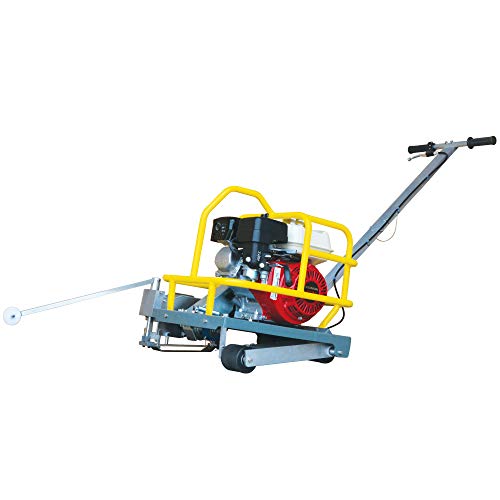
The Tomahawk Power model features a compact 6″ blade for tight entry work. Powered by a 3.5HP Honda GX120 engine, it delivers practical cutting power for narrow sidewalk intersections and edge work. It includes a 6″ blade and provides a compact option where access is limited and precision matters. Best for smaller projects or constrained spaces where larger saws cannot operate efficiently. Limitation: cutting depth is relatively modest, so it may require more passes on thicker sections.
Who it’s best for: operators prioritizing compact footprint and quick setup for tight cuts. Choose this for small sidewalks, joint cuts, or edge work where larger units cannot fit.
CORMAC CQ480 Walk Behind Floor Saw

The CORMAC CQ480 is a robust 20″ blade floor saw with a 13HP gasoline engine and integrated water tank. Its reinforced steel box frame is designed to minimize vibrations for straighter cuts and longer blade life. A user-friendly crank helps adjust cutting depth, and the package includes a 20″ concrete blade for immediate use. Best for mid-to-large scale projects where vibration control and blade stability directly influence outcomes. Limitation: heavier unit may require more handling and transport effort on busy sites.
EDiamondTools 18″ All Purpose Diamond Saw Blade

While not a saw itself, this 18″ all-purpose diamond blade complements walk-behind units for hard or reinforced concrete, asphalt, granite, terrazzo, and ductile iron piping. The blade features a 10mm segment height and 0.145″ segment width for efficient cutting in demanding materials. Best for users who want a high-performance blade option that can handle diverse substrates. Caution: always match blade type to material to maximize life and performance.
EDiamondTools 20″ All Purpose Diamond Saw Blade

Another versatile EDiamondTools option, this 20″ blade is designed for hard/reinforced concrete, asphalt, granite, and terrazzo with a 1″ arbor. It provides broad cutting coverage for larger jobs where a longer blade length translates to fewer passes and faster project completion. Best for larger commercial or industrial tasks where efficiency matters. Limitation: heavier blades require stronger power and handling precautions.
Buying Guide
- Blade size and depth: Larger blades cut deeper and cover more area per pass but require a more powerful motor and stable support. Choose 14″ or 20″ when possible for commercial work; smaller blades suit narrow or precision cuts.
- Power train: Gas-powered walk-behinds offer more torque for tough materials but are noisier and heavier than electric or battery options. For frequent outdoor use, gas models are common; for indoor or noise-sensitive sites, consider electric or low-emission options.
- Dust and water management: Wet/dry dust control systems improve cut cleanliness and tool life. Ensure water supply on site if you plan to use dust suppression, and verify local regulations require dust controls for cutting operations.
- Ergonomics and transport: Foldable handles, adjustable height, and balanced weight distribution reduce operator fatigue. Consider model weight if you must frequently move the saw on-site or store it in a limited space.
- Replacement parts and blades: Availability of genuine blades and easy-access maintenance extend the lifespan of the saw. If you expect a wide range of materials, choose a blade lineup that covers hard/reinforced concrete and asphalt.
FAQ
What size walk-behind saw should I choose for sidewalks?
A 14″ blade is a common choice for sidewalks, offering a balance between portability and cutting depth. For tighter joints, a smaller 6″ or 7″ model may be adequate.
Is a diamond blade necessary for asphalt cutting?
Diamond blades excel when cutting hard concrete or reinforced materials. For plain asphalt, standard blades can suffice, but a diamond blade provides cleaner cuts and longer life in tough mixes.
Do I need water for dust control?
Water helps suppress dust and cools the blade, extending its life. Check local regulations and site conditions to decide whether water offloading is feasible.
Can I transport a walk-behind saw by myself?
Some models offer folding handles and lighter frame builds, enhancing transport. For heavier units, seek assistance or use a dolly to reduce injury risk.
How do I choose between gas and electric walk-behinds?
Gas models provide more torque and mobility away from outlets, suitable for large outdoor sites. Electric options are quieter and better for restricted spaces or indoor work with proper ventilation.