Choosing the right vacuum switch for power tools can help prevent circuit overloads, reduce dust exposure, and keep your workshop running smoothly. This guide highlights top vacuum switch models designed to automate dust collectors and tool vacuums with delay off features and load-sensing capabilities. Each option below brings different installation styles, control modes, and protection features to fit various workshop setups. Review the selections to find the best match for your tools, workflow, and safety needs.
| Product | Brand | Key Feature |
|---|---|---|
| Automatic Vacuum Switch, Ortis Vacuum Switch for More Power Tools | Ortis | Auto/On/Off modes with 1s start delay and 7s off delay |
| O’SKOOL Automatic Vacuum Switch | O’SKOOL | UL-certified cord, automatic on, 10s off delay |
| Automatic Vacuum Switch, Ortis Dust Control Autoswitch | Ortis | LED indicators, adjustable actuation threshold, 3s/7s/10s off delay |
| SENCTRL Automatic Vacuum Switch AVS3000 | senctrl | Manual switch, three modes, overload protection, 1s on / 7s off delays |
| KTNNKG Automatic Remote Vacuum Switch | KTNNKG | Load sensing, remote control, 1s delay on / 7s delay off |
Below are five top choices that balance reliability, ease of use, and protective features. Each section includes a direct product link for quick reference, a visual, and a concise overview of how the switch can improve your workflow and safety.
Ortis Automatic Vacuum Switch With Two Tool Outlets

The Ortis switch provides two tool outlets, enabling multiple tools to operate without extra power strips. It supports three vacuum modes—automatic, off, and on—with auto switching to simplify operation. A 1-second delay at startup reduces surge risk, while a 7-second off delay helps maintain cleaner air by continuing vacuum clearance after tool shutdown. The dual-outlet setup helps organize cords and keeps your workstation tidy, supporting woodworking and dust collection tasks in one consolidated unit.
Installation offers two methods: screw fastening or traceless wall mounting with adhesive. This flexibility helps secure the device in varied workshop layouts, reducing installation time and improving durability. For users prioritizing productivity and air quality, this Ortis model delivers a practical blend of automatic operation and protective timing controls.
O’SKOOL Automatic Vacuum Switch
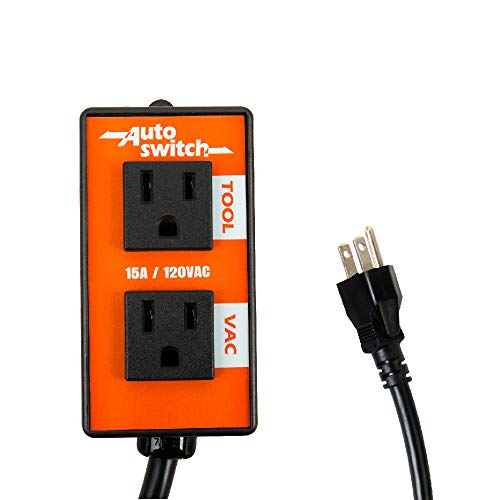
The O’SKOOL model emphasizes safety with UL-certified components and a flame-retardant shell. It automatically turns on the vacuum when a tool starts and delays shutting off for about 10 seconds, allowing dust and debris to clear the line. The package includes a 15-foot cord and installation instructions, making it suitable for setups where longer reach from power sources is needed. This switch stands out for its combination of safety, practical delay timing, and straightforward wiring.
With a focus on user health, the design aims to minimize airborne toxins and reduce noise during operation. It is well-suited for workshops where tool use is intermittent but dust control remains essential. The included installation guide helps new users complete setup confidently and quickly.
Ortis Automatic Vacuum Switch With Adjustable Actuation
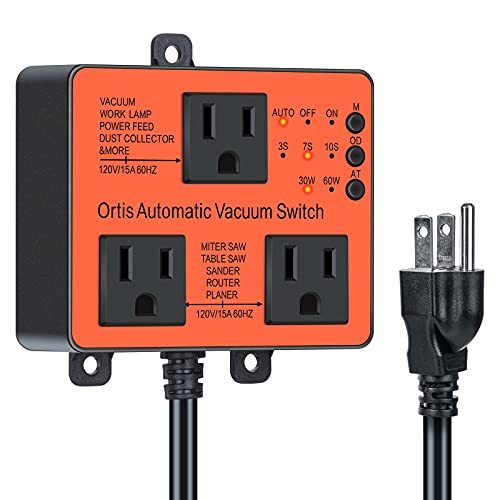
This Ortis model adds an adjustable actuation threshold (30W/60W) to tailor the vacuum’s response to your actual load. This prevents the vacuum from running too long or failing to shut off after a tool stops, which can improve energy efficiency and reduce noise. LED indicators clearly display mode and status, helping operators quickly verify current settings. The device maintains the familiar three-mode operation—Auto, Off, and On—and emphasizes precise control for busy workshops with varying tool loads.
Two tool outlets persist as a core feature, helping consolidate cords and devices. The adjustable threshold makes it a strong choice for users who run different tools and want to avoid unwanted vacuum activation or lingering dust collection after tool use ends.
SENCTRL AVS3000 Automatic Vacuum Switch

The SENCTRL AVS3000 pairs a three-mode control scheme with two tool outlets and overload protection. It uses a 19.7-inch UL-certified 14 AWG cord designed to handle substantial current, with a durable PC+ABS V0 flame-retardant shell to resist heat during extended use. A one-second on-delay combined with a seven-second off-delay helps balance immediate tool activation with thorough dust collection and cleanup after tool use ends. This model emphasizes safety and dependable operation in demanding woodworking environments.
Designed for professional use and DIY enthusiasts, the AVS3000 focuses on reducing dust and noise while protecting electrical circuits. The manual override option can be helpful in scenarios requiring continuous vacuum operation despite tool activity, providing flexibility for longer cleanup tasks where automatic switching might not be ideal.
KTNNKG Automatic Remote Vacuum Switch

KTNNKG combines load-sensing outlets with remote control, delivering a 1-second startup delay and a 7-second stop delay to ensure debris is cleared after tool cessation. The remote control capability allows operators to turn the device on or off without approaching the panel, which can improve safety and convenience in larger workshops. As a 120V/15A/60Hz unit, it is designed for typical American workshop power standards and can handle substantial dust-collection loads.
By offering load sensing, the KTNNKG unit helps coordinate tool and vacuum activity, reducing the likelihood of simultaneous power-on events that could trip circuits. The included delay timings support steady cleanup and safer air quality in busy environments where multiple tools are in frequent use.
Buying Guide: Key Purchase Considerations
When selecting a vacuum switch for power tools, consider how you work, the tools you use, and your safety priorities. The following factors can help you compare models and choose the best fit for your shop.
- Number of tool outlets: If you run multiple tools at once, choose a switch with two outlets to simplify wiring and reduce cord clutter.
- Mode options: Look for Auto, On, and Off modes, plus a reliable auto-switch feature to ensure the vacuum activates when a tool starts and clears air when it finishes.
- Delay timings: Short on-delays prevent immediate surges, while longer off-delays help finish clearing dust. Adjustable delays offer flexibility for varied tasks.
- Load sensing: A load-sensing outlet helps prevent circuit overload by delaying vacuum operation when high-current tools start.
- Safety and build quality: UL certification, flame-retardant housings, and robust cords reduce risk and improve durability in workshop environments.
- Installation simplicity: Screw-fixed versus adhesive mounting affects how you install in existing spaces; consider your wall material and layout.
- Cord length and reach: Longer cords are helpful in larger shops, but ensure the unit’s cord length matches your power source placement.
In practice, selecting a model with adjustable actuation thresholds and variable off-delays provides the most versatility across different projects. For workshops prioritizing air quality and dust control, a device with a prompt startup delay and a generous shutdown delay can minimize dust escape and reduce noise.
Always follow manufacturer installation instructions and safety guidelines when wiring these switches into your dust collection system or shop vac. Regular checks for wear on cords and connectors help maintain safe operation. By aligning a switch’s features with your workflow, you can improve efficiency, reduce dust exposure, and protect your electrical system from overloads.