Choosing the right vacuum pump for a rotary evaporator is essential for efficient distillation, solvent recovery, and safe lab operation. This article highlights five strong options that balance oil-free reliability, pumping speed, and compatibility with common lab solvents. Each entry includes core features to help you compare performance, maintenance needs, and suitability for dining, beverage, or pharmaceutical testing environments.
| Product | Brand | Model | Key Benefit |
|---|---|---|---|
| JOANLAB Oilless Vacuum Diaphragm Pump | JOANLAB | VP-30L | High flow (30L/min) and oil-free operation |
| Pazcii 160W Diaphragm Vacuum Pump | Pazcii | 160W/30L/min | Quiet, durable, oil-free with built-in filter |
| Win 24L Lab Diaphragm Vacuum Pump | Win | Oil Free 24L | Compact, silent, 24L/min for standard tasks |
| YUCHENGTECH 15L SHZ-(III) | YUCHENGTECH | SHZ-(III) 15L | Multi-tap, corrosion-resistant materials |
| Welch Vacuum 2546B-01 | Welch Vacuum | 2546B-01 | Standard-duty, precise vacuum with gauges |
When evaluating pumps, consider compatibility with your rotary evaporator setup, noise levels, maintenance needs, and the ability to run continuously if your workflow includes long distillation runs. The options below cover a range of capacities and use cases, from oil-free systems ideal for solvent-sensitive work to compact models that fit snugly on crowded benchtops.
JOANLAB Oilless Vacuum Diaphragm Pump (30L/min)

This JOANLAB model uses an oil-free diaphragm design, delivering a clean vacuum environment suitable for filtration, distillation, and sample pretreatment. It supports both positive and negative pressure tasks and is designed to handle regular lab workloads without frequent oil changes. The VP-30L is praised for its compact size, making it a practical choice for labs needing a reliable, low-maintenance pump for rotary evaporators and related processes. Applications span essential oil extraction, e-juice production, and general lab filtration tasks.
Pazcii 160W Oil-Free Diaphragm Vacuum Pump

Powered by a robust 160W motor, this Pazcii pump delivers up to 200 mbar ultimate vacuum with a pumping speed of approximately 7.93 gal/min. Its aluminum construction promises durability and wear resistance, while its oil-free operation minimizes maintenance and reduces environmental impact. A built-in filter helps maintain the integrity of pumped gases, aligning with safety and cleanliness standards in distillation setups and filtration work often performed with rotary evaporators.
Win 24L Lab Diaphragm Vacuum Pump

This 24L/min, oil-free unit provides versatility for vacuum filtration, distillation, and rotary evaporator applications. Its compact form and quiet operation make it a good fit for busy labs where space and noise are considerations. While it is suitable for many general vacuum tasks, users should note its note cannot handle strongly corrosive gases, so solvent compatibility should be matched to the system’s chemical profile.
YUCHENGTECH 15L SHZ-(III) Desktop Vacuum Pump
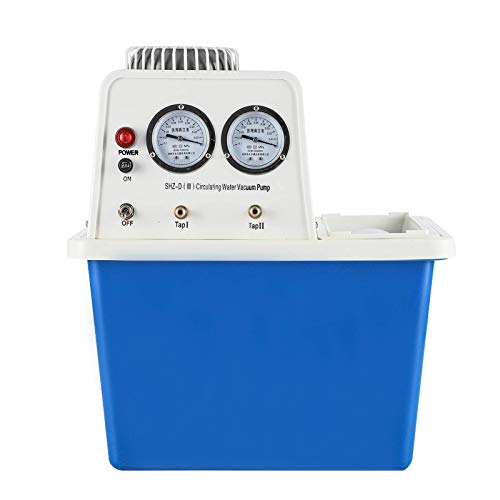
Designed for multi-purpose use with rotary evaporators and glass reactors, this model features multiple taps for flexible connections and an emphasis on corrosion resistance. The SHZ-(III) series offers dual vacuum meters and separate taps that can be used individually or together, enabling precise control in suction and pressure operations. It is well-suited for labs needing adaptable vacuum support across different distillation tasks.
Welch Vacuum 2546B-01 Standard Duty Pump

The Welch 2546B-01 is a standard-duty, single-head pump designed for vacuum and pressure applications, including gel dryers and rotary evaporators. It offers a free air displacement of 46 LPM and a vacuum limit around 60 Torr, with manually adjustable vacuum and pressure gauges. Its robust design makes it a common choice in labs that require dependable control during distillation and filtration tasks, though users should consider its maintenance needs for continuous high-demand use.
Buying Guide: Key Considerations For Vacuum Pumps With Rotary Evaporators
Selecting the right pump involves balancing performance, maintenance, and safety. Here are several angles to consider:
- Oil-free vs oil-sealed: Oil-free diaphragms reduce maintenance and solvent contamination risk, but some applications still prefer oil-sealed pumps for very high vacuum or extended continuous operation. For most rotary evaporator setups, oil-free models offer adequate performance with easier upkeep.
- Pumping speed and ultimate vacuum: Higher pumping speed (L/min) speeds up cycle times, while the ultimate vacuum (the lowest achievable pressure) matters for delicate distillation and solvent recovery. Match these specs to the viscosity and volatility of solvents used.
- Noise and footprint: Compact, quiet pumps help maintain a comfortable lab environment and allow closer placement to the evaporator. Consider whether your benchtop has enough clearance for air exhaust and connections.
- Material compatibility: Some solvents (acetone, ether, chloroform) can affect pump components or seals. Choose corrosion-resistant materials or ensure compatibility with your solvent profile.
- Maintenance and serviceability: Oil-free pumps often require occasional filter checks. Look for built-in filters and accessible maintenance procedures to minimize downtime.
- Connectivity and ease of use: Multi-tap options and integrated gauges provide more control during complex distillations. Ensure the pump connectors fit your existing hoses and clamps.
- Durability and warranty: A robust frame and quality diaphragms contribute to long service life in busy lab environments. Check warranty terms and replacement parts availability.
For labs prioritizing low maintenance and solvent-friendly operation, the JOANLAB and Pazcii options provide oil-free delivery with strong performance suitable for routine rotary evaporation tasks. The Win 24L and YUCHENGTECH models offer compact forms and flexible connections that suit smaller facilities or shared equipment spaces. The Welch 2546B-01 provides a solid, standard-duty alternative when a slightly higher intake and operator gauges are beneficial for process monitoring.