Whether you’re repairing a bumper, bonding ABS parts, or fabricating precise plastic joints, an ultrasonic plastic welding machine can speed up production with clean, fast welds. This guide highlights five top options, clarifying who each product suits—DIY hobbyists, small shops, or industrial users. The selections focus on 28 kHz systems and versatile heads, power range from 220W to 1200W, and adjustable features that aid in material-specific welding. Use this overview to compare capabilities, compatibility, and practical limitations before purchase.
| Product | Brand | Key Feature |
|---|---|---|
| TBVECHI Ultrasonic Plastic Welder | TBVECHI | 28KHz, 700W, portable handheld |
| 700W AC110V Welding Machine | Gosangom | 10 welding heads, 2-12 mm versatility |
| BAOSHISHAN Ultrasonic Spot Welder | BAOSHISHAN | Multiple power levels, adjustable frequency |
| ANXYYDS Ultrasonic Spot Welder | ANXYYDS | 1200W, 35KHz, fast cycles |
| ULTRASONIC Welder Kit | MIOUYTRT | 10 heads, LCD display, 28KHz |
TBVECHI Ultrasonic Plastic Welder — 28KHz, 700W Handheld

This handheld welder operates at 28 kHz with 700 watts of output, designed for plastics such as ABS, PS, PC, PP, and PE. It is best for small-scale, on-the-go spot welding tasks where a compact tool is advantageous. The device includes a robust, foldable cable for easy maneuvering in tight spaces. Choose this if you need a portable welder for quick field repairs or hobby projects.
Best for: DIY repairs and small shop tasks requiring mobility and straightforward operation.
Caution: Handle with care to avoid misalignment during clamping, as the portable design relies on operator steadiness for consistent welds.
700W AC110V Welding Machine — Ultrasonic Spot Welder
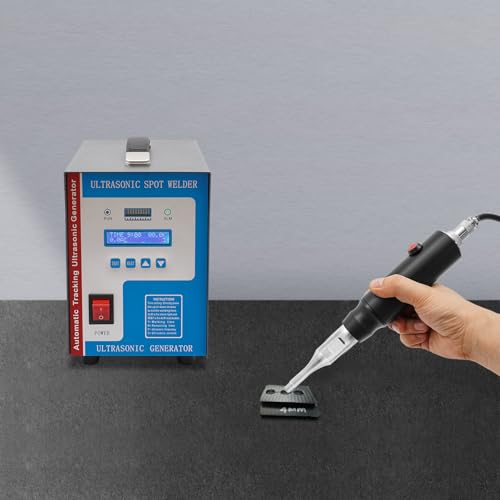
This welding machine offers 700 watts of power and a 110V input, with ten different welding heads to handle materials from 2 to 12 mm thickness. It is well-suited for small to mid-sized shops performing diverse plastic welding tasks, including DIY applications and professional setups. The multiple heads provide flexibility when switching between thicknesses and joint types.
Best for: Users needing a versatile, multi-head solution for various plastic thicknesses.
Caution: Check head compatibility with your target plastics to ensure consistent results across different applications.
BAOSHISHAN Ultrasonic Spot Welder — Adjustable (500W/600W/700W/800W)
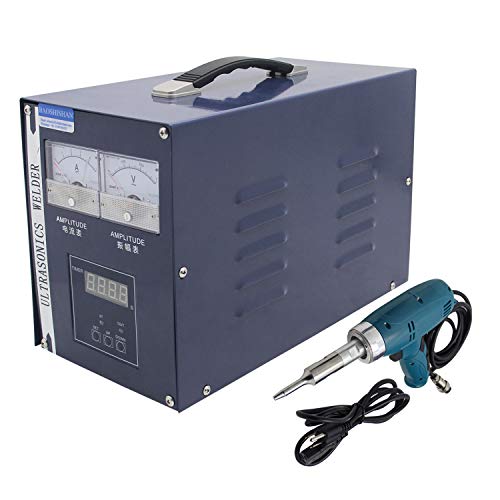
This customizable welder provides four power modes (500W to 800W) at 28 kHz, with options that suit different welding heads and materials. It is ideal for users who know their material type and need a tailored power setting for consistent joints. This flexibility makes it appealing for semi-professional environments or workshops that handle varied plastics.
Best for: Users who require a configurable power range to suit specific materials and joint types.
Caution: Customization requires input on welding heads and material; misconfiguration can affect weld integrity.
ANXYYDS Ultrasonic Spot Welder — 1200W, 35KHz
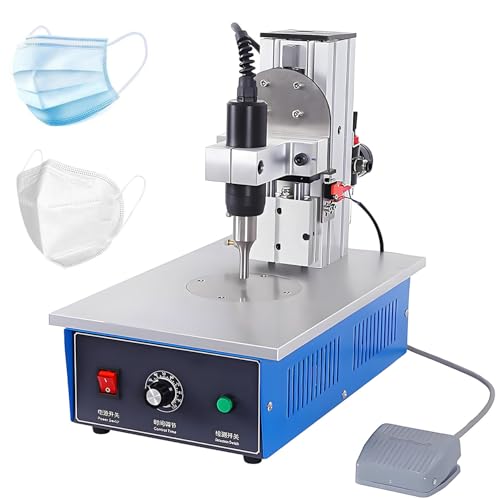
With 1200 watts of power at 35 kHz, this welder delivers fast cycle times for welding nylon and other thermoplastics. The unit is built for higher throughput and industrial-like performance, making it better for larger projects or production-like environments. An electronic pedal option supports hands-free operation for repetitive tasks.
Best for: Higher-demand projects where speed and strong welds on nylon and similar plastics are required.
Caution: Higher frequency and power can introduce more complex setup; ensure proper safety and training for operators.
Ultrasonic Welder Kit — 700W, 28KHz, 10 Heads

This 700W handheld welder comes with 10 interchangeable heads and an LCD display. It enables precise control over welding time and current, with real-time monitoring. The device is suitable for diverse projects, including electronics enclosures, textiles, and ABS/PVC assemblies. The kit’s versatility supports both delicate bonding and sturdy joins.
Best for: Professionals needing a comprehensive kit with interchangeable heads and monitoring features.
Caution: LCD and control systems require careful calibration; improper settings may affect weld quality.
Buying Guide: Key Purchase Considerations
What power level do you need? Higher power (500W–1200W) enables faster welds and thicker materials but demands more careful handling and longer cool-down. For hobby projects, 300–700W models often provide sufficient speed with easier control.
Which frequency matters? 28 kHz is common for general plastics; higher frequencies (like 35 kHz) can offer finer control on delicate materials but may reduce penetration depth. Match frequency to the material and thickness of joints.
How important are interchangeable heads? Multiple heads expand material compatibility and joint types. If you weld different plastics or thicknesses, a kit with 8–10 heads provides greater flexibility and reduces the need for separate devices.
Is portability a priority? Handheld, cordless, or foldable designs improve maneuverability in tight spaces or on-site work. For shop use, a bench-mounted unit may offer steadier welds and repeatable results.
What safety features matter? Look for overheat protection, current monitoring, and clear fault alarms. Safety interlocks and automatic shutoff can prevent accidental damage to delicate components.
What materials will you weld? ABS, PS, PC, PP, PE, PMMA, nylon, and PVC are common targets. Confirm the machine’s optimum operating range and compatible horn sizes for your typical plastics.
What about warranties and support? Since these devices involve high-frequency energy, ensure the seller offers clear documentation, spare parts, and responsive support for maintenance and horn replacements.
Common Scenarios And Recommendations
- Small workshop or hobbyist repair: TBVECHI 700W handheld offers portability with solid performance for quick field tasks.
- Varied thickness tasks in a shop: Gosangom with 10 heads provides broad compatibility for 2–12 mm parts.
- Custom material needs: BAOSHISHAN 500–800W with adjustable frequency suits precise projects and material-specific welds.
- High-speed production: ANXYYDS 1200W at 35KHz supports rapid cycles and high throughput for nylon fabrics and thermoplastics.
- Comprehensive kit with monitoring: MIOUYTRT 700W with LCD display and 10 heads enables precise, monitored welding across applications.
FAQ
- What is the typical use of an ultrasonic plastic welder?
Answer: It uses high-frequency mechanical vibration to create a molten weld at the joint surface, joining plastics without adhesives or screws. - Do I need a specific wattage for thin plastics?
Answer: Lower wattage (around 200–500W) can be sufficient for thin materials; higher wattage is better for thicker parts or faster cycle times. - Are interchangeable heads essential?
Answer: For versatile tasks and different material thicknesses, yes; heads determine the weld area and effective material compatibility. - Can these welders be used on nylon?
Answer: Yes, several models are designed for nylon and other thermoplastics with appropriate frequency and power settings. - Is safety training required?
Answer: Basic training on operation, heat management, and horn handling is recommended due to the energy involved in ultrasonic welding. - Do these units offer monitoring features?
Answer: Some models include LCD displays and fault alarms for real-time monitoring of frequency, current, and time.