Answering the need for dependable, tractor-mounted spraying, this guide highlights five top 3-point hitch sprayers that suit different farm sizes and spraying tasks. Each option is evaluated for capacity, pump performance, boom design, and ease of use. The aimed buyer profiles range from small hobby farms to larger acreage operations. Use the comparison table below to quickly scan key specs and decide which model fits your equipment and spraying goals.
| Product | Tank Size | Pump Type | ||
|---|---|---|---|---|
| Fimco 5303244 | 45 gal | 2.4 GPM | 4-nozzle folding | Acreage with moderate spray needs |
| Fimco 5303252 | 65 gal | Hypro 6-roller | 7-nozzle folding | Mid-size farms needing higher flow |
| NorthStar 3-Pt. Boomless | 55 gal | 2.2 GPM | Boomless | Fence lines and wide-area coverage |
| Fimco 5303763 | 110 gal | HYPRO 6-roller | 1025FX4 boom | Large acreage spraying |
| NorthStar Tow-Behind | 31 gal | 2.2 GPM | Breakaway boom | Truck-side or trailer setups |
Fimco 45 Gallon 3-Point Sprayer
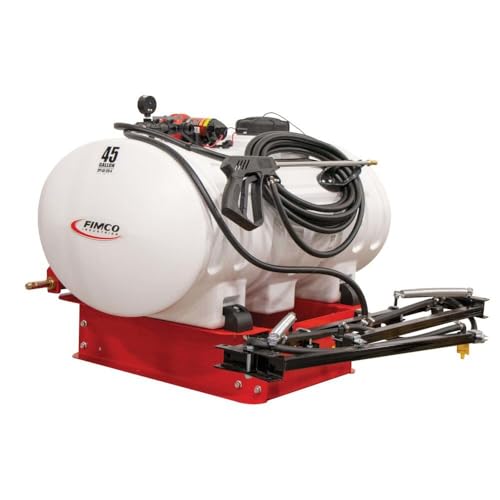
This 45-gallon unit uses a 12V 2.4 GPM pump for steady spray performance. The fan-cooled diaphragm design helps maintain reliability during extended operations. A deluxe pistol grip wand supports spray precision in field conditions. Best for small to mid-sized farms needing dependable, moderate-volume spraying on Category 1 implements.
- Best for: small to mid-size tractors, acreage with moderate spraying tasks
- Selected for balanced capacity, reliable pump, and comfortable spray wand
Fimco 65 Gallon 3-Point Sprayer Complete

This 65-gallon model features the Hypro 6-roller cast iron pump delivering up to 9.76 GPM at 540 RPM, and a 12-foot coverage foldable boom with seven nozzles. Durable UV-resistant tank and quick-clean design suit farms that need higher flow and broader reach. Best for small-to-mid-sized operations seeking higher capacity without upgrading equipment scale.
- Best for: farms needing higher flow and broader spray reach
- Selected for high-capacity pump and versatile 12 ft coverage
NorthStar 3-Point Boomless 55-Gallon Sprayer

Featuring a 55-gallon tank and a 12-volt diaphragm pump, this boomless sprayer covers wide areas with a 14-foot spray width. The unit includes a remote control switch for easy operation and is best for perimeter applications, pasture borders, and fence lines. Caution: boomless design requires careful nozzle control to avoid overspray in tight spaces.
- Best for: fence lines and wide-area coverage without a boom
- Selected for ease of mounting and boomless versatility
Fimco 110 Gallon 3-Point Tractor Sprayer

This 110-gallon system uses the HYPRO 6500C pump to deliver up to 18.2 GPM with a PTO quick-coupler, supporting high-volume weed control and fertilizer applications. The 1025FX4 10-nozzle foldable steel boom provides 16.7 feet of coverage with air-induction tips to reduce drift. Best for large acreage and heavy spray tasks, where consistent distribution matters.
- Best for: large farms needing high flow and wide coverage
- Selected for robust pumping and low-drift spraying
NorthStar Tow-Behind 31-Gallon Sprayer

Designed for tow-behind setups, this 31-gallon sprayer uses a 2.2 GPM pump with a spring-loaded breakaway boom and 120-inch spray width. The rugged cart includes a large 7.5-inch lid and thick-walled tank for UV and chemical resistance. Best for trailer-ready setups and large property spraying from a secondary vehicle.
- Best for: tow-behind or vehicle-towed spraying on larger properties
- Selected for breakaway boom protection and wide coverage
Buying Guide
What capacity suits your operation?
Smaller farms typically benefit from 45–65 gallon tanks for manageable refill cycles. Larger farms may require 110 gallons or more to minimize downtime. Consider your spray schedule, field size, and refill logistics when selecting capacity.
Which pump type matters?
Diaphragm pumps are common for agricultural sprays due to reliability and chemical compatibility. Multi-roller piston pumps offer higher flow (GPM) for fast coverage but can require more maintenance. Choose a pump that balances flow, chemical compatibility, and serviceability for your needs.
Boom design and spray width
Four- or seven-nozzle folding booms provide broader coverage and better drift control, while boomless options simplify mounting and reduce mechanical components. For fields with obstacles, a breakaway or boomless design can minimize damage and downtime.
Tractor compatibility and hitch category
Most models here are Category 1 3-point hitch compatible, suitable for smaller tractors. If you operate larger machines, verify hitch compatibility and PTO connections. Ensure your implement mounting aligns with your tractor’s hydraulic and electrical systems.
Ease of use and maintenance
Look for features like quick-clean drain ports, accessible spray wands, and clear fluid monitoring. A compact design with user-friendly controls reduces operator fatigue and increases spraying accuracy over long days in the field.
Safety and drift management
Air-induction or low-drift nozzle options help reduce chemical drift. Confirm if the sprayer supports adjustable spray pressure and nozzle flow to tailor coverage to specific crops or weed targets.
FAQs
- Q: What is a 3-point sprayer best used for? A: They are designed to attach to Category 1/2 tractors for field spraying, weed control, and fertilizer applications over various acreages.
- Q: How do I choose between a boom and a boomless sprayer? A: Boom sprayers offer precise coverage on wide fields; boomless sprayers excel near fences or obstacles and reduce mechanical components.
- Q: What maintenance does a 3-point sprayer require? A: Regular pump checks, nozzle cleaning, drain port maintenance, and inspection of hoses and fittings for leaks.
- Q: Can these sprayers handle fertilizers and chemicals? A: Many models use compatible pumps and UV-resistant tanks designed for agricultural chemistries; verify chemical compatibility with each model’s materials.
- Q: Are there safety considerations for drift control? A: Yes, using air-induction nozzles, proper nozzle spacing, and correct spray pressure reduces drift and protects non-target areas.
- Q: Do these units require professional installation? A: Basic mounting and hose connections are typically user-performed, with some setups needing tractor hydraulic or PTO integration.