If you need clean, straight cuts on pipes, plates, or beams, a track torch burner offers precise control, portability, and consistent performance. This guide highlights five top options and explains who they’re best for. Each product is evaluated on durability, track length, cutting thickness, and ease of use to help you compare quickly. The buyer will appreciate clear takeaways like “best for portability” or “best for thicker cuts.” A quick summary table is provided below to compare core specs at a glance.
| Product | Track Length (total) | Cutting Thickness | Best For | Notes |
|---|---|---|---|---|
| LEHUNDI IK12 | 360 cm | 0.23″–4″ | Industrial precision on thick materials | Aluminum, 4 tracks included |
| BLUEROCK CG-30 | 12 ft | 8–100 mm | Complete straight-line kit | Motorized option with full kit |
| VEVOR CG1-30 | 12 ft track | 0.2″–4″ | Versatile pipe and straight cuts | Includes 3 tips |
| LEHUNDI CG1-30 (Semi-automatic) | 70 cm per track, up to 210 cm with 3 tracks | 8–100 mm | Compact, lightweight for field use | Dual track heads possible |
| LEHUNDI Automatic Track (3 tracks) | 3 x 27.55″ tracks | 8–100 mm | Low-profile, portable multi-track | Acetylene/oxygen compatible |
LEHUNDI IK12 Track Torch Burner Cutting

The IK12 model combines durable aluminum construction with a long 360 cm track length (four 90 cm sections) for extended straight cuts. It supports cutting steel up to 4 inches thick and offers adjustable speeds from 6″ to 31.4″ per minute. A built-in cooling fan and an imported AC motor support continuous operation, making it suitable for demanding shop work or field projects. Best for: shops needing robust, precise straight cuts on thick steel with extended track real estate.
Best for: users who require a high level of stability and long cutting runs without frequent track reconnection. Limitation: heavier setup compared to ultra-portable single-track units due to the longer track length, which can affect transport.
BLUEROCK CG-30 Straight Line Track Kit

This complete straight-line kit includes a 120V motorized machine, a 12′ track set, torch head, hose valve assembly, and cutting tips. The kit is designed for reliable straight cuts with a robust torch head and standard fittings, providing a turnkey solution for metal shops. Best for: those who want a ready-to-use kit with a full track system and dependable performance. Limitation: higher initial cost for a full kit; ensure compatibility with your preferred power source and gas supply.
VEVOR Track Torch Burner CG1-30

The VEVOR CG1-30 combines a 12-foot straight track with a 0.2″–4″ cutting range and a 45° bevel capability. It ships with three tips (propane variants) to adapt to different materials and flame requirements. Best for: users who need adjustable flame performance and versatility across various pipe and plate sizes. Limitation: maximum speed is 2–30 in/min, which may be slower for very large projects compared to higher-speed systems.
LEHUNDI CG1-30 Semi-Automatic Track Torch

This semi-automatic unit uses an aluminum alloy body for stability and portability. It can operate with acetylene and optionally CO3 for propane, with a 8–100 mm cutting range and a speed range of 50–750 mm/min. It features three tracks totaling 210 cm and includes connector ends for extended rail systems. Best for: fieldwork where a lighter, compact torch with extension options is preferred. Limitation: avoid opening the oxygen valve too wide and follow the manual for safe operation.
LEHUNDI Automatic Track Torch With 3 Tracks
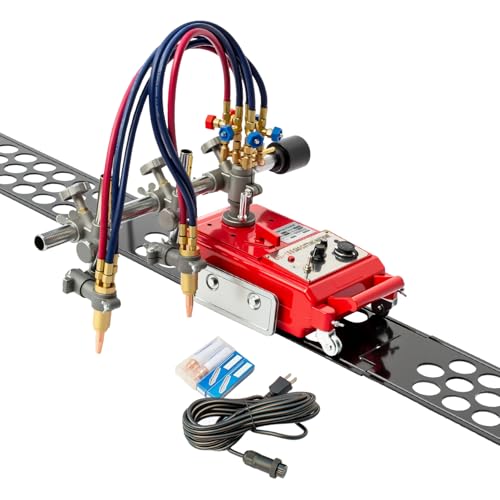
This portable, three-track system offers automatic flame cutting with acetylene and oxygen. It includes three 27.55″ (70 cm) tracks, making it a compact solution for smaller shops or on-site work. Best for: users needing a lightweight, easy-to-transport setup with decent cut capacity. Limitation: shorter track length may require more frequent repositioning on longer runs.
Buying Guide: Key Considerations For Track Torch Cutters
- Track length and stability: Longer tracks reduce the need to stop and re-align, but increase transportation effort. Look for aluminum frames for light weight and rigidity.
- Cutting thickness range: Ensure the machine covers your typical thickness. Most units here handle 0.2″–4″ thick steel; verify if you frequently cut near the upper limit.
- Power and motor type: A wired 110V supply with a robust motor and cooling fan supports continuous operation. Consider a machine with built-in cooling for hot-work conditions.
- Tips and gas compatibility: Check the included tips and whether the unit supports acetylene, propane, or both. Swapping tips should be quick and tool-free where possible.
- Portability vs. capacity: Fieldwork benefits from lighter, easily transportable units, while shop work may prioritize longer tracks and motorized drives.
- Upgrade paths: Some kits allow extending rails or adding second torches for higher throughput. Consider available add-ons and future expansion.
Frequently Asked Questions
- What is the typical maximum cutting thickness for these track torches? Most models handle roughly 0.2″ to 4″ thick steel, with some variants reaching near 4″ under optimal conditions.
- Do these systems require special gas setups? Many units support acetylene and oxygen; some also accommodate propane with a CO3 nozzle. Always follow manufacturer guidelines for gas mix and pressures.
- Are the tracks extendable? Several kits include multiple track sections; some models allow adding more rails for longer straight cuts.
- Is a motorized track advantageous? Motorized drives improve consistency and reduce manual effort on long runs, especially at higher speeds.
- Can I use these on pipes or plates? Yes, the straight-track design is suitable for both pipe beveling and plate cutting, depending on tips and track configuration.
- What safety considerations are essential? Maintain proper ventilation, use industrial pressure gauges for oxygen control, and avoid excessive gas flow to prevent flashbacks.