Answering common buyer needs, this guide highlights top turbidity and total suspended solids (TSS) meters for quick, reliable water testing. Best for laboratories, field technicians, or home researchers who need clear TSS assessments via turbidity readings. The following selections emphasize accuracy, ease of use, and versatile calibration options. A quick summary table is provided after the intro to compare key specs at a glance.
| Product | Best For | Key Feature | Calibration Range |
|---|---|---|---|
| Bante TB200 Turbidity Meter | Labs and field testing | 4-point calibration; multiple units | 0.02–2000 NTU |
| HFBTE Benchtop Turbidity Meter | benchtop labs | Formazin standards; multiple units | 0–2000 NTU |
| VTSYIQI Digital Turbidimeter Kit | Educational and lab kits | 4 units; TSS conversion | 0–2000 NTU |
| VTSYIQI Digital Turbidimeter Benchtop Kit | Research labs | ASTM ISO ready; USB | 0–2000 NTU |
| WECO Digital TDS Meter | Quick water checks | Auto-off; simple | ppm range via TDS |
Bante TB200 Laboratory Turbidity Meter

The Bante TB200 offers 2 to 7-point calibration and selectable turbidity units (NTU, FNU, EBC, ASBC). It supports turbidity and total suspended solids (TSS) measurement modes, making it suitable for both quick field checks and more detailed lab work. Best for technicians who need flexible units and a broader calibration sweep. Limitations include a requirement for standard references to maintain accuracy across units.
Who it’s best for: professionals needing multiple calibration points and versatile TSS conversion for accurate water clarity assessments. Why selected: strong calibration options and explicit TSS mode help compare turbidity to solids more reliably.
Key features
- 2–7 points calibration with formazin standards
- Selectable units: NTU, FNU, EBC, ASBC
- Measurement modes: Turbidity and Total Suspended Solids
Considerations
- Better for: lab or field use requiring flexibility across standards
- Avoid if: you only need a single-unit turbidity readout
HFBTE Benchtop Turbidity Meter

The HFBTE benchtop model supports Formazin-based calibration with a broad range (0–2000 NTU/FNU/ASBC/EBC) and offers a dedicated Turbidity and TSS measurement mode. It is a solid choice for labs that perform regular turbidity testing and require a stable bench-top instrument. A potential limitation is that setup and calibration may require more time upfront compared to simple pocket testers.
Who it’s best for: laboratories and academic environments needing precise, repeatable turbidity with TSS insights. Why selected: robust calibration options and broad unit support enable consistent cross-method comparisons.
Key features
- Selectable 4 turbidity units
- 2–7 point calibration with formazin standards
- Turbidity and TSS measurement modes
Considerations
- Better for: bench setups with regular calibration routines
- Avoid if: you require a compact handheld device
VTSYIQI Digital Turbidimeter Kit

This turbidity meter kit includes a multiparameter setup with a TSS mode to approximate solids by turbidity. It features a 0–2000 NTU range and offers a 4-unit selection. It is well-suited for educational labs and entry-level research environments seeking a cost-effective TSS-enabled turbidity meter. A caveat is that performance depends on proper formazin standard calibration and clean cuvettes.
Who it’s best for: students and new practitioners needing a comprehensive kit with TSS conversion support. Why selected: combination of ease-of-use and TSS-mode compatibility supports learning and basic testing workflows.
Key features
- 4 turbidity units (NTU, FNU, EBC, ASBC)
- Push-button 2–7 point calibration with formazin standards
- TSS conversion factor for solids estimation
Considerations
- Better for: teaching labs and initial field tests
- Avoid if: you require the highest precision for critical industrial processes
VTSYIQI Digital Turbidimeter Benchtop Kit
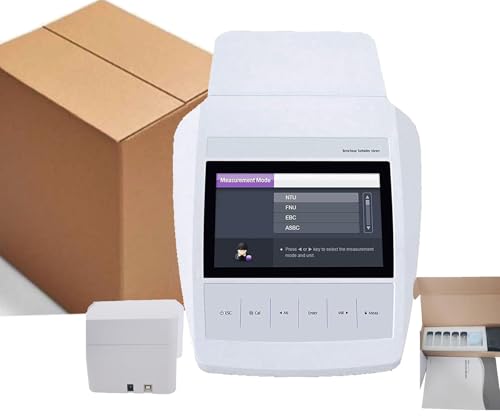
This benchtop turbidity kit from VTSYIQI is designed for ASTM ISO workflows, offering a wide range with a 0–2000 NTU capacity and quick calibration. It emphasizes USB connectivity for data logging and analysis. Best for labs needing ISO-compliant turbidity measurements with TSS compatibility. Limitation: may require a computer for full data handling and longer setup time than handheld options.
Who it’s best for: research labs and quality control settings demanding ISO-standard turbidity measurements with solid data integration. Why selected: reliable benchtop performance and compatibility with standard reference solutions support rigorous testing.
Key features
- ASTM ISO-ready resolution
- 2–7 point calibration with formazin standards
- USB data interface
Considerations
- Better for: lab environments needing ISO-compliant procedures
- Avoid if: you need a small, portable device
Myron L Analog TDS Meter 01489-25

The Myron L TDS meter provides three range options for total dissolved solids and includes automatic temperature compensation for consistent readings. It is maintenance-free with built-in electrodes that do not require replatinizing. Best for: ongoing TDS monitoring in professional settings where consistent, long-term measurements are needed. Limitation: analog design may lack some digital data features found in modern meters.
Who it’s best for: professionals requiring stable, long-life TDS measurements with minimal upkeep. Why selected: built-in, maintenance-free electrodes reduce downtime and simplify use for routine tests.
Key features
- Three-range TDS measurement (0–5000 ppm)
- Automatic temperature compensation
- Maintenance-free electrodes
Considerations
- Better for: routine TDS checks with minimal maintenance
- Avoid if: you need advanced digital data export or wireless features
Buying Guide: Total Suspended Solids Meter Considerations
What to prioritize when choosing a TSS-related meter?
- Measurement mode: If you need direct TSS readings, look for meters offering a dedicated TSS or a robust turbidity mode with a clear conversion factor.
- Calibration options: Four-point or seven-point calibrations with Formazin standards improve accuracy across a wide range.
- Units: Check for NTU, FNU, EBC, and ASBC compatibility to align with your testing standards.
- Form factor: Benchtop meters suit lab environments; handheld units are better for field work.
- Data handling: USB or digital interfaces help with long-term data logging and trending analyses.
Practical questions
- Do I need both turbidity and TSS readings in one device? If yes, choose a meter with a dedicated TSS mode or conversion factor.
- Is calibration with Formazin standards required for my workflow? For stringent QC, yes; for quick checks, simpler calibration may suffice.
- How often should calibration be performed? Regular calibration intervals depend on usage and required accuracy; follow manufacturer guidance.
- Should I prioritize benchtop or portable meters? Benchtop meters provide stability and data options; portable meters are ideal for in-field testing.
- Is data logging important for you? USB and software compatibility can simplify record-keeping and trend analysis.
Common pitfalls to avoid
- Using a device without appropriate conversion standards for solid readings can yield inconsistent TSS estimates.
- Neglecting regular cleaning of cuvettes or probes can degrade accuracy over time.
- Relying on meters that lack temperature compensation in environments with fluctuating temperatures can skew results.
FAQ
- What is the difference between turbidity and total suspended solids? Turbidity measures water cloudiness caused by particles, while TSS refers to the actual mass of suspended solids; some meters estimate TSS via turbidity conversions.
- What calibration standards are commonly used? Formazin standards are widely used for turbidity calibration across many meters.
- Can I use a TSS meter for field testing? Yes, but ensure the device is rugged enough and has a reliable power source for portable use.
- Do all meters include automatic temperature compensation? Many do, but verify the feature in product specs to ensure accurate readings in varying temperatures.
- Is data export important for compliance? Choose meters with USB or software options to streamline data logging and reporting.
- Are there safety or maintenance considerations? Regular cleaning and calibration are essential; follow the manufacturer’s maintenance instructions.