Choosing the right submersible sewage pump helps keep basements dry, prevent backups, and maintain wastewater flow in residential systems. This guide reviews five reliable models that balance power, durability, and ease of use. Each option accommodates 2″ discharge and heavy solids handling while offering automatic float controls for hands-off operation. Use the buying guide below to compare features like flow rates, lift height, and materials to match your sump pit, basin, or sewage ejector needs.
| Product | Horsepower | Flow (GPH) | Discharge | Casing |
|---|---|---|---|---|
| Acquaer 3/4HP Submersible Sewage Pump | 0.75 HP | 6400 | 2″ | Cast Iron |
| LANCHEZ 1HP 6600 GPH Submersible Pump | 1 HP | 6600 | 2″ | Cast Iron |
| Zoeller Waste-Mate 267-0001 | 0.5 HP | Unknown (rated for heavy-duty use) | 2″ | Noted for sturdy build |
| AQUASTRONG 1 HP Sewage Grinder Pump | 1 HP | 4200 | 2″ | Cast Iron |
| wassermann 3/4 HP Submersible | 0.75 HP | 7200 | 2″ | Cast Iron |
Acquaer 3/4HP Submersible Sewage Pump

The Acquaer model uses a cast-iron housing and an oil-filled split-capacitor motor designed for high flow and durability. It can move up to 6400 GPH and lift water as high as 29 feet, making it suitable for basements and below-grade installations. A 2″ NPT discharge supports robust piping, and the built-in auto/manual float switch enables automatic operation when water rises. The unit is intended for non-septic-tank use, and the design emphasizes resistance to clogging with a non-clogging vortex impeller. Power is supplied via a standard 10-foot cord with a piggy-back plug for convenience. Safety guidance includes not lifting the pump by the power cord to avoid damage.
LANCHEZ 1HP 6600 GPH Submersible Pump
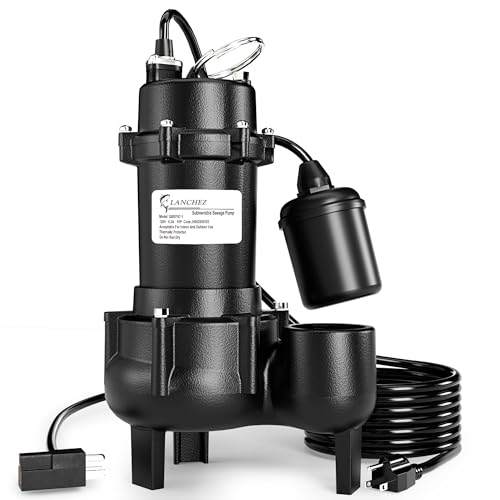
The LANCHEZ unit packs a 1HP PSC copper motor for efficient, quiet operation and high flow—up to 6600 GPH, with head height up to 27 feet. Cast-iron construction provides corrosion resistance and durability, with built-in thermal overload protection to guard against motor burnout. The automatic tethered float switch turns the pump on and off in response to water level, offering hands-off operation in sump basins. A 2″ NPT discharge ensures solid waste handling, making this pump suitable for residential basements and below-grade drainage needs.
Zoeller Waste-Mate 267-0001
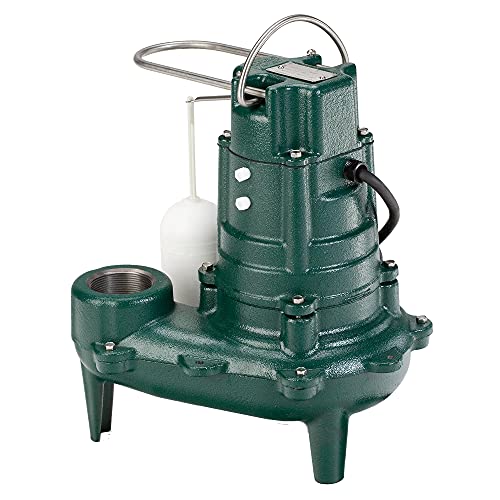
Zoeller offers a heavy-duty submersible option intended for sewage, effluent, or dewatering tasks. It features a 1/2 HP motor and a design that passes 2″ spherical solids with a plastic impeller. A float-operated, two-pole mechanical switch supports automatic operation, while the non-clogging vortex impeller reduces maintenance. This model is positioned for both residential and commercial applications, with reliability and simple wiring as core strengths.
AQUASTRONG 1 HP Sewage Grinder Pump

The AQUASTRONG grinder pump combines shredder blades with a 1HP motor to tackle soft and semi-rigid debris, reducing clogs in sewage systems. It handles up to 4200 GPH and can lift water up to 40 feet. The 2″ discharge supports solid passage while the cast-iron body and stainless steel components contribute to durability. An automatic float switch enables easy, regulation-based operation, though the manual emphasizes avoiding certain liquids and non-biodegradable items that could harm performance.
WASSERMANN 3/4 HP Submersible Sewage Pump

This 3/4 HP model offers 7200 GPH at up to 32 feet of head, with a 2″ discharge and cast-iron construction for durability in challenging sump environments. It includes an auto float switch and a robust, clog-resistant design to move solids efficiently. The unit emphasizes reliability in basement drainage and below-grade installations, with a 10-foot electrical cord to simplify placement and setup.
Buying Guide: Key Purchase Considerations
When selecting a submersible sewage pump, consider three core categories: performance, durability, and practical features. For performance, compare gallons per hour (GPH) at a given lift height and ensure the head pressure meets your sump pit depth. Durability often hinges on the material of the casing (cast iron is preferred for longevity) and the impeller design (non-clogging vortex impellers reduce maintenance. For practical features, look for automatic float switches, cord length, and a 2″ discharge that can handle typical residential solids. Auto operation helps prevent basement flooding, while manual overrides enable control during extended drainage tasks.
Durability and reliability are critical for long-term operation. Pumps with thermal overload protection guard the motor from overheating during dry runs or heavy demand. Cast iron housings provide robust protection against corrosion and physical impact in damp basements. When evaluating models, also assess serviceability—availability of replacement parts and the ease of cleaning the impeller and housing can reduce downtime.
Disposal and compatibility are essential considerations. Some models are designed specifically for septic-tank contexts, while others are intended for general sewage ejector use. Check if the unit permits solids up to 2″ in diameter and confirm the discharge size fits existing piping. Finally, consider installation layout and cable routing; a 10-foot to 20-foot cord length can offer flexibility in placement without requiring additional extensions.
In summary, the top picks balance high flow with solid construction and user-friendly automatic controls. Selecting among them should align with your sump pit dimensions, desired lift, and typical wastewater profile for your basement or foundation drainage system.