Moving bulky items safely often hinges on choosing the right lifting straps. This guide highlights five highly regarded options, covering different use cases from single-person to two-person lifts, and from reinforced comfort to added back support. Each product below is evaluated on versatility, durability, and how it can reduce strain during furniture and appliance moves.
| Product | Brand | Typical Use | Capacity |
|---|---|---|---|
| Shoulder Dolly Moving Straps (LD1000) | SHOULDER DOLLY | Two movers lifting bulky items | Up to 800 lbs |
| Forearm Forklift – Orange | Forearm Forklift | Two-person lifting for furniture and appliances | Up to 800 lbs |
| X-Protector Moving Straps | X-Protector | Two-person lifts for various shapes/sizes | Up to 800 lbs (implied) |
| Moving Straps Lifting (Padded) – EPXXUDD | EPXXUDD | Two-person or single-person setup for heavy items | Up to 800 lbs (implied) |
| STATABSTA Furniture Shoulder Straps | STATABSTA | One-person lifting and moving | High-load capable (not specified) |
Shoulder Dolly Moving Straps – LD1000
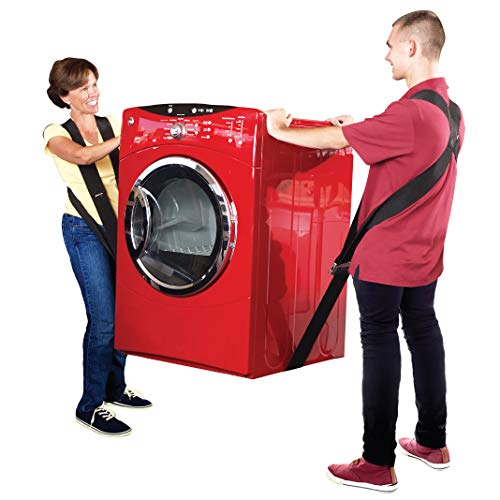
The Shoulder Dolly design emphasizes keeping arms free while two movers coordinate lifting and navigation through doors and around corners. Constructed to promote correct lifting techniques, these straps aim to engage the legs and torso for safer transfers. The system is described as heavy-duty, supporting substantial loads and reducing stress on the arms and hands. This setup is particularly useful for bulky furniture or appliances that require precise balance and a two-person lift to prevent back strain.
Forearm Forklift – Orange

Forearm Forklift straps are designed to leverage the user’s body mechanics, offering eight contact points for stability. The set includes two adjustable straps that work to minimize perceived weight by distributing load more evenly and enabling easier navigation of stairs and tight corners. This product is notable for its OSHA-accepted recognition regarding back injury reduction, underscoring its emphasis on safer lifting practices and consistent performance across various furniture and appliance moves.
X-Protector Moving Straps – 2 Pairs

X-Protector offers adjustable length with a broad range (50-118 inches), making it adaptable to various item sizes and shapes. A key feature is the inclusion of a sponge pad for added comfort, which helps minimize direct pressure on the back during longer carries. The design aims to reduce the risk of strain and injury by providing a universal fit for many moving scenarios, from couches to dressers and beyond.
Moving Straps Lifting (Padded) – EPXXUDD

EPXXUDD’s padded lifting system offers two mounting options, accommodating both one-person and two-person configurations. The product highlights versatility for moving office partitions, safes, and other bulky items, while noting easy portability and adjustable reach. The design emphasizes ease of storage and rapid adjustment, with a practical range that supports a wide spectrum of items, potentially reducing back pain and facilitating safer handling.
STATABSTA Furniture Shoulder Straps

Designed for a one-person lift, these furniture moving straps prioritize simplicity and portability. The product uses reinforced nylon with sturdy metal buckles to endure heavy loads while protecting items from damage during transport. With a total length of 18 feet and adjustable buckles, the straps welcome a flexible fit for a variety of shapes and sizes, making them a practical choice for single-person moves where balance and control are essential.
Buying Guide: Key Purchase Considerations
- Intended use and lift configuration: Determine whether you most often move as a single worker or with a partner. Two-person systems typically offer more stability for large furniture, while one-person straps favor compact storage and easier handling of smaller items.
- Load capacity and safety features: Look for straps rated to handle 800 lbs or more when moving heavy furniture and appliances. Features such as non-slip buckles, reinforced webbing, and ergonomic handles reduce the risk of slippage and back strain.
- Material and durability: High-density polyester or nylon fabrics with strong buckles provide longevity under repeated use. Consider models with padded or cushioned contact areas to minimize pressure points on the body.
- Adjustability: A broad length range (e.g., 50-118 inches or similar) enables compatibility with a wide array of item sizes, from mattresses to large dressers. Adjustable straps also help fit different body heights and moving scenarios.
- Comfort vs. practicality: Padded versions can improve comfort on long carries, but heavier padding may add bulk. Balance comfort with weight and ease of use for your typical moves.
- Storage and portability: Lightweight, foldable, and compact systems are easier to store in a toolkit or vehicle. Consider how quickly you can deploy the straps when needed.
- Compliance and safety claims: Some products reference OSHA-related safety considerations. While not a substitute for training, such claims can indicate a focus on reducing back injuries during heavy lifting.
- Versatility of use: Some straps include multiple mounting options or 2-pair configurations, which can expand the range of items you can move safely, from sofas to appliances and beyond.
How to Choose Between the Options
For tighter spaces or frequent single-person moves, a pair of long, adjustable, padded straps with strong buckles (like the STATABSTA or EPXXUDD variants) can offer the best balance of control and comfort. If you often move large, irregularly shaped items with a partner, two-person systems like Shoulder Dolly, Forearm Forklift, or X-Protector provide steady leverage and better body mechanics. For budget-conscious buyers who want a versatile approach, a two-pair setup with adjustable length can cover a broad range of objects and configurations.
Best Practices When Using Lifting Straps
- Plan the move: Clear a path, remove obstacles, and test balance before lifting.
- Protect floors and walls: Use blankets or pads under the item to prevent scuffs and dents.
- Use proper lifting technique: Bend at the knees, engage the core, and lift with the legs rather than the back.
- Coordinate with your partner: Communicate each step—when to lift, move, and pivot to avoid sudden shifts.
- Inspect equipment: Check buckles and webbing for signs of wear before each use.