Looking for reliable stationary gas air compressors for continuous tool use? This guide highlights top options that balance power, capacity, and durability. Best for workshops and construction crews that need long, steady air supply without relying on electricity. The list emphasizes models with large tanks, durable cast-iron pumps, and portable or wheeled designs for remote job sites. Each selection includes who it’s best for and why, plus practical considerations to help you compare at a glance.
| Product | Tank / Capacity | Power | Max PSI | Best For |
|---|---|---|---|---|
| Albott 13HP Gas Air Compressor 30 Gallon | 30 gal | 13 HP | 180 | High-output, long runtimes |
| Albott 6.5HP Gas 20 Gallon | 20 gal | 6.5 HP | DA | Two-tool operation, versatile |
| Metabo HPT EC2510E 8-Gallon | 8 gal | Gas Engine | 145 | Professional-grade mobility |
| Metabo HPT THE TANK XL 9-Gallon | 9 gal | Gas Engine | 90 | Heavy-duty framing and roofing |
| VEVOR 80-Gallon Stationary | 80 gal | 6.5 HP | 145 | Massive air supply, industrial use |
Albott 13HP Gas Air Compressor 30 Gallon
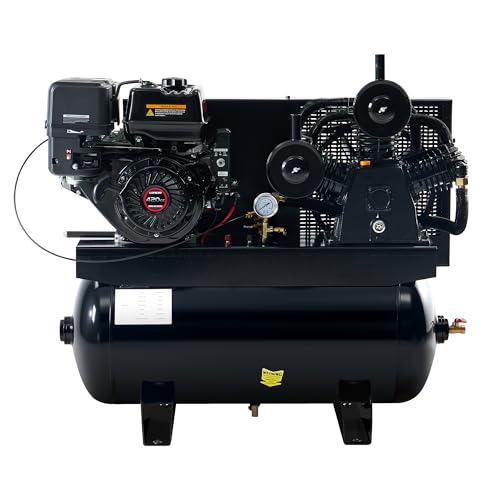
- Powerful 13 HP engine with a 30-gallon ASME-certified tank for safer, long-lasting air storage.
- Max pressure up to 180 PSI; delivers 18 CFM at 90 PSI for continuous tool use.
- Durable three-cylinder cast iron pump and robust frame for heavy-duty work.
- Best for: shops needing high-output, sustained air flow for multiple tools.
- Limitation: Larger footprint and heavier weight; less ideal for very tight spaces.
The Albott 13HP model is designed for serious air-changing tasks where peak performance matters. A long runtime reduces motor cycling, improving efficiency on demanding jobs.
Albott 6.5HP Gas Air Compressor, 20 Gallon
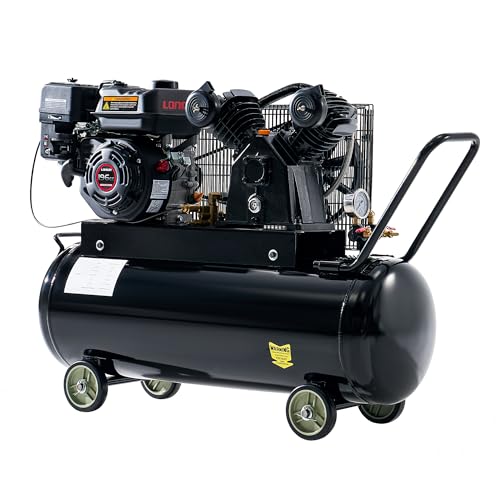
- EPA-certified 6.5 HP gas piston pump with a 20-gallon ASME-certified tank.
- Two outlets enable running two tools at once without sacrificing pressure.
- Cast iron pump and reinforced frame for wear resistance and longer service life.
- Best for: small to mid-size shops needing dual-tool capability and solid capacity.
- Limitation: Moderate tank size may require more frequent top-offs on continuous heavy use.
Choose this if you need reliable dual-output operation with a compact footprint compared to larger industrial units.
Metabo HPT EC2510E Gas Powered 8-Gallon

- Honda GX engine delivers reliable power for framing, roofing, and finishing nails.
- 8-gallon tank with 116–145 PSI range supports consistent tool performance.
- Cast iron cylinder design enhances durability and long life with minimized oil carryover.
- Best for: professionals needing a compact, portable gas unit with strong compression.
- Limitation: Smaller tank means more frequent rest cycles for very heavy, extended use.
This model emphasizes mobility without sacrificing professional-grade engine reliability.
Metabo HPT THE TANK XL 9-Gallon

- Honda GX 200 engine; assembled in the USA for robust performance.
- 9.5 CFM at 90 PSI supports multiple nailers and light framing tasks.
- Wheelbarrow-style mobility with solid rubber tires for rough jobsites.
- Best for: crews needing a mobile, high-availability unit on varied job sites.
- Limitation: Slightly higher weight than smaller portable units; needs space to maneuver.
Recommended when you require high tool compatibility and easy transport around a worksite.
VEVOR 80-Gallon Stationary Gas Compressor

- 6.5 HP engine with an 80-gallon tank for prolonged air supply.
- Max 145 PSI with 15.5 SCFM at 90 PSI; designed for continuous operation.
- Oil-free operation reduces maintenance; suitable for industrial manufacturing.
- Best for: shops needing large-volume air for several tools simultaneously.
- Limitation: Larger footprint; may require permanent installation space.
Best for heavy-duty, long-running tasks where a high-volume, oil-free output is advantageous.
Buying Guide: Stationary Gas Air Compressors
- Tank size and duty cycle: Larger tanks (40–80 gallons) support longer runtimes, reducing rest periods between tool use.
- Max PSI and CFM: Higher PSI and CFM deliver more powerful bursts; match to tool requirements and project type.
- Engine and durability: Cast-iron pumps and Honda GX or similar engines emphasize longevity in rugged environments.
- Portability vs. fixed install: Wheelbarrow designs aid mobility; stationary frames suit permanent shop setups.
- Oil-free vs. oil-lubricated: Oil-free pumps minimize maintenance but may require more frequent checks for wear; oil-lubed pumps typically last longer under heavy load.
Key questions to consider: Do you need to run multiple tools at once? Is mobility essential on-site? What is your typical working duration without power access? How much space do you have for the unit?
Frequently Asked Questions
- What is the difference between oil-free and oil-lubricated pumps? Oil-free pumps require less maintenance but can wear faster under heavy use, while oil-lubricated pumps tolerate long runtimes with periodic oil checks.
- What tank size is best for a framing crew? An 8–20 gallon tank suits most portable job sites; larger teams benefit from 30–80 gallon models for extended operation.
- Why choose a gas-powered compressor over an electric one? Gas units do not rely on electrical outlets and are ideal for outdoor or remote sites, offering higher mobility and continuous operation.
- Is 180 PSI necessary for home handyman tasks? Most standard nailers and inflators operate well under 150 PSI; higher PSI is needed for heavy-duty sandblasting or impact tools.
- Can I run two tools at once from a single tank? Some models provide dual outlets and enhanced flow, but always verify CFM at your target PSI to avoid pressure drops.
- What maintenance should be performed regularly? Check oil levels (for oil-lubed units), inspect hoses and outlets, and drain condensate from the tank to prevent rust and corrosion.