Whether you’re scaling production or tackling homebrew projects, stainless steel mixing tanks offer durable, easy-to-clean solutions for uniform heating, stirring, and filling. This guide highlights five top options, each suited to different tasks—from lab-scale dispersing to large-batch blending. Use the quick comparison below to pick the best fit for your needs, whether you need precise temperature control, high-volume throughput, or compact lab performance.
| Product | Brand | Capacity | Best For |
|---|---|---|---|
| 15L Heating Mixing Filling Machine | LSGDMSTOR | 15 Liters | |
| 30 Liter Conical Fermenter | Fermtech | 30 Liters | |
| Heating Mixing Filling Machine (30L) | Hjhdbgh | 30 Liters | |
| Gslxheal 1.5L Water Jacketed Tank | Gslxheal | 1.5 Liters | |
| 30L Electric Heating And Mixing Tank | Omosiroi | 30 Liters |
15L Heating Mixing Filling Machine (LSGDMSTOR)
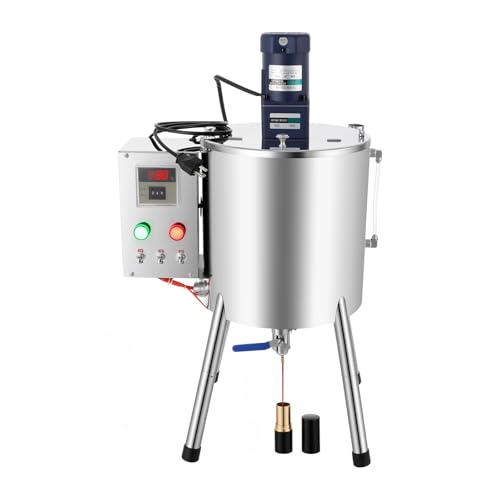
The 15L unit combines uniform stirring with dual heating to handle delicate blends like lipstick, ointments, and creams. It uses a copper motor up to 60 watts and a T-shaped paddle plus two 0.75 kW heating tubes. The design supports high-throughput filling up to 20-45 bottles per minute, making it suitable for small to medium production runs. The stainless steel discharge nozzle, C-shaped heating tube, and ball-valve control help prevent leakage and curing during transfer. It is best for cosmetic labs or boutique manufacturers seeking consistent texture and efficient throughput. A potential limitation is its 15 L capacity, which may constrain very large batches.
Who it’s for: cosmetic formulators, small-batch producers, and makers of salves or butters who require reliable heating and stirring in a compact footprint.
30 Liter Conical Fermenter With Bottle Filler
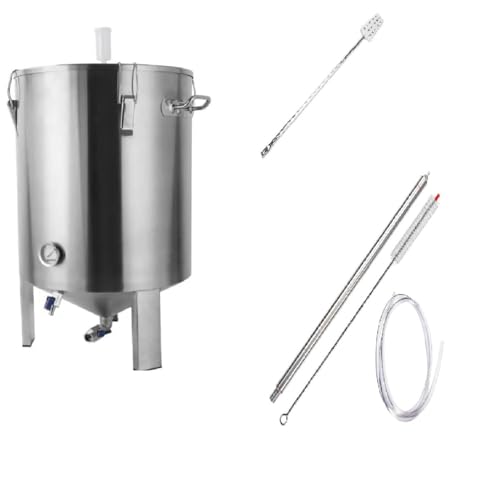
This 30 L conical stainless fermenter is designed for homebrewers and small drink projects. It includes a built-in thermometer (0-40°C), four locking latches for a tight seal, a beer-out valve, and a yeast paste-out valve for convenient transfers and cleaning. The 304 stainless steel with a brushed finish helps resist corrosion and simplifies maintenance. Best for fermentation projects like beer, wine, or kombucha. Limitation: non-dedicated agitation features may limit supreme mixing control mid-fermentation; you may prefer a dedicated agitator if you need vigorous uniform mixing during fermentation.
Heating Mixing Filling Machine (30L) By Hjhdbgh

This 30 L system features a seamless 304 stainless steel tank with full argon arc welding. It combines a dual-tube heating setup (0.75 kW each) and a 60 W copper motor to deliver uniform stirring and heating. Dual temperature modes (water bath up to 90°C, heat-conducting oil up to 300°C) support wax, creams, and syrups. It’s best for multi-material production and fast cycle times. Caution: data suggests handling high temperatures, so proper insulation and handling are required to avoid burns.
30L Paste Liquid Filling Machine (YSHUSTGY)
The YSHUSTGY unit mirrors a high-capacity 30 L setup with a consistent copper motor, T-shaped paddle, and dual heating tubes, enabling uniform stirring and heating from 90°C up to 300°C using water or oil. It’s well-suited for lipstick, wax, and cream production at a commercial scale. Best for: materials requiring precise heat management and smooth filling. Limitation: same as similar models, larger batches require careful heat distribution planning to maintain uniform temperature throughout the tank.
30L Electric Heating And Mixing Tank (Omosiroi)
This 30 L tank offers corrosion-resistant 304 stainless steel with argon arc welded joints for reliability and longevity. A robust copper motor (36 rpm) and dual 0.75 kW heating tubes provide even mixing and heating. The temperature range supports a broad set of applications from cosmetics to food production, with a heating limit of 300°C in oil mode. Best for: cosmetics, ointments, and dense pastes that require stable heat control. Limitation: oil-based heating requires careful handling and monitoring to avoid overheating materials sensitive to high temperatures.
Buying Guide
What size should you choose?
Small-batch needs benefit from 15 L or 1.5 L lab-scale tanks; mid-range production commonly uses 30 L units for a balance of throughput and manageability. For high-volume operations, consider larger tanks or multiple parallel units to maintain consistent results.
Which heating method is right for you?
Water bath heating is gentler and good for heat-sensitive products. Thermal oil allows higher temperatures for thick pastes and waxes. Choose based on your material’s viscosity, heat stability, and desired filling rate.
Is dual heating important?
Dual heating (water and oil) provides flexibility across materials. If you work with diverse formulations, a dual-mode system reduces the need for multiple machines.
What about cleaning and maintenance?
Look for seamless welds, food-grade stainless steel, and accessible discharge valves. Features like easy-clean interiors and smooth surfaces reduce residue buildup and simplify sanitation.
Safety and workflow considerations
Ensure temperature controls are accurate, and the system includes safety interlocks and reliable seals to prevent leaks. Plan workflows that minimize transfer steps to maintain product integrity and reduce contamination risk.
Durability and value
Consider corrosion resistance, weld quality, and motor reliability when evaluating long-term cost of ownership. Systems with argon arc welding and high-grade stainless steel typically offer better durability for demanding environments.
FAQ
Q1: What material are these tanks typically made from? A1: Most are made from 304 stainless steel for corrosion resistance and durability.
Q2: Can these tanks handle viscous pastes? A2: Yes, many models are designed to mix and heat viscous materials like lipstick, ointments, and waxes.
Q3: Do these units require specialized installation? A3: They typically require stable electrical supply and proper ventilation; follow manufacturer guidance for setup.
Q4: Are there safety features to prevent leaks? A4: Models include discharge nozzles, ball valves, and insulated heating tubes to control temperature and minimize leaks.
Q5: Can I use these tanks for food production? A5: Many are suitable for cosmetics and food-grade applications, but confirm material compatibility with your specific product before use.
Q6: How do I choose between water bath and oil heating? A6: Water bath is gentler and suitable for heat-sensitive materials; oil heating supports higher temperatures for tougher formulations.