Common questions for buyers begin with: which spreader bar lifting beam provides reliable load capacity, easy setup, and adaptable sling configurations? This guide highlights five top options suitable for construction, industrial, and medical lift scenarios. Each product is evaluated for capacity, length, ease of use, and best-use cases. Read on to identify which beam matches your lifting needs and constraints.
| Product | Capacity | Length | |
|---|---|---|---|
| 4400 LBS 2 Ton Aluminum 4′ Lifting Spreader Beam | 4400 lbs | 4 ft | Lighter weight lifting with quick sling changes |
| 4400 LBS 2 Ton Aluminum 6′ Lifting Spreader Beam | 4400 lbs | 6 ft | Longer reach while maintaining light weight |
| 4400 LBS 2 Ton Aluminum 2′ Lifting Spreader Beam | 4400 lbs | 2 ft | Compact, tight-spot lifting |
| Vestil SBM-40-12 Steel Economy Spreader Beam | 4000 lbs | 12 ft | Budget-conscious, longer-span lifting |
| NYZAL 11000 LBS 5 Ton Steel 45” Lifting Spreader Beam | 11000 lbs | 45 in | High-load, large cargo with upgraded steel |
4400 LBS Aluminum 4′ Spreader Beam — Lighter, Easy to Use

Best for: light to medium-duty lifting in tight spaces where weight matters. This 4-foot aluminum beam balances high capacity with easier handling. It ships with a 4-foot round sling bridle and G80 5/16” sling hooks, ready for use. The locking retaining pin web connectors allow quick assembly and disassembly. Change sling lengths without tools, increasing versatility for different job heights and loads.
Caution: Aluminum construction provides weight savings but check for field corrosion exposure and ensure proper torque on pins during setup. This unit emphasizes portability over extremely long-span applications, so consider span needs for your lift job.
4400 LBS Aluminum 6′ Spreader Beam — Reach Without Bulk
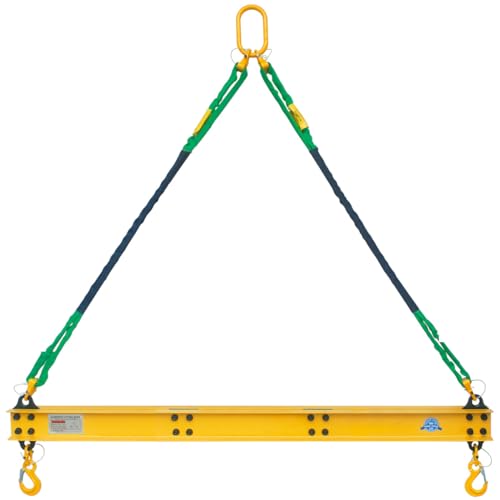
Best for: projects requiring a longer reach while preserving light weight. The 6-foot aluminum beam maintains easy handling and comes with a 6-foot sling bridle and G80 sling hooks. Locking retaining pin web connectors support simple assembly and disassembly. Suitable for longer spans where transport and setup time matter.
Limitation: While long-span aluminum beams reduce weight, always verify clearance for overhead routes and ensure the sling setup accommodates the chosen beam length to avoid uneven lift dynamics.
4400 LBS Aluminum 2′ Spreader Beam — Small, Agile

Best for: compact lifting tasks in constrained spaces. The 2-foot beam offers high capacity in a short span, paired with a 2-foot sling bridle and G80 5/16” hooks. It’s easy to maneuver and quick to set up using the locking retaining pin connectors. Choose this if working in narrow aisles or near equipment where a longer beam would be impractical.
Caution: Short spans reduce reach, so confirm clearance and load geometry before lifting to avoid contact with nearby structures or tools.
Vestil SBM-40-12 Steel Economy Spreader Beam — Budget Long Span

Best for: longer-span lifting where weight is less critical and budgets matter. This 12-foot steel spreader beam supports up to 4,000 lbs and complies with standard safety guidelines for uneven and awkward loads. Includes two swivel lifting hooks for added versatility.
Limitation: Steel is heavier than aluminum, which can impact transport and setup time. Ensure the vehicle and rigging are prepared to handle the heavier beam safely.
NYZAL 11,000 LBS 5 Ton Steel 45” Beam — Heavy Duty Load

Best for: high-capacity overhead lifting with reinforced steel construction. The 45-inch beam is built for large and heavy cargo with a high-security coefficient and rail-grade rails. Includes G80 Mn-steel chain and alloy steel hooks for long-term use. This option is best when maximum load and structural resilience are priorities.
Limitation: Heavier and less portable. Transport and rigging requirements are greater, so plan for appropriate lifting equipment and space.
Buying Guide
What matters most when choosing a spreader beam lifting bar?
- Load capacity vs. weight: Aluminum beams save weight and improve handling; steel beams offer higher rigidity and capacity but are heavier.
- Span length: Short spans excel in tight spaces; longer spans reduce lift angles but add weight and potential handling complexity.
- Swing and sling compatibility: Look for provided slings, hooks, and locking pins to simplify setup and reduce tool needs during installation.
- Application type: Medical or patient lifts often prioritize stability and multi-point spreaders, while industrial lifts may require higher capacities or longer reach.
- Material and durability: Aluminum is corrosion-resistant and light; steel is robust for rugged environments and long-term use.
- Portability vs. fixed setup: Consider how often you move the beam between sites and whether a lighter aluminum option meets your mobility needs.
Key considerations by scenario
- Frequent small lifts in tight spaces: Prefer 2′ to 4′ aluminum beams with locking pins for quick setup.
- Heavy, awkward loads: Steel beams with higher capacity and longer spans may be necessary, but verify rack and hauling capabilities.
- Medical or patient handling: Look for multi-point spreaders and compatibility with existing patient lifts to ensure safe, balanced transfers.
FAQs
- What is a spreader beam used for? It distributes lifting force across multiple points to stabilize a load during overhead lifting.
- Can I mix sling lengths with a spreading beam? Yes, many beams allow changing sling lengths via locking connectors without tools.
- Is aluminum better than steel for spreader beams? Aluminum is lighter and easier to handle; steel is generally sturdier and suited for heavier loads.
- How do I choose the right span length? Consider the load geometry, overhead clearance, and the reach required to lift without striking nearby objects.
- Do these beams require specialized maintenance? Regular inspection of pins, hooks, and slings is recommended to prevent loosening or wear.
- Are these beams compatible with standard slings and hooks? Most are designed to work with standard G80 slings and common hook sizes; verify specific model data.