Choosing the right spindle is essential for achieving clean cuts, tight tolerances, and consistent performance in CNC routing. This guide highlights five standout spindles that balance power, precision, and durability for a range of materials and workloads. Each option includes key specifications, what to expect in use, and how it fits into different machine setups. Use the buying guide at the end to compare capabilities and select the best spindle for your workshop needs.
Summary of selected products:
| Product | Brand | Power | RPM Range | Spindle Diameter | Collet |
|---|---|---|---|---|---|
| NymoLabs 710W CNC Router Spindle Motor | NYMOLABS | 710W | 7,000–30,000 | 65 mm | 1/4″ ER11 |
| Genmitsu 710W Compact Router | Genmitsu | 710W | 6,500–30,000 | 65 mm | 1/8″ ER11 |
| NymoLabs 7,000–30,000 rpm Spindle | NYMOLABS | 710W | 7,000–30,000 | 65 mm | 1/8″ ER11 |
| OUYANG 800W Compact Router | OUYANG | 800W | 10,000–30,000 | 65 mm | ER11 |
| RATTMMOTOR 500W Spindle Motor | RATTMMOTOR | 500W | 2,000–12,000 | 52 mm | ER11 |
NymoLabs 710W CNC Router Spindle Motor Overview

The NymoLabs 710W spindle combines a robust motor with a real-time speed display and six-speed settings, enabling precise control across materials. A 65 mm spindle diameter accepts common mounting standards, and the engine features a soft-start system with constant torque control to maintain stability under heavy cuts. Radial runout is tightly controlled (within 0.05 mm), supporting secure tool engagement and improved engraving or milling accuracy. The unit ships with a 1/4″ ER11 collet and includes four spare carbon brushes for extended service life.
Genmitsu 710W Compact Router for CNC Machines

The Genmitsu 710W Compact Router emphasizes durability and precision, delivering a 6-speed range (6500–30000 RPM) with soft-start and constant torque to reduce load surges. Run-out is typically under 0.05 mm, ensuring your bits remain centered during operation. It comes with a 1/8″ ER11 collet and nut, and supports a broad tool range from 1 mm up to 1/4″ shanks. The spindle is designed for long-term use, and spare carbon brushes are included to minimize downtime during maintenance.
NymoLabs 7,000–30,000 RPM Spindle With 1/8″ ER11

This NymoLabs model targets engraving and detailed milling with a 1/8″ ER11 collet, offering 710W of power and a 65 mm spindle diameter. The design includes a soft-start feature and a tailored drive system to reduce stalling during rapid speed changes. Runout is kept to a minimum (within 0.05 mm), contributing to higher precision in fine-detail carving and edge finishing. Carbon brushes are included to support reliable performance across extended sessions.
Zhong Hua Jiang 110V Spindle for CNC Routers

This 110V spindle operates at 5,000–24,000 RPM with a 65 mm diameter and ER11-6 mm compatibility. It emphasizes ultra-low runout (less than 0.005 mm) and four upgraded steel bearings for longevity. The unit is designed for easy integration with VFDs, featuring pre-soldered wiring for quick setup. Power and cooling are tuned for quieter operation during continuous routing tasks, making it suitable for higher-frequency milling of wood, plastics, and light metals.
OUYANG 800W 65mm CNC Router Spindle
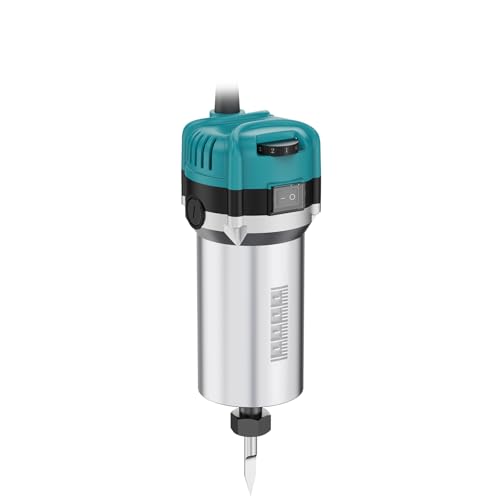
The OUYANG 800W spindle provides a broad RPM window from 10,000 to 30,000, driven by a 65 mm chassis for stability in extended cuts. It uses a standard ER11 collet and is engineered for efficient heat dissipation through a cast aluminum frame, aiming to maintain performance during long sessions. The kit is aimed at CNC engraving and trimming tasks, with durable construction suitable for hobbyist to small-shop workflows. It balances power, runtime, and compatibility with common 650 mm to 100 mm Z-axis machines.
RATTMMOTOR 500W Spindle Motor for CNC Routers

The RATTMMOTOR spindle offers a 500W output with air cooling for sustained operation. It runs at a range of 2,000–12,000 RPM with a 52 mm diameter and ER11-compatible chuck. Notable is its quiet operation and compact footprint, reinforced with a cooling fan at the rear for safe, long-term use. The device is positioned for mid-range projects and is compatible with common 12–100V DC systems used in many hobbyist CNC setups, making it a versatile option for updated or legacy machines alike.
Buying Guide: How To Choose The Right CNC Spindle
- Power vs. workload: Higher wattage spindles deliver more torque at low speeds, which is beneficial for cutting hardwoods, aluminum, and dense plastics. For light-duty plastics and woodworking, 500–710W models are often sufficient, while metalworking may benefit from 1 kW units and above.
- RPM range and speed control: A broad RPM range helps handle varied materials and bit types. Spindles with soft-start and constant torque features reduce stalling and improve surface finish during ramp-ups and heavy cuts.
- Diameter and mounting compatibility: A 65 mm diameter is common for many CNC machines and enables stable mounting. Confirm the spindle’s mounting pattern and collet compatibility with your tool shanks (e.g., 1/8″, 1/4″, and 1-8 mm).
- Collet type and tool compatibility: Ensure the included collet set matches the majority of your bits. Some spindles ship with ER11 and others allow additional adapters for various shank sizes.
- Runout and accuracy: Low runout (typically under 0.05 mm, and often closer to 0.005–0.01 mm in higher-end units) improves precision in engraving and fine routing. Good runout reduces tool deflection and ensures cleaner edges.
- Cooling and noise: Air-cooled systems are common and adequate for many tasks; water-cooled spindles are used for longer continuous operations but add complexity. Noise reduction is important in small shops; look for balanced bearings and dynamic balancing features.
- Durability and maintenance: Carbon brush life, bearing quality, and ease of maintenance affect long-term reliability. Replacements (burn brushes, spare bearings) should be readily available for the model you choose.
- System compatibility: Check whether the spindle is designed for direct use with your inverter/driver (VFD) and the voltage of your shop (110V vs. 220V). Some models include pre-wired options for straightforward integration.
In selecting among the options above, consider your typical material suite, desired finish quality, and how often you run long, uninterrupted jobs. If you frequently switch between woods and metals, a spindle with a wide RPM range and reliable constant torque control will reduce tool changes and maintain accuracy. For hobbyists focused on engraving and light milling, compact, lower-wattage spindles with solid runout are often sufficient while keeping costs reasonable.