Finding the right small gas leaf blower means balancing power, weight, and run-time for your specific yard tasks. This guide highlights five compact gas blowers suitable for homeowners and light commercial use. Each option is explained with who it’s best for, plus practical cautions to consider. Whether you’re clearing leaves, light snow, or debris around sidewalks, these picks aim to help you choose the right tool for your space and frequency of use.
Overview Of Top Picks
The table summarizes key points to compare at a glance. Each product targets a different buyer type, from casual weekend yard cleanup to more frequent or professional use.
- SENIX 4QL 26.5 cc — Best for steady, lower-emission operation with easy start and comfortable handling.
- YUASDUU 25.4 CC — Best for lightweight feel with strong airflow and quietish operation for its class.
- Getell Handheld Gas Leaf Blower — Best for high-velocity blasts and straightforward start-up.
- HASANEN Backpack Gas Powered Leaf Blower — Best for longer sessions and larger cleaning areas; backpack comfort matters.
- Husqvarna 125B — Best for ergonomic design and reliable power in a compact handheld form.
SENIX 4QL 26.5 cc 4-Cycle Handheld Gas Leaf Blower

The SENIX 4QL 26.5 cc blower delivers up to 410 CFM and 125 MPH with a 4-cycle engine. It emphasizes low emissions and smoother operation, essential for longer cleanup sessions. Its 4QL technology reduces fuel use and keeps vibration lower for comfortable use. This model is best for homeowners who want strong performance without mixing gas and oil. A potential limitation is the need for occasional maintenance on a four-stroke design compared with simpler two-stroke layouts.
YUASDUU 2-Stroke 25.4CC Gas Leaf Blower
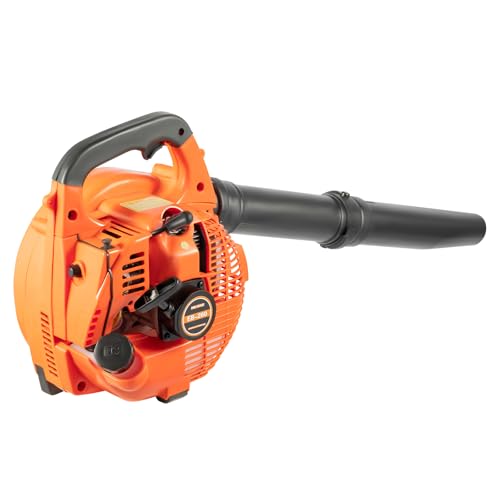
The YUASDUU model operates at 0.75 kW and up to 7000 rpm, producing 0.13 m³/s airflow for rapid debris clearance. It features corrosion-resistant plastic and aluminum components with a flame-retardant tube and a low-noise muffler of about 90 dB(A). It’s best for users wanting a fairly light, affordable option with quiet operation for neighborhoods. A consideration is that two-stroke engines require oil mixtures and routine fuel management, which some users may find less convenient than four-stroke designs.
Getell Handheld Gas Leaf Blower

The Getell blower features a 26cc two-stroke engine delivering 180 mph air speed and 380 CFM, designed for direct yard clearing. It emphasizes balance and comfort with a cushioned handling setup and an easy-start system. It’s best for homeowners who want a straightforward, powerful handheld unit for routine seasonal cleanup and lighter snow tasks. A limitation is that higher wind speeds can increase operator fatigue without proper technique or support gear.
HASANEN Backpack Gas Powered Leaf Blower

HASANEN’s backpack model uses a 63cc two-stroke engine and an 850 CFM flow at 6800 r/min, with a substantial 1.8 L fuel tank for longer sessions. The backpack design spreads weight across the shoulders and back, making it better for large yards or commercial cleanup. It’s best for users who prioritize extended runtime and an even load distribution. The trade-off is that it may feel heavier during short tasks, and the setup takes a bit longer than handheld units.
Husqvarna 125B Gas Leaf Blower

The Husqvarna 125B offers 470 CFM at 170 MPH from a compact 28-cc 2-cycle engine. Its ergonomic tube and soft-grip handle reduce user fatigue during extended use, making it a comfortable choice for many yards. It’s best for buyers seeking a reliable, well-balanced handheld option with proven design. A limitation is that two-stroke engines require periodic mixture and maintenance routines to sustain peak performance.
Buying Guide: Key Considerations For Small Gas Leaf Blowers
- Four-stroke versus two-stroke affects fuel efficiency, emissions, maintenance, and run-time. Four-stroke engines generally require less mixing but may be heavier or more expensive.
- Look for CFM (cubic feet per minute) and MPH (miles per hour) to gauge cleaning power. Higher numbers help with wet leaves and heavier debris.
- For longer sessions, choose models with balanced design or a backpack harness to reduce fatigue.
- A larger tank extends run-time between refuels, especially on large properties.
- Mufflers and design influence how loud a blower is. Lower dB(A) is preferable for shared spaces and neighborhoods.
- Look for easy-start features, especially if you frequently need a quick ignition in cold weather.
- Some designs require more routine adjustments, oil mixing, or air filter care. Consider your willingness to perform upkeep.
- Handheld units are lighter and easier to maneuver; backpack models offer better long-run comfort for larger properties.
FAQ
- What should I consider first when choosing a small gas blower? Consider yard size, typical debris, preferred weight, and whether you value handheld ease or backpack comfort for extended use.
- Are 2-stroke engines more powerful than 4-stroke ones? Power depends on displacement and design. Two-stroke engines often deliver strong blasts but require fuel mixing and more frequent maintenance.
- Is a backpack blower worth it for a small yard? Yes, if you have a larger area or want to reduce fatigue during long sessions, as weight is distributed across shoulders and back.
- How loud are these gas leaf blowers? Noise levels vary; many models include mufflers to reduce sound. Check the dB(A) rating for quiet environments.
- Which blower is best for light snow removal? Models with higher CFM and adequate MPH can clear light, dry snow; ensure the nozzle and intake design suits snow use.
- Do I need to mix oil with fuel for all gas blowers? Most two-stroke engines require oil-fuel mixture; four-stroke designs do not. Verify engine type before purchase.