Answering the question: which skid steer concrete mixer attachments deliver reliable mixing, controlled pours, and durable construction for construction sites, landscaping, and municipal work? This guide highlights five top options, detailing who each is best for, why it’s a strong pick, and any limitations. Whether you’re a contractor, urban landscaper, or maintenance crew, these attachments help speed up rough-in tasks and improve consistency on site.
Summary of selected products:
- FORGLO 92 Gallon Skid Steer Concrete Mixer Attachment — Large capacity, durable blades, central hydraulic outlet.
- Wolfequip 66-80 GAL Skid Steer Concrete Mixer — Flexible discharge options with front, side, and center chutes.
- MIVA Skid Steer Concrete Mixer Attachment — 350L capacity, reinforced components, removable screen.
- LandHonor Concrete Mixer Double Discharge — Dual discharge options, robust drive system.
- Geelife Self-Loading Skid Steer Concrete Mixer Bucket — Built-in bag breaker, hydraulic control for precise discharge.
FORGLO 92 Gallon Skid Steer Concrete Mixer Attachment
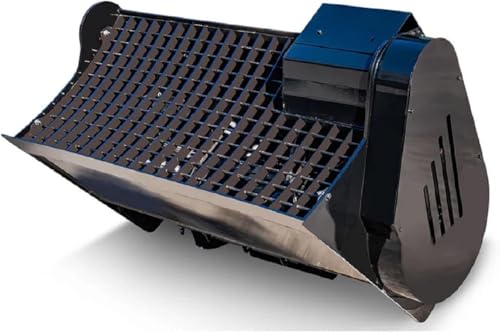
Best for: heavy-duty construction sites and large landscaping projects needing high-capacity mixing. The 350L bucket system blends concrete uniformly and supports precise pours via hydraulic central outlet or tilt-dumping. Reinforced wear blades and a thickened base plate extend service life in demanding environments. The hinged front safety grid simplifies interior cleaning and minimizes downtime.
Why selected: This attachment combines industrial-grade durability with a large-volume mixer, reducing refills and improving pour control on big jobs. Limitations: Larger units may require additional hydraulic power and vehicle clearance on tight sites.
Wolfequip 66-80 GAL Skid Steer Concrete Mixer

Best for: mid-size jobs and operations requiring flexible discharge options. Features include multiple discharge routes: front pour, manual side chute for controlled side placement, and a hydraulic center chute with a hose for precise placement. The center chute doubles as a sandbag filler, adding utility in utility or flood-control tasks.
Why selected: The combination of front, side, and center discharge makes it versatile for irregular job layouts. Limitation: The dual discharge setup may require careful maneuvering to maintain a clean pour in confined spaces.
MIVA Skid Steer Concrete Mixer Attachment

Best for: users needing a high-capacity 350L mixer with a removable screen and easy loading. This model emphasizes efficient mixing with a central hydraulic outlet or tilt-dump discharge, plus a built-in bag-breaker for quick material prep. Durable construction supports extended use in demanding environments.
Why selected: The removable screen and near-identical performance to other 350L attachments offer familiar operation with added loading convenience. Limitation: Some users may prefer a dedicated center chute for larger pours, depending on site layout.
LandHonor Concrete Mixer Double Discharge

Best for: skid steers that require stringent placement control with parallel discharge options. This mixer provides both a manual side chute and a hydraulic center chute with a hose, enabling precise side pours, reach into tight areas, and efficient sandbag filling assistance.
Why selected: The dual discharge approach supports diverse site needs, including challenging access areas. Limitation: The system’s complexity may demand more operator training for optimal use.
Geelife Self-Loading Skid Steer Concrete Mixer Bucket

Best for: operators who value quick cement powder loading and precise discharge control. Features include effortless loading, mixing, and delivery, plus a built-in bag breaker and hydraulic bottom opening with a detachable unloading pipe for precise control.
Why selected: The self-loading capability reduces manual loading steps, improving site efficiency. Limitation: Self-loading mechanisms may require additional maintenance to ensure smooth operation in dusty conditions.
MIVA Skid Steer Concrete Mixer Attachments 350L

Best for: contractors needing a consistent 350L capacity with reliable mixing and controlled discharge. This attachment mirrors the 350L design with a durable frame, central hydraulic outlet, and tilt-dump capability for efficient pours.
Why selected: It offers a familiar capacity with straightforward operation. Limitation: Similar to other 350L mixers, height and weight may impact navigation on low-clearance sites.
Buying Guide: Key Considerations for Skid Steer Concrete Mixer Attachments
- Capacity and Pour Control: Choose a mixer with an appropriate bucket size for your typical batch. Central hydraulic outlets and tilt-dump options improve pour precision.
- Discharge Flexibility: Front, side, and center chutes enable versatile placement; consider jobsite geometry and reach requirements.
- Build Quality and Durability: Look for reinforced blades, thick base plates, and wear-resistant materials to withstand heavy-duty use.
- Ease of Maintenance: Hinged safety grids, accessible interiors, and simple component design reduce downtime during cleaning and repairs.
- Self-Loading and Bag Handling: Built-in bag breakers or self-loading capabilities save loading time but may introduce extra maintenance needs.
- Hydraulic Compatibility: Confirm your skid steer’s hydraulic capacity aligns with the attachment’s load demand to ensure efficient operation.
- Application Fit: For large-scale pours, prioritize attachments with higher capacity and robust discharge options; for tight sites, prefer compact or flexible-discharge models.
FAQ
- What size skid steer mixer should I choose for residential projects? Choose a mixer in the 66–80 gallon range for smaller decks and patios, with simple discharge options for easy placement.
- Which feature matters most for long pours? A central hydraulic outlet or tilt-dump capability provides consistent, controlled pours over longer distances.
- Are dual-discharge mixers worth it? Yes for complex layouts or sites needing precise side pours, but they require more operator handling.
- Is self-loading a good option? Self-loading saves time but may require more maintenance and regular cleaning to prevent buildup.
- Do I need a 350L capacity mixer? For large batches and frequent pours, 350L offers efficiency, but ensure your machine and site can handle the weight and size.
- How important is durability? Very important—look for wear-resistant blades and thickened base plates to maximize service life in heavy-duty tasks.