Answering the need for fast, reliable brush clearing with a skid steer, this guide highlights top 5 attachments that excel in heavy-duty land clearing, pasture maintenance, and trail work. Each option is evaluated for largest cutting width, blade design, and hydraulic compatibility to help buyers pick the right tool for their machine and tasks. Best for large jobs, best for tight spaces, best for rugged terrain—find the model that matches your worksite needs and equipment flow.
Summary table of selected products:
| Product | Cut Width | Best For | Key Advantage |
|---|---|---|---|
| 72″ Wide Skid Steer Brush Cutter (Generic) | 66″ cutting width | Large sites, heavy debris | Stump jumper, 25HP gear box |
| GIYI 63″ Wide Brush Cutter | 57.6″ / 1460 mm | Landscaping, trails | Heavy-duty frame, wide compatibility |
| JaoRop M-RC 42″ Mini Brush Cutter | 42″ working width | Compact machines, tight spaces | Lightweight, precise control |
| Landhonor 66″ Brush Cutter | 66″ cutting swath | Open front deck work | Low deck height, rugged build |
| MIVA 57.68″/1460 mm Brush Cutter | 57.68″ width | Trail clearing, ditches | Heavy-duty steel, rust resistance |
72″ Wide Skid Steer Brush Cutter Attachment
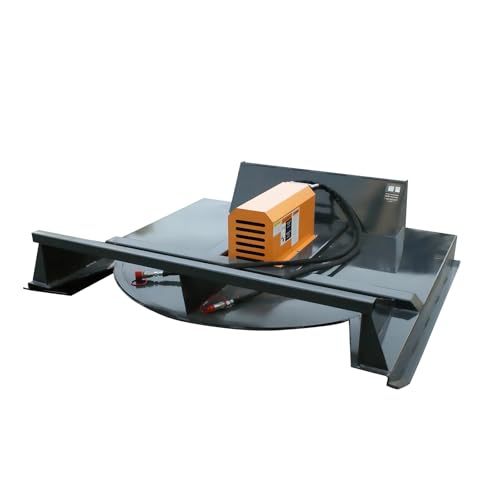
Best for: large properties with dense brush, segments of open fields, and pasture work. This attachment is designed to cover more ground per pass due to its 66″ cutting width and 72″ deck, enabling faster clearing of thick brush up to 3″ in diameter.
Why selected: It combines two bi-directional blades with a 25HP gear box and a stump jumper to traverse uneven ground with fewer interruptions, reducing downtime on rough terrain.
Caution: Hydraulic compatibility requires 14-20 gpm; ensure your loader can supply this flow to maintain optimal blade speed.
GIYI 63″ Wide Brush Cutter Attachment

Best for: landscaping work, lakeside cleanup, and trail maintenance where a robust, mid-size cutter is advantageous. The 1460 mm width plus a torque range of 700-2000 rpm supports efficient clearing of dense infestations.
Why selected: It’s built to handle 30-60 L/min flow and 10-22 MPa pressure, making it a versatile choice across many skid steer hydraulics and site conditions.
Caution: Heavy-duty construction implies a heavier unit; verify machine lifting capacity and mounting compatibility, especially on smaller skid steers.
JaoRop M-RC 42″ Mini Brush Cutter

Best for: compact skid steers or mini loaders, where maneuverability and precision matter more than sheer width.
Why selected: A compact 42″ working width with two blades and a weight suited for smaller machines helps you clear brush and saplings in constrained sites.
Caution: Flow requirements 20-40 L/min; confirm hydraulic supply aligns with your machine to maintain consistent blade speed and cut quality.
Landhonor 66″ Brush Cutter

Best for: open-front deck layouts where a wide, low-profile cutting area helps maintain a clean finish on heavy brush and saplings up to 3 inches in diameter.
Why selected: The 66″ swath with a rugged 0.25-inch deck and 20-inch push bar design supports low debris kickback and robust durability in harsh conditions.
Caution: Requires 16-22 GPM flow; ensure your hydraulic system can sustain this rate along with other attachments on your machine.
MIVA 57.68″/1460 mm Brush Cutter
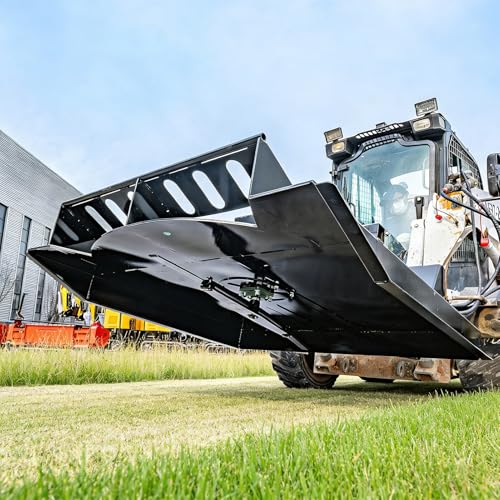
Best for: trail clearing, drainage ditches, and lakeside maintenance where a narrower but sturdy cutter can access irregular edges.
Why selected: A heavy-duty steel frame with an anti-rust coating provides reliable performance in challenging environments and demanding work sites.
Caution: Width is narrower than some competitors; ideal for mid-size jobs or sites with tight access rather than very wide open areas.
Buying Guide
What should I consider when choosing a skid steer brush cutter?
Cut width and deck height: A wider swath clears more in fewer passes but may require more powerful hydraulics and a larger machine. A lower deck height helps you cut closer to ground level, improving final finish and reducing debris buildup.
Hydraulic requirements and compatibility
Check flow rate (GPM) and operating pressure (PSI/MPa). Attachments list specific ranges (for example 14-20 gpm or 16-22 GPM). Ensure your skid steer’s hydraulic system and auxiliary circuit support the attachment without impacting other implements.
Blade design and build quality
Bi-directional blades can improve cutting efficiency in dense brush. A robust steel deck (commonly 0.25 inches) reduces wear and prevents damage when encountering rocks or thick debris. A stump jumper helps navigate stumps without stalling the machine.
Weight, mounting, and machine fit
Confirm mounting compatibility with your skid steer model and ensure the unit’s weight can be safely handled by your loader. Heavy-duty units require secure mounting to prevent vibration and movement during operation.
Site conditions and typical tasks
Consider job size, average brush diameter, and terrain. For large, open areas with dense brush, a wider cutter with high flow performance is advantageous. For tight spaces or hillsides, a smaller, more maneuverable unit may be preferable.
Safety and maintenance considerations
Regularly inspect blades, guards, and hydraulic fittings. Follow manufacturer guidelines for maintenance intervals and check for wear to prevent failure during operation.
FAQ
- What cutting width is best for open-field brush clearing? A wider cutting width (such as 66 inches) reduces passes and improves clearance speed on large plots.
- Do I need a high-flow hydraulic system for these cutters? Yes, many attachments require 14-22 GPM at specified pressures to achieve optimal blade speed and cutting efficiency.
- Can I use these attachments on smaller skid steers? Some models, like the 42″ mini cutter, are designed for compact loaders, but always verify hydraulic flow, weight, and mounting compatibility.
- Are stump jumpers necessary? Stump jumpers help avoid damage when hitting stumps and roots; they are common on larger, rugged designs.
- What maintenance is most important? Regular blade sharpness checks, deck integrity, and hydraulic hose inspections to prevent leaks and ensure consistent performance.
- Can I replace blades easily? Most models use common blade assemblies; refer to the manufacturer’s maintenance guide for replacement steps and torque specs.