If you need precise grading, backfilling, and material shaping from a skid steer, a 6-way blade attachment can boost efficiency and accuracy. This guide highlights five top options that offer six-way blade movement or equivalent multi-direction control, helping operators choose the right tool for construction, landscaping, and snow removal. Each option is suited for demanding jobs, from site prep to final grading. The summary table below compares key attributes to help buyers decide quickly.
| Product | Blade Width | Best For | Notes |
|---|---|---|---|
| 84 inches | Heavy duty grading, backfilling, ditching | ±30° angle, ±10° tilt; bolt-on edge; open design for visibility | |
| 84 inches | Construction and landscaping grading | ±30° angle, ±10° tilt; bolt-on edge; robust build | |
| 84 inches | Grading and pushing dirt with hydraulic control | Hydraulic angle and tilt; SSQA compatibility | |
| 74 inches | Snow and debris management | Adjustable angles; hydraulic with spring shocks; universal connection | |
| 79 inches | Grading and pushing material | Hydraulic angle up to 28°; spring shocks; SSQA compatibility |
Wolfequip 84″ 6 Way Bulldozer Blade

Best for heavy-duty grading and backfilling on large sites. The Wolfequip blade offers ±30° angle and ±10° tilt with a proven pivot system for precise shaping without repositioning the skid steer. The 960 lb weight and bolt-on edge extend service life, while open-edge visibility reduces rework. Suitable for operators seeking strong performance with straightforward operation.
- Best for: heavy earthmoving, grading, ditching
- Why selected: robust construction and precise control
- Limitation: heavier attachment may impact machine lift mustering on smaller skid steers
Bulldozer Attachments 6-Way Dozer Blade 84″

This 6-way blade is positioned for construction and landscaping tasks requiring versatile edge shaping. It features a bolt-on replaceable edge and skid shoes for longer life and heavy-duty cylinders for durability in tough environments. The 84-inch width provides ample coverage while maintaining operator visibility.
- Best for: site grading and leveling with frequent edge changes
- Why selected: balanced weight and durability; clear control
- Limitation: bolt-on components may require periodic maintenance
Titan Attachments 84″ Hydraulic 6-Way Dozer Blade

Hydraulic control enables side-to-side angling for precise debris pushing and leveling. The reinforced moldboard improves material flow and reduces resistance, enabling more material to move per pass. Ideal for operators needing adjustable angles without leaving the seat.
- Best for: precise pushing and leveling with hydraulic angle control
- Why selected: hydraulic 6-way functionality with durable moldboard
- Limitation: hydraulic components may require maintenance checks in challenging conditions
YITAMOTOR 74″ Snow Plow Blade

Best for snow and debris management with adjustable side-to-side angles. It features universal skid steer attachment compatibility and spring shocks to absorb impacts, extending blade life in harsh winter conditions. Suitable for operators who need a versatile snow blade with reliable performance.
- Best for: snow removal and debris management
- Why selected: hydraulic adjustability and shock absorption
- Limitation: performance depends on hydraulic system compatibility
Titan Attachments 79″ Hydraulic Dozer Blade
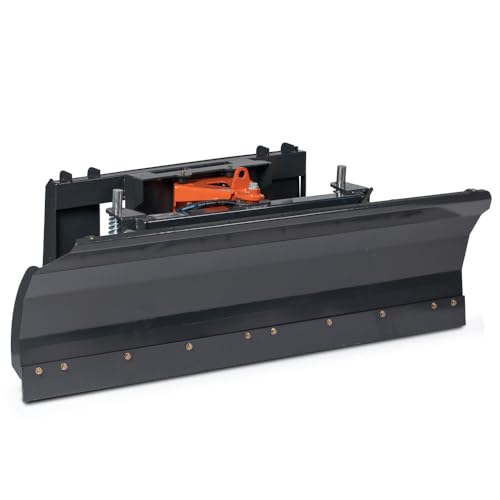
With a 79-inch width, this hydraulic dozer blade handles dirt, rock, rubble, and snow. The molded steel blade provides a pronounced curve to reduce resistance, allowing more material to be moved per pass. Side-to-side angle control up to 28 degrees offers precise pushing from the operator’s seat.
- Best for: mid-sized projects needing reliable hydraulic control
- Why selected: compatibility with SSQA quick attach systems and effective material flow
- Limitation: narrower than some 84″ blades, which may require more passes on larger areas
Buying Guide
What is a 6-way blade and why does it matter?
A 6-way blade provides six directional adjustments, typically including up-down tilt and left-right angling. This enhances control for grading, backfilling, and contouring without repositioning the skid steer, saving time and improving results on varied terrains.
Key considerations when choosing a 6-way blade
- Blade width: Larger widths cover more area but require more machine power and may reduce visibility in tight spaces.
- Angle and tilt range: Higher degrees of tilt and angle improve versatility for shaping and pushing material.
- Mounting system: Ensure compatibility with your skid steer’s quick attach or SSQA standard.
- Edge design: Bolt-on edges and skid shoes extend blade life in tough environments.
- Weight and durability: Heavier blades are built for heavy-duty work but may affect machine balance and fuel use.
When to prefer hydraulic versus manual control
Hydraulic blades provide on-the-fly adjustment from the operator seat, beneficial for large sites or frequent angle changes. Manual 6-way blades may be simpler and robust but require manual repositioning for each change, which can slow progress on complex jobs.
Site-specific recommendations
- Construction and landscaping with frequent grading: choose a blade with hydraulic or rapid-adjust capabilities and 84″ width for efficient ground coverage.
- Snow and debris management: prioritize blades with angle adjustment and shock absorption to handle seasonal loads smoothly.
- Light- to medium-duty backfilling: a lighter blade with good visibility may offer easier maneuverability on smaller machines.
Maintenance tips
- Inspect bolt-on edges and replace as needed to maintain cutting efficiency.
- Check hydraulic connections and hoses for leaks and wear.
- Lubricate pivot points periodically to preserve smooth operation.
FAQs
- Q: What is the advantage of a 6-way blade over a standard blade?
A: A 6-way blade offers multiple directional adjustments, enabling precise grading, shaping, and backfilling without moving the skid steer. - Q: Do I need hydraulic power to use a 6-way blade?
A: Hydraulic control provides the most convenient operation, but some blades use manual adjustments. - Q: Will a 84″ blade fit my skid steer?
A: Compatibility depends on your skid steer’s mounting system and hydraulic capacity; verify SSQA compatibility and weight limits. - Q: What maintenance is essential for 6-way blades?
A: Regular edge replacement, inspection of bolts and hoses, and lubrication of pivot points keep performance optimal. - Q: Which blade is best for snow removal?
A: Blades with hydraulic angle control and spring shocks are favorable for snow clearing and debris management. - Q: Is a heavier blade always better?
A: Heavier blades are more durable for heavy-duty jobs but require adequate machine power and stability.