Finding the right sheet metal forming machine depends on your project size, material thickness, and desired finish. This guide highlights five solid options suitable for automotive restoration, HVAC fabrication, and general metalworking. Each pick is explained with who it’s best for, practical pros and cons, and how it compares to the others.
The top picks below are best for:
– Professionals needing robust, long-lasting tools for regular use.
– DIY enthusiasts tackling restoration and custom fabrication projects.
– Hobbyists seeking portable or adjustable tools for varied sheet gauges.
Summary table of chosen products:
| Product | Main Use | |
|---|---|---|
| Metal Shrinker Stretcher Combo Set | Shrinking and stretching with one tool | 1″ throat depth for deeper shaping |
| KAKA INDUSTRIAL Sheet Metal Bead Roller RM-08 | Beading, crimping, ogee beads | 6 dies, adjustable depth stops |
| Eastwood Bead Roller with Dies | Panel ribs, decorative beading | 19″ throat depth, offset dies |
| VEVOR Slip Roller 12.6″ | Slipping and bending sheet metal | Detachable rollers, multiple groove sizes |
| KASTFORCE 24″ Box & Pan Brake | Pan/brake folding for 24″ wide sheets | 0-135 deg brake range |
Metal Shrinker Stretcher Combo Set – 1″ Throat Depth

The Metal Shrinker Stretcher Combo Set combines shrinking and stretching capabilities in one durable package. Best for professionals and serious DIYers who need to form wheel arches, door panels, or custom shapes with precision. The 1″ throat depth increases reach for deeper panels, enabling more complex shaping without repositioning the workpiece. Heavy-duty cast iron and steel components ensure stable operation under pressure. A caution: check your material thickness against the tool’s capacity to avoid excessive strain.
KAKA INDUSTRIAL Sheet Metal Bead Roller RM-08

Best for HVAC projects and DIY metalworkers who need precise beading with multiple profiles. The RM-08 offers six dies, including beading, crimping, burring, and ogee beads, with a 22-gauge capacity and a 7-inch throat. Adjustable depth stops provide repeatable results, which helps when fabricating multiple panels to match exact shapes. A potential limitation is that larger panels or thicker metals may require longer machines or multiple passes.
Eastwood Bead Roller with Dies
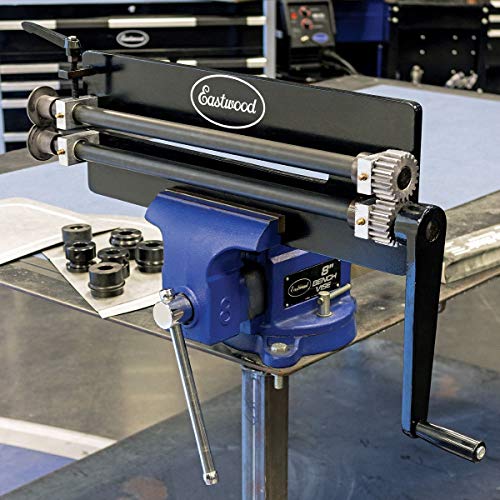
Best for builders and restorers needing strong panel ribs and decorative detailing. This bead roller features offset dies to create channels, flanges, and varied profiles, with a generous 19″ throat depth enabling work on the center of large panels. It supports up to 18 gauge steel, 16 gauge aluminum, and 20 gauge stainless, making it versatile for automotive sheets and bodywork. Use this if you want a gear-driven design that delivers strong forming power with manageable hand force. A limitation is the heavier setup, which may require a sturdy workbench or stand for optimal use.
VEVOR Slip Roller 12.6 Inches

Best for compact workshops and light to medium-duty sheet forming. The 12.6″ slip roller handles up to 1.0 mm thick ST37 steel and 320 mm wide rolls, with detachable upper axis and three groove sizes (5/32″, 15/64″, 5/16″). The detachable rollers simplify part access and cleanup. Choose this for a space-efficient tool that still provides multiple groove options; avoid if you regularly work with thicker or wider sheets beyond its capacity.
VEVOR Slip Roll Machine – 24 Inch
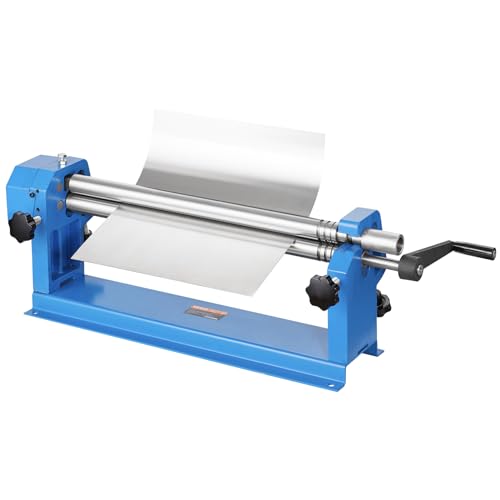
Best for larger panels and heavier gauge work. The 24-inch forming width supports up to 16 gauge capacity and includes two detachable rollers with multiple grooves, enabling efficient bending and rolling of longer pieces. It features updated roller surfaces for smoother finishes and improved gear engagement. This model suits workshops needing wider coverage and greater material versatility, but it may require a larger work area and more storage space for the rollers when not in use.
KASTFORCE KF5006 Box and Pan Brake

Best for precise fold work on box and pan sections. The KF5006 provides a maximum width of 24 inches with a 20-gauge maximum thickness and a brake range of 0-135 degrees, making it suitable for creating accurate bends and complex pan shapes. Choose this if your projects require clean, repeatable folds across mid-sized panels. A limitation is the 20-gauge limit, which may not handle thicker materials without risk of deformation.
Buying Guide
- Material and gauge compatibility: Match the tool’s rated thickness with your common sheet metal thickness (e.g., 18- gauge steel, 20-gauge stainless).
- Working width and throat depth: Larger panels benefit from wider machines; deeper throats help with inner curves and center sections.
- Die variety and adjustability: Tools with multiple dies and adjustable depth stops offer greater flexibility and repeatable results for consistent parts.
- Portability vs. stability: Consider weight and mounting needs if you move between jobs or have a fixed workshop.
- Ease of use and maintenance: Gear-driven designs reduce hand force; detachable components simplify setup and cleanup.
- Application fit: Choose based on intended tasks—beading, shrinking/stretching, or full box/pan bending—to avoid overbuying features you won’t use.
Frequently Asked Questions
- What is the difference between a bead roller and a slip roller?
– Bead rollers form raised channels and decorative profiles; slip rollers bend and roll flat curves and sheets with rotating rollers. - Which tool is best for automotive sheet metal work?
– A combination shrinker/stretcher or a bead roller with appropriate dies typically offers the most versatility for wheel arches and panels. - Do these machines require special maintenance?
– Yes. Regularly lubricate moving parts, inspect dies for wear, and ensure bolts and fasteners stay tight to maintain precision. - Can I use these on aluminum and stainless steel?
– Many models support aluminum up to specified gauges; stainless is often limited to thinner gauges or specific machines—check each product’s gauge rating. - Is a larger throat depth always better?
– Not always. Deeper throats help with larger panels and inner curves, but require more space and can be heavier to handle.