Direct answer: these sachet filling and sealing machines are designed for efficient, precision liquid packaging in bags from 50 ml to 500 ml. They suit small to mid-size liquid producers, beverage bottlers expanding into pouch packaging, and contract packagers seeking faster throughput. The top picks below emphasize high accuracy, adaptable bag sizes, and versatile sealing options. A quick summary table of the five chosen products follows to help compare capabilities at a glance.
| Product | Filling Range | Sealing Type | Throughput | Best For |
|---|---|---|---|---|
| AS-1000 (110V) | 50-500 ml | Side or Back | 1100-1300 bags/hour | Small to medium liquid lines, stable operation |
| AS-1000 (220V) | 50-500 ml | Side or Back | 1100-1300 bags/hour | Higher power setup for larger runs |
| Automatic Liquid Filling Packing Machine (Back Seal) | 3-1000 ml | Back Seal | — | Customizable bag sizes, liquids like juice, wine, sauce |
| Automatic Liquid Filling Packing Machine (Three-Side Seal) | 3-1000 ml | Three-Side Seal | — | Flexible seal styles for various pouch designs |
| YOULIAN 50-500 ml | 50-500 ml | Side or Back | 1500-1800 packs/hour | High-volume small liquid lines, branding options |
AS-1000 Automatic Liquid Pouch Filling Sealing Machine 50-500ml (110V)

This model targets steady, high-precision liquid filling for small to mid-scale producers. It offers a filling accuracy within 1% and a throughput of 1100-1300 bags per hour, with adjustable volume from 50 ml to 500 ml. It supports customization for bag sizes and offers a color printing option for packaging film. Best for: small operations that need reliable, fast production with flexible bag formats. Limitation: only as good as the supplied packaging film and setup; ensure compatible film stock and power supply.
AS-1000 Automatic Liquid Pouch Filling Sealing Machine 50-500ml (220V)
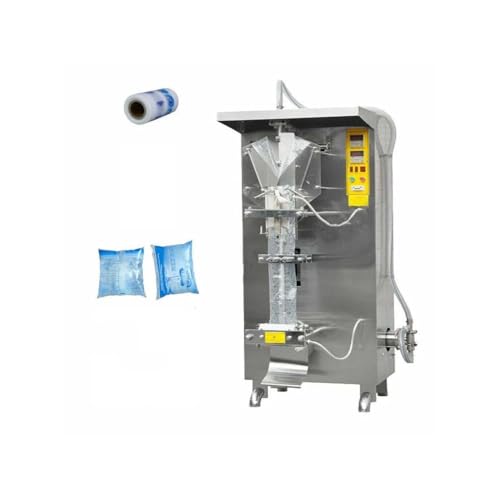
This 220V variant mirrors the 110V model with the same high-precision filling and 1100-1300 bags per hour output. It emphasizes consistent operation for mass liquid packaging and provides the same customization and film-printing options. Best for: facilities that require higher voltage compatibility and stable performance in larger production lines. Caution: verify electrical compatibility with your facility’s power supply before purchase.
Automatic Liquid Filling Packing Machine (Back Seal)

Designed for water, juice, vinegar, wine, and sauce packaging, this machine supports customized filling ranges from 3 ml to 1000 ml. It features film compatibility with various plastics and supports back sealing with adjustable bag width and length. Best for: operators needing a back-seal option and flexible bag sizing. Limitation: specifics on throughput are not listed; assess line speed needs against production goals.
Automatic Liquid Filling Packing Machine (Three-Side Seal)

This model also handles liquids like water, juice, wine, and sauce with a flexible filling range of 3-1000 ml and a 5-20 cm film width. It supports three-side sealing as well as back sealing and can adapt to different bag lengths from 1 to 16 cm. Best for: brands that want a specific pouch design and strong sealing integrity. Limitation: similar to the back-seal variant, precise throughput data isn’t provided here.
AS-1000 Vertical Liquid Filler Sealer 50-500ml (220V)

Crafted for small business scalability, this vertical filler sealer delivers 1100-1300 bags per hour with ±1% accuracy in 50-500 ml. It supports optional side or back sealing and provides a path to branded packaging through a film printing service. Best for: startups seeking fast, reliable throughput with brand-consistent packaging. Caution: ensure compatible pouch film and down-stream equipment compatibility for veggie or fruit-based liquids.
Buying Guide
- Filling range and accuracy: Choose a model that covers your target pouch volumes (common range: 50-500 ml) and maintains around ±1% accuracy to minimize waste.
- Sealing method compatibility: Decide between side/back sealing or three-side sealing. Some lines offer multiple options; pick the one that matches your pouch design and film material.
- Throughput needs: Estimate weekly production volume. If your line demands 1,000+ bags/hour, prioritize machines billed for high-speed operation and stable performance.
- Power and electrical requirements: Check voltage compatibility (110V vs 220V) and available power in your packaging area to avoid wiring upgrades.
- Bag size flexibility: Look for machines that support adjustable bag width and length to accommodate evolving products or seasonal SKUs.
- Film compatibility and branding: Ensure the film types (PE, laminated films, aluminized film) are suitable for your product’s shelf life and that optional printing services fit your branding plan.
- Maintenance and service: Favor models with clear maintenance guidance, readily available spare parts, and supplier customization options to future-proof your line.
Frequently Asked Questions
- What is the typical filling accuracy for these sachet machines? Most models target around 1% filling accuracy, helping minimize material waste and product giveaway.
- Which sealing option should I choose? Back sealing is common for liquid-heavy pouches; side sealing works well with straight, simple pouch shapes. Three-side sealing provides stronger seals for certain films and formats.
- Can these machines handle juices and sauces? Yes, many listed models are designed for water, juice, sauces, and wine, with adjustable filling ranges to match viscosity and bead size.
- Do these machines print packaging film? Several offerings include optional color printing on the film to boost branding and product recognition.
- Do I need to customize bag sizes? Some machines offer customization for bag size and film to fit specific packaging needs; confirm minimum and maximum dimensions before purchase.
- What maintenance should I expect? Routine calibration, regular seal checks, and replacement of worn components are typical; verify service options with the seller.