Answering buyers who need durable, high-precision roller chain sprockets for ANSI #40 and #35 chains, this guide highlights five solid choices. These sprockets are best for small- to mid-size industrial setups, maintenance teams, and hobbyists who require corrosion resistance, hardened teeth, and reliable wear performance. Each product is examined for fit, material, and practical limitations to help you choose confidently.
Summary table of chosen products:
| Product | Best For | Key Benefit | Limitations |
|---|---|---|---|
| Saelno 40B30-1 | Heavy-duty #40 chains | Hardened teeth with corrosion resistance | 1 inch bore, higher tooth count |
| Saelno 40B12-1 | Compact drive for #40 chains | Small 12-tooth option with rust resistance | Limited torque capacity |
| 40B19-1 | General purpose #40 chain drives | Moderate teeth for balanced torque | Generic brand with standard specs |
| 41A35H | Medium gear ratios | Plain bore for flexible mounting | Lower hardness spec details |
| RHKING 35T | #35 chain applications | Hardened teeth, rust resistance | Only 15 teeth |
Saelno 40B30-1: Hardened 30-Tooth Sprocket For ANSI #40 Chain

The Saelno 40B30-1 is a Type B roller chain sprocket designed for ANSI #40 chains with a 1 inch bore and 30 teeth. Constructed from ANSI 1045 carbon steel, its teeth are hardened to HRC38-42 via high-frequency quenching for wear resistance. The surface is blackened for corrosion resistance, making it suitable for environments where rust is a concern. Best for: mid-torque drives where durability and rust resistance are priorities, such as general machine shops or maintenance-based applications. Limitation: the 30-tooth configuration can limit lower-speed, high-torque scenarios.
Why choose this: The hardened teeth and corrosion-resistant finish provide long service life in typical shop or light industrial use. It’s a robust option when you expect frequent load cycles and exposure to moisture.
Who should avoid: If you need a very high-torque, low-speed setup, a sprocket with more teeth or a different bore may be preferable.
Saelno 40B12-1: 12-Tooth Sprocket For ANSI #40
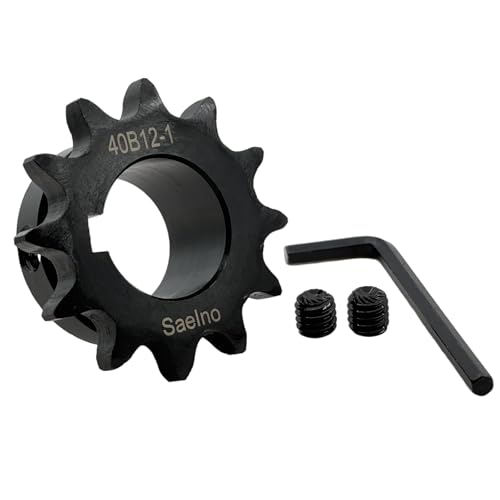
Saelno’s 40B12-1 is a compact 12-tooth roller chain sprocket with a 1 inch bore for ANSI #40 chains. It uses the same 1045 carbon steel base and heat-treated hardened teeth (HRC38-42) with a blackened finish to resist rust. Best for: small drive systems or micro-machines where space is limited and torque needs are modest. Better for: low-speed applications where fewer teeth reduce back-driving stress. Limitation: fewer teeth can lead to quicker wear under higher torque loads.
Key point: The 12-tooth configuration provides a compact, lightweight option when space constraints are critical, though you should avoid high-torque demands.
41A35H: 35-Tooth Plain Bore Sprocket

The 41A35H is a 35-tooth roller chain sprocket with a 0.75 inch plain bore, designed for ISO 06C chain alignment. The description notes hardened teeth, indicating improved wear resistance. Best for: mid-range gearing where a non-standard bore is acceptable and mounting simplicity is valued. Limitations: limited bore options may require adapters for non-standard shafts. Safety note: ensure alignment to prevent uneven wear or chain derailment.
Why it matters: A plain bore offers mounting flexibility when you have custom shafts or adapters, but verify fitment against your shaft diameter and keyway requirements.
RHKING 35T: 3/4-Inch Bore, 15-Tooth Sprocket

RHKING’s 35T sprocket features a 3/4 inch bore and 15 teeth, compatible with #35 chain designation. It uses AISI 1045 medium carbon steel with high-temperature quenching heat treatment to harden the teeth (HRC38-42) and includes a blackened surface for rust resistance. Best for: compact, moderate-torque drives in #35 chain systems. Limitation: the smaller tooth count reduces torque capacity compared to larger sprockets, which can impact heavy-duty use.
Choosing this: It’s a solid option when space and weight are a concern while maintaining wear resistance through hardened teeth.
Acxico 2Pcs 10T Sprocket: 8mm Bore, 10 Teeth

Acxico offers two 8mm bore 10-tooth sprockets suitable for light-duty applications in roller chain drives. They emphasize durability and high strength with 8mm bore alignment. Best for: small, precise drives in compact machinery or hobbyist projects where minimal torque is needed. Caution: small bore and low tooth count limit load-bearing capacity and life under higher stress conditions.
uxcell 35-Teeth Idler Sprocket Set

uxcell provides a 15-tooth idler sprocket pair with 10mm bore, intended for ISO 06C chain systems. Constructed from C45 carbon steel with heat-treated teeth for wear resistance and long service life. Best for: tensioning and guiding chains in constrained spaces; ideal as a backup or alignment component. Limitation: idler sprockets add slack in drive systems and do not drive the load themselves; ensure proper alignment and tensioning.
Buying Guide: How To Choose The Right Roller Chain Sprocket
What chain size do you use? Verify ANSI/BS standard and pitch. For ANSI #40, look for 1/2 inch pitch and 1 inch bore options. For #35, confirm the bore and pitch match your chain and shaft. Do you need hardened teeth? If your environment is dirty, wet, or high-load, hardened teeth (HRC38-42) provide greater wear resistance. Is rust resistance important? A blackened or treated surface helps resist corrosion in harsher environments. Consider tooth count: more teeth generally increase torque capacity but require more shaft space. Plain bores offer mounting flexibility; ensure compatibility with your shaft and keyway. Do you need multiple sprockets? Idler options help with tensioning and alignment but do not transmit drive power. Always confirm dimensions and photos for a precise fit before ordering.
Practical choices by scenario:
- Best for high wear resistance: Saelno 40B30-1 or 40B12-1 (hardened teeth, rust-resistant finish).
- Best for compact spaces: 40B12-1 or 41A35H (small bore or plain bore with flexible mounting).
- Best for #35 chain drives: RHKING 35T or Saelno 35B50-5/8 (hardened teeth, rust resistance).
- Best value for light-duty or hobby use: Acxico 10T or uxcell Idler (simple, cost-effective with adequate hardness).
FAQ
- What is the meaning of HRC 38-42 for chain sprockets? The teeth are hardened to increase wear resistance, reducing wear under normal operating loads.
- How do I choose the right bore size? Match the shaft diameter and consider if a keyway is required to secure rotation.
- Are plain bore sprockets compatible with set screws? Yes, many B-type sprockets include set screws for secure mounting.
- Can 12-tooth sprockets handle high torque? Generally not; higher torque typically requires more teeth for load distribution.
- What about corrosion resistance? A blackened or treated surface helps protect against rust in damp or outdoor environments.
- Should I buy a pair of idler sprockets? Idlers help with tensioning and alignment but do not drive the load.