Precision water flow control matters in heating, cooling, and industrial systems. Proportional valves adjust flow in response to control signals, delivering consistent temperatures and efficient energy use. This guide highlights five reliable options, featuring thermostatic mixing and motorized control. Each selection is linked to its Amazon listing for quick reference and comparison. Below is a quick summary table to help you compare core specs at a glance.
| Product | Brand | Connection | Control Type |
|---|---|---|---|
| Honeywell Home AM-1 Series S | Honeywell | 3/4″ Union NPT | Proportional Thermostatic Mixing Valve |
| Honeywell AMX Series Sparco | Honeywell | 3/4″ Union Sweat | Proportional Thermostatic Mixing Valve |
| HSH-Flo 2 Way Brass 1/2″ | HSH-Flo | 1/2″ NPT | Proportional Integral Modulating Valve |
| HSH-Flo 2 Way Brass 1/4″ | HSH-Flo | 1/4″ NPT | Proportional Integral Modulating Valve |
| U.S. Solid 1″ 3 Way Brass | U.S. Solid | 3 Way | Motorized Ball Valve |
Honeywell Home AM-1 Series S Model Proportional Valve

Honeywell’s AM-1 Series S model combines a proportional control strategy with a thermostatic mixing function, designed to maintain stable hot water temperatures under fluctuating inlet conditions. The unit’s 3/4″ union NPT connection aligns with common residential and light commercial piping. While the product’s listed features emphasize safety and domestic build quality, users should assess its compatibility with existing control loops and whether a thermostatic element meets the exact mix ratio required for their system. The design aims to reduce thermal shock and overshoot in hot water distribution, especially where supply temperatures vary.
Honeywell AMX Series Sparco Proportional Valve

The AMX Series Sparco is designed to deliver precise temperature control by regulating cold and hot water mix with a dedicated proportional control mechanism. The 3/4″ Union Sweat configuration provides a straightforward installation path for many water heating setups. The valve highlights its direct applicability to water heater outlets and dynamic operating conditions, with adjustment possible via a small tool. When integrating into a system, consider calibration tolerances and how quickly the valve responds to signal changes, ensuring the control loop can maintain the desired temperature across varying demand.
HSH-Flo 2 Way Brass 1/2″ Proportional Valve
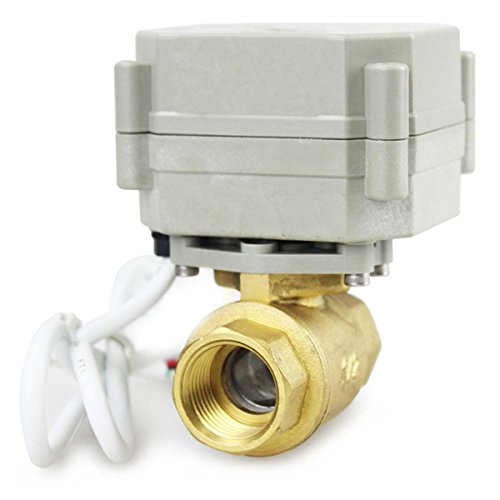
This 1/2″ brass valve features a proportional control actuator with a 4N.M rating and an indicator for quick status checks. It is suitable for higher flow scenarios where precise modulation is required, and the included signaling wires facilitate integration with common digital controllers. For best results, verify the actuator’s signal compatibility (0-5V or similar) with your control system and confirm the valve’s full bore allows the intended flow without excessive pressure drop, especially in multi-valve configurations.
HSH-Flo 2 Way Brass 1/4″ Proportional, Modulating Valve
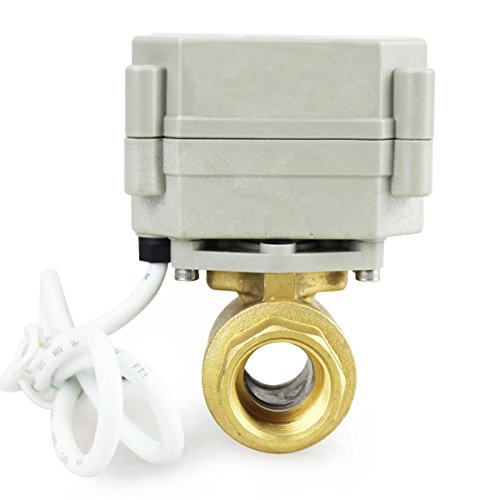
The smaller 1/4″ version from HSH-Flo emphasizes compact installations while preserving proportional control characteristics. With a 4N.M actuator and integrated indicators, it supports precise modulation in tight spaces, such as under-sink mixer assemblies or compact boiler room layouts. When selecting this valve, assess line size constraints and ensure the control signal range matches your programmable logic controller or building management system to avoid undershoot or overshoot in flow regulation.
U.S. Solid 1″ 3 Way Brass Motorized Ball Valve

This 3-way brass valve from U.S. Solid is designed for residential, commercial, or industrial applications requiring automated flow routing and remote operation. The built-in motor enables precise actuation, while a manual override provides a fail-safe option during power outages. It is not intended for drinking water in some configurations, so verify suitability for your system’s fluid type. The 3-way configuration supports routing between multiple outlets, making it a strong candidate for zones where dynamic valve positioning is crucial to maintain balanced pressure and temperature across circuits.
Hydraulic Proportional Flow Divider Valve

Included here as an additional reference for proportional flow distribution in hydraulic circuits, this 50:50 divider is rated for up to 8 GPM and 3/8” NPT ports with a high maximum pressure. This type supports precise split control where two downstream branches require coordinated flow. In water systems, consider compatibility with potable water standards and ensure materials are corrosion-resistant for long-term reliability. It complements proportional control strategies by providing predictable distribution ratios alongside individual valve modulation.
Control Devices PR25-008 Proportional Pressure Relief Valve

This proportional relief valve provides a safety function to prevent excessive pressure buildup, a critical feature in systems with dynamic flow demands. While not a traditional motorized control valve, the proportional action assists in maintaining system integrity and protecting components from pressure spikes. Consider pairing a relief valve with a proportional flow valve to create a robust control loop that can handle surge conditions and maintain stable operating pressures under changing loads.
Buying Guide: Key Considerations For Proportional Water Valves
- Control Type and Signals: Proportional valves respond to electrical signals (4-20 mA, 0-5 V, 0-10 V, etc.). Verify that your controller’s output matches the valve’s input range to ensure linear, repeatable modulation.
- Voltage and Power Requirements: Some valves operate on 12 V DC or other low-voltage supplies. Ensure your control cabinet provides the correct supply and consider redundancy in critical systems.
- Flow Capacity and Size: Valve port size (1/4″, 1/2″, 3/4″, 1″) determines maximum flow and pressure drop. Choose a size that meets your system’s GPM needs without imposing excess head loss.
- Material and Media Compatibility: Brass valves provide robust performance but verify compatibility with potable water, hot water, or other fluids. Some models are not suitable for drinking water; check certifications as needed.
- Mechanical vs. Thermostatic: Thermostatic mixing valves maintain a set outlet temperature by mixing hot and cold streams, while motorized proportional valves modulate flow. Depending on your goal (temperature stability vs. precise flow), select the appropriate approach.
- Installation Configuration: 2-way vs. 3-way configurations enable different control strategies. 3-way valves offer routing options, which is useful for seasonal bypasses or multi-zone systems.
- Control Redundancy and Safety: Look for manual overrides, fail-safe features, and ease of maintenance. Redundancy reduces downtime in critical applications like domestic hot water or radiant heating.
- Support and Documentation: Rich installation guides, wiring diagrams, and troubleshooting resources save time during commissioning and maintenance.
In selecting a proportional valve for water, balance key factors: how precisely you need to modulate flow, the operating environment, fluid compatibility, and the control system’s signal standard. The five products above provide a spectrum—from thermostatic mixing to motorized proportional control and three-way routing—so you can tailor a solution to residential, commercial, or light-industrial installations. Always review your system’s pressure, temperature ranges, and safety requirements before finalizing a valve choice.