Seeking professional-grade soil testing gear? This guide highlights top-rated options designed for precise moisture, pH, nutrient, and compaction readings. Ideal for serious gardeners, landscapers, and farmers, these tools help you tailor watering, fertilization, and cultivation practices to your soil’s unique needs. The listed products cover handheld testers, penetrometers, and mail-in analysis kits for a comprehensive soil health picture. The table below offers a quick snapshot of the best picks to match different buyer priorities.
| Product | Best For | What It Measures | Why It Stands Out |
|---|---|---|---|
| YAMRON 4-in-1 Soil Moisture Meter | Home gardeners; small farms | Moisture, pH, soil temperature, sunlight | Compact 4-in-1 with backlit display for day or night use |
| AgraTronix 8180 Soil Compaction Tester | Soil scientists; field work | Soil compaction via 24″ probe | Sturdy stainless steel dial; portable and durable |
| SONKIR MS02 3-in-1 Soil Tester | Budget-friendly garden use | Moisture, pH, sunlight | No battery needed; simple 3-function design |
| Dynamic Cone Penetrometer (MARS INTERNATIONAL) | Professional field testing | Soil density and compaction | Complete kit with calibrated drop hammer |
| MySoil Soil Test Kit | Lab-grade accuracy at home | Nutrient levels and pH | Professional mail-in lab analysis with clear guidance |
YAMRON 4-in-1 Soil Moisture Meter

- Features: 4-in-1 tester measuring soil moisture, pH, temperature, and sunlight with a backlit LCD display.
- Best for: Home gardeners and small farm tasks needing quick, integrated readings.
- Why selected: Combines four essential measurements into one compact device, enabling fast decisions on irrigation and plant health.
- Caution: Battery-dependent backlight means readings could be harder to see when batteries are low; replace as needed.
AgraTronix 8180 Soil Compaction Tester
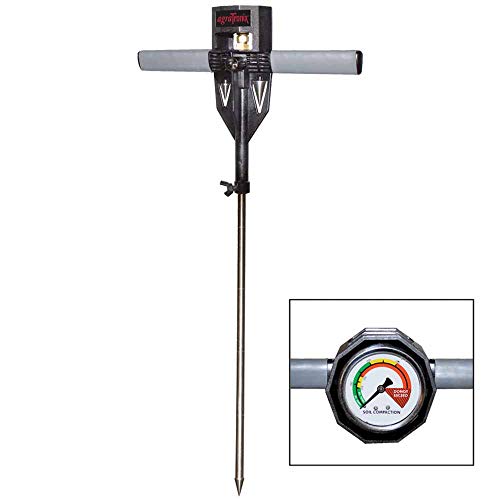
- Features: 24-inch stainless steel probe with a liquid-filled dial for accuracy; rubber grip handles and a portable design.
- Best for: Professionals needing precise soil density and compaction data in the field or lab.
- Why selected: Durable construction supports repeated use in varied soil conditions; straightforward readout.
- Caution: Heavy-duty build may be less convenient for very small plots or indoor testing.
SONKIR MS02 3-in-1 Soil Tester

- Features: Measures soil moisture, pH, and sunlight; no batteries required.
- Best for: Gardeners seeking a simple, low-maintenance tester for outdoor use.
- Why selected: Battery-free operation reduces ongoing costs and maintenance time.
- Caution: If soil is very dry, readings may stall; water soil lightly before testing for accuracy.
Digital Soil Penetrometer FM-204DJ

- Features: Measures soil bearing capacity with a 0–100 kg range and 0–30 cm depth.
- Best for: Field technicians and researchers assessing compaction and soil support for structures or crops.
- Why selected: Lightweight, compact option for quick field checks of compaction across soil types.
- Caution: Limited to a defined range; extreme soils may require higher-range equipment for accuracy.
Dynamic Cone Penetrometer Kit

- Features: Complete kit with penetrometer assembly, calibrated drop hammer, measuring rod, cone tip, and storage case.
- Best for: Professionals needing precise density and compaction data in field settings.
- Why selected: Provides a full package for reliable field testing and transportability.
- Caution: Requires training to interpret results correctly and ensure safe operation.
MySoil Professional Soil Test Kit

- Features: Nutrient and pH analysis with recommended actions; mail-in professional lab analysis
- Best for: Landscapers and serious growers needing lab-grade accuracy and guidance.
- Why selected: Combines precise lab analysis with practical recommendations tailored to soil and plants.
- Caution: Turnaround time for lab results is several days; not instant like field meters.
Buying Guide: Key Purchase Considerations
- What will you test most often? If you need a single device for moisture, pH, temperature, and sunlight, a 4-in-1 meter like YAMRON can streamline daily tasks. For deep density data, prefer a cone penetrometer or a soil compaction tester like the Dynamic Cone Penetrometer kit.
- How portable should the tool be? Field work benefits from compact, durable devices (e.g., SONKIR MS02 or AgraTronix 8180) with easy transport.
- Do you require battery-free operation? If you want zero-maintenance readings in remote areas, battery-free options like SONKIR MS02 are advantageous, but ensure you compare measurement capabilities.
- Do you prefer on-site readings or lab analysis? On-site meters deliver immediate results; lab-based MySoil provides detailed nutrient profiles and actionable recommendations but involves shipping samples.
- Accuracy and range matter. For precise density and compaction, rely on calibrated tools (Dynamic Cone Penetrometer, penetrometers with clear scales) rather than general-purpose testers.
- Budget and training. Professional-grade kits offer value over time but may require training to interpret data correctly; consider kits with clear instructions and included case or guides.
Frequently Asked Questions
- What’s the advantage of a 4-in-1 soil tester? It provides multiple readings in one device, saving time and reducing equipment clutter for routine garden and small farm tasks.
- Is a battery-free tester enough for garden use? Yes for basic measurements like moisture, pH, and light; for temperature-heavy decisions or precise readings, a battery-powered device with a backlit display may be preferable.
- When should I use a penetrometer? Use a penetrometer to assess soil density and compaction, especially for establishing root growth potential and irrigation planning in fields.
- How long does a lab soil test take? Lab analysis typically takes about 6–8 days, depending on the service, making it slower than on-site meters but more comprehensive.
- Can these testers test soil in all soil types? Most testers are versatile, but some kits are optimized for certain soil textures; always check if the kit covers your soil type and climate.
- Are these tools suitable for professional farming? Yes, several options—especially compaction and density testers—are designed for fieldwork and professional settings.