Answering common buyer questions, these machines automate precise powder weighing and dispensing for home use, small workshops, and boutique packaging. The top picks favor compact size, adjustable weights, and reliable accuracy. Best for small-batch creators handling spices, coffee, flour, granules, or instant mixes.
| Product | Best For | Key Benefit |
|---|---|---|
| TREESNAIL 5-500g | Small business or workshop | Wide range, high speed |
| TREESNAIL 1-100g | Home and light packaging | Compact and versatile |
| TREESNAIL 2-200g | Medium batches | Balanced capacity |
| Hanchen Powder Filling Machine 1-50g | Precision for small lots | Three speeds, clear visualization |
| XKOPCAL 10-999G | Varied materials and larger bags | Wide weight range |
Buying considerations in this guide cover price-to-performance, material compatibility, ease of use, and maintenance. The list below provides a quick snapshot to help you compare features and decide which machine fits your workflow and budget.
TREESNAIL 5-500g Powder Filling Machine

Best for small businesses that require higher filling speeds and a broad material range. This model handles powders and granules with 0.011–1.1 lb (5–500 g) portions and offers 10–12 packs per minute. The strong vibration feeding system supports stable flow, reducing residue and improving consistency. Not ideal for loose tea or irregular materials.
Best for: small packaging lines, spice blends, coffee powders, and granulated seasonings. Limitations: not designed for coarse or irregularly shaped materials that don’t flow freely.
TREESNAIL 1-100g Powder Filling Machine
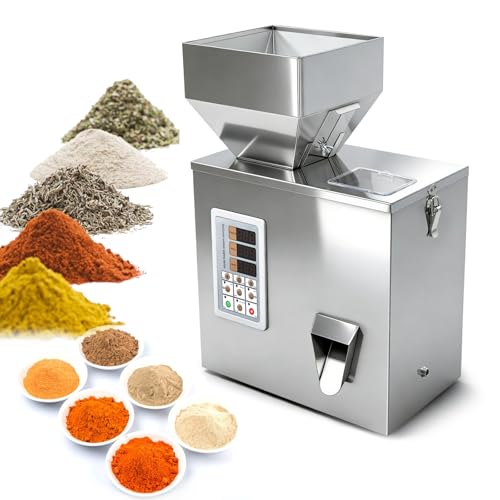
Better for home users and micro-operations seeking compact equipment with precise weighing. It weighs 0.0022–0.22 lb portions with 8–16 packs per minute. The device shares a vibration-assisted feed system for consistent results and is suitable for powders and small granules. Not recommended for loose tea leaves or irregular shapes.
Best for: hobbyists, sample runs, and small-batch seasoning or instant drink mixes. Caution: performance depends on material fluidity and may require weight tuning for very fine powders.
TREESNAIL 2-200g Powder Filling Machine

Choose this for slightly larger portions while keeping a compact footprint. It supports 8–16 packs per minute with 0.0044–0.44 lb (2–200 g) ranges. The vibration-assisted feed provides steadier discharge for powders and granules. Not ideal for non-free-flowing materials without modification.
Best for: mid-size home businesses and boutique packaging lines. Limitation: performance decreases with materials that clump or bridge in the hopper.
Hanchen Powder Filling Machine 1-50g

Best for precise small amounts and education or lab-like packaging tasks. It features intelligent filling with a multi-speed control, a visual window, and a dual-vibration system to reduce residues. Not ideal for very large batch production due to its smaller weight range and slower speeds.
Best for: culinary students, test kitchens, and craft projects. Caution: smaller capacity means slower throughput for larger runs.
XKOPCAL Powder Filling Machine 10-999G
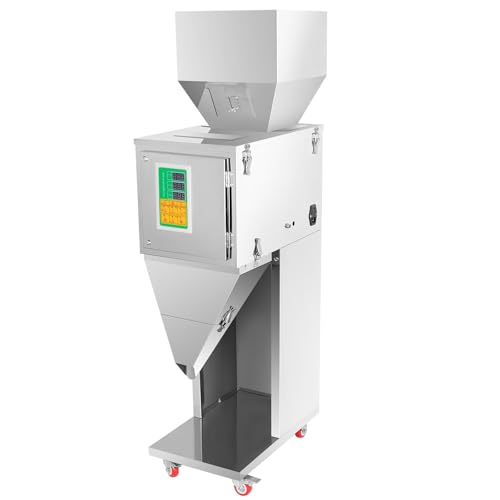
Best for diverse materials and larger bag sizes. This model supports 13–20 bags per minute with an accuracy around ±0.1 g. It uses dual vibration for stable feeding and features an intelligent control panel with weight presets and eight speed levels. Suitable for tea, grains, seeds, and beans, but may be overkill for very tiny portions.
Best for: small manufacturers needing flexibility and tighter tolerances. Caution: higher initial cost and more complex setup compared to ultra-compact models.
Buying Guide
What weight range do I need?
Choose a machine that covers your typical portion. If you package 1–100 g, a model like TREESNAIL 1-100g or Hanchen 1-50g is appropriate. For larger batches, consider the 2-200g or XKOPCAL 10-999G options.
How important is filling speed?
Faster machines improve throughput but may sacrifice precision on tricky powders. For free-flowing materials, 8–16 packs per minute is common and suitable for micro-operations. If your focus is accuracy for small sachets, slower speeds with tight tolerances may be preferable.
What materials can be filled?
Most models handle powders and granules such as spices, coffee, flour, and instant mixes. Some can handle only free-flowing materials; irregular or sticky substances may require material testing or equipment adjustments.
Which features matter for reliability?
Key features include a vibration feeding system for consistent flow, a visual observation window, an intelligent control panel with weight presets, and a durable stainless steel build. Look for dual-vibration designs to minimize residue and improve accuracy.
What maintenance is typical?
Regular cleaning, inspection of vibration components, and calibration checks are common. Stainless steel bodies resist corrosion and are easier to sanitize in food-related use. Be mindful of hopper size and ease of disassembly for cleaning.
Is a higher price justified?
Higher-priced units often provide tighter tolerances, broader weight ranges, and faster throughput. For hobbyists or occasional use, budget models can be adequate, but for small businesses, the added reliability and support may justify the investment.
FAQ
What is the typical accuracy of these powder filling machines?
Most models report ±0.1–2% depending on material and settings, with some achieving ±0.1 g for smaller portions.
Can these machines handle irregular or chunky materials?
Many are designed for free-flowing powders and small granules. Irregular shapes or high moisture can cause feeding issues and may require different equipment or preparation.
Do these machines require special power supply?
Most units run on standard 110V power and include integrated control panels. Some models offer multiple speeds and adjustable weights for flexibility.
How easy is cleaning and sanitation?
Machines with stainless steel construction and accessible hoppers are typically easier to clean. Regular disassembly and wipe-down are recommended for food-grade applications.
What is the typical throughput range?
Throughput generally ranges from 8 to 20+ packs per minute, depending on model, material, and target weight.