Pilot operated check valves provide controlled hold and relief in hydraulic circuits, preventing cylinder drift when a valve is in neutral. This guide highlights five reliable options suited for different flow rates, port sizes, and environments. The top picks cover metal housings, aluminum bodies, and steel constructions to fit mobile or stationary equipment. Best for: industrial hydraulic systems, mobile machinery, and OEM assemblies requiring reliable anti-drift performance and straightforward integration.
| Product | Max Flow | Port Type | Material | |
|---|---|---|---|---|
| Summit Hydraulics Double Pilot 11 GPM | 11 GPM | #6 SAE | Steel | Small to mid-size cylinders, compact manifolds |
| Threlaco Double Pilot 20 GPM | 20 GPM | #8 SAE | Anodized Aluminum | Higher-flow circuits, corrosion-resistant parts |
| Summit Hydraulics 11 GPM ½” NPT | 11 GPM | ½” NPT | Steel | Standard hydraulic circuits with pipe-thread fittings |
| Fluidhaus D03 13 GPM | 13.1 GPM | D03/NG6 (top ports) | Aluminum | OEM-style top-mount configurations |
| Buyers Products HCVD08SAE | – | 1/2″ SAE | Standard steel | Truck, trailer, and equipment hydraulics |
Summit Hydraulics Double Pilot Check Valve, 11 GPM

This valve is designed to lock hydraulic cylinders in place when the controlling valve is neutral. It uses a 4:1 pilot ratio and supports up to 5000 PSI, with #6 SAE O-Ring Boss ports (9/16”-18) for robust sealing. Best for compact, high-pressure circuits where field reliability matters. Choose this if you need a compact, high-pressure solution for smaller manifolds.
Best for: equipment with tight space and higher pressure requirements, where 9/16”-18 threaded connections are standard. Limitation: port size and body dimensions may restrict use in larger system blocks.
Threlaco Double Pilot Operated Valve, 8 SAE Ports

Equipped for up to 20 GPM and 3000 PSI, this valve uses an anodized aluminum body to reduce weight while resisting corrosion. It includes a #8 SAE O-Ring Boss thread for straightforward installation in common manifolds. Best for mobile and industrial systems that require intermediate flow with reliable pilot release. Choose this if you want a lighter, corrosion-resistant design with solid mid-range performance. Caution: aluminum construction may be less rugged in heavy shock environments compared to steel.
Summit Hydraulics ½” NPT Pilot Check Valve

This version uses ½” NPT ports with a similar 11 GPM rating and 5000 PSI capacity, but in a pipe-thread configuration. Best for standard hydraulic circuits that rely on threaded connections rather than SAE flange adapters. Choose this if your system already uses NPT fittings and you need consistent performance in a compact form. Limitation: NPT connections may require sealing compounds or tape, depending on the installation.
Fluidhaus Pilot Operated Check Valve, D03 Module
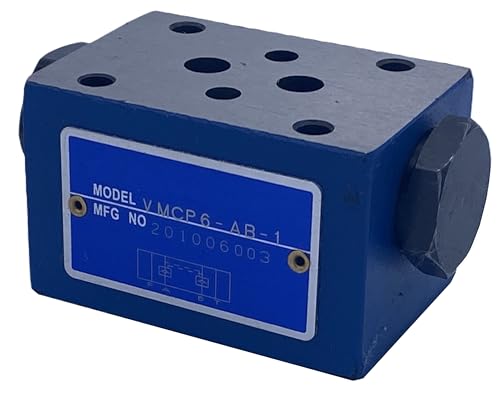
Designed for robustness, this module features mounting bolts included for direct top-mount integration with directional control valves. It supports up to 3045 PSI and about 13.1 GPM, suitable for OEM and high-volume applications. Best for installations where a coordinated valve stack is advantageous. Avoid this if space around the valve is extremely tight, as the top-mount bolts add footprint to the assembly.
Buyers Products HCVD08SAE Double Check Valve

This 1/2″ SAE valve operates up to 3625 PSI, offering reliable double-check functionality for common truck, trailer, and equipment hydraulics. Best for fleet or workshop use where standard SAE fittings and strong pressure ratings matter. Limitation: limited port options may constrain integration into complex manifolds.
Buying Guide
What to consider when choosing a pilot operated check valve
- Flow capacity: Match the valve to your system’s GPM requirement. Higher flow needs larger ports and stronger seats.
- Port size and thread type: SAE vs. NPT and the correct thread size affect compatibility with existing manifolds and fittings.
- Material and environment: Steel bodies are rugged; aluminum bodies save weight and resist corrosion. Consider mobile vs. stationary use.
- Crack pressure and pilot ratio: Larger crack pressures provide faster response; higher pilot ratios can improve hold capacity in dynamic loads.
- Mounting and integration: Some models include mounting bolts or top-mount options for easier OEM-style integration.
- Maintenance and seals: Look for compatible seals (O-ring boss vs. standard seals) and ease of service in the field.
How to compare similar valves
- Compare maximum flow against system demand to avoid pressure drop or sluggish response.
- Check port standards to ensure seamless compatibility with existing hydro blocks and hoses.
- Assess weight and material for the operating environment, especially in mobile equipment.
Installation tips
- Follow standard safety practices when depressurizing hydraulic lines before installation.
- Use proper sealants or thread tape where required for NPT ports to prevent leaks.
- Position pilot lines for reliable actuation and avoid kinks or sharp bends in hoses.
FAQ
- What is a pilot operated check valve? The valve uses a pilot signal to release or seat a check valve, providing controlled hold and release in hydraulic circuits.
- When should I use a pilot operated valve? Use when you need cylinder hold in neutral and controlled retraction under load, especially in mobile machinery and OEM stacks.
- What port size should I choose? Choose based on your system’s GPM needs and existing fittings; SAE is common for manifolds, while NPT is standard for pipe-thread systems.
- Are aluminum pilot valves durable for heavy duty use? Aluminum is lighter and corrosion-resistant, suitable for many mobile applications, but steel variants may offer higher durability in shock-prone environments.
- Do these valves require special maintenance? Regular inspection for leaks and seat integrity is recommended; use compatible seals and follow manufacturer guidelines for servicing.
- Can these valves be integrated into existing valve manifolds? Yes, most models are designed for common hydraulic manifolds and can be adapted with standard fittings.