Discover top wind turbine motors and kits ideal for learning, experiments, and small-scale electricity generation. This guide highlights five reliable options, covering educational kits, mini generators, and compact wind turbines suitable for classrooms, workshops, or hobby projects. Each picks focuses on durability, ease of use, and real electricity generation to power small devices.
| Product | Type | Key Use | Notable Feature |
|---|---|---|---|
| Thames & Kosmos Wind Power V4.0 STEM Experiment Kit | Educational Kit | Build a 3 ft turbine to generate electricity | Single-piece blade construction for aerodynamics |
| Sntieecr 6 Set Mini Generator Motors | Mini DC Motors Kit | DIY wind turbine with multiple propellers | Includes different voltages and speeds for learning energy conversion |
| RIYIN 120V DC Motor Wind Turbine Generator | DC Motor Generator | Higher voltage wind energy demonstration | Rated at 120V with 50W output |
| QX Electronics 1PC AC Micro Wind Generator | AC Micro Wind Generator | Small-scale wind-to-AC power experiments | Output voltage 0.01–15V |
| SWONVI 2 Pcs DC 0.1V-5.5V Wind Turbines | DIY Wind Turbine Kit | Educational demonstration kit | Includes assembly for hands-on learning |
Note: Each product in this list serves different learning goals—from classroom demonstrations to hands-on tinkering. Review features and compatibility with your setup to choose the best fit for your wind-energy exploration.
Thames & Kosmos Wind Power V4.0 STEM Experiment Kit
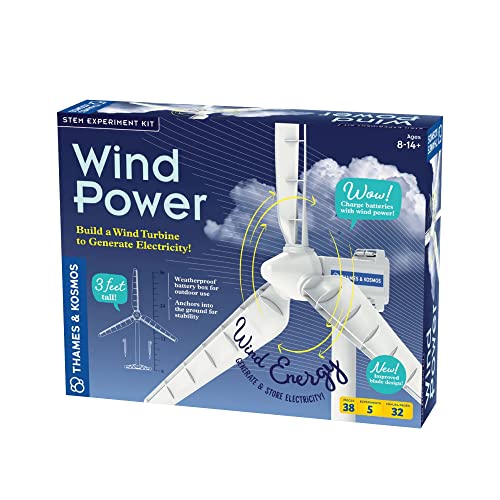
Built around a real, working 3-foot tall wind turbine, this kit helps learners understand wind as a clean energy source. It features a single-piece blade design that improves durability and aerodynamics. The kit enables electricity generation to charge a battery and power a small model car, integrating hands-on physics with practical applications. Ideal for classrooms and hobbyists exploring renewable energy basics and turbine concepts.
EUDAX Mini Generator Motors 3V-12V DC Motor

This compact set covers multiple voltages with corresponding speeds, enabling experimentation with wind, hand-crank, or small mechanical power sources. The motor body diameter is 24mm with a 14 cm lead, making it easy to integrate into small turbines or DIY projects. Suitable for students and hobbyists exploring energy conversion and motor-to-generator behavior in a compact package.
Sntieecr 6 Set Mini Generator Motors 3V-12V
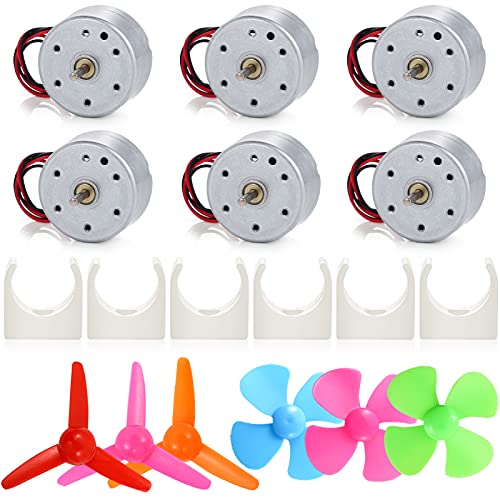
Designed as an educational beginner kit, this set includes six mini DC motors with different propeller configurations to teach energy conversion. Voltage levels of 3V, 4.5V, and 12V correlate with respective speeds, enabling users to observe how wind and rotation translate to electrical output. The kit emphasizes hands-on experimentation and is suitable for physics and engineering classrooms or home labs.
RIYIN 120V DC Motor Wind Turbine Generator
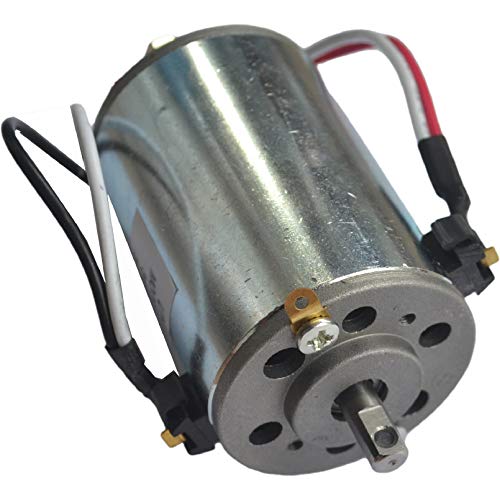
This wind turbine generator operates at a higher voltage, rated at 120V DC with an output around 50W. Front and rear ball bearings support smoother operation, which is useful for demonstrations requiring higher voltage demonstrations or longer-running experiments with a compact turbine design. Suitable for more advanced experiments and power scaling concepts in wind energy studies.
QX Electronics 1PC AC Micro Wind Generator

This micro wind generator provides an AC output, with voltage control in the 0.01–15V range. It’s compact and suitable for small-scale wind energy experiments where AC output is desired for educational demonstrations or simple power projects. This model helps illustrate how wind energy can be converted into different electrical forms and can be paired with small rectification or storage setups.
SWONVI 2 Pcs DC 0.1V-5.5V Wind Turbines

This pair of DIY wind turbine kits features four-vanes and a 100mm fan diameter, suitable for classroom demonstrations or home experiments. The kit provides the experience of assembling a wind power model and observing its ability to generate electricity under controlled wind-like conditions. It’s a practical hands-on option for beginners exploring wind energy principles and small-scale power generation.
Buying Guide
Key purchase considerations for wind turbine motors and kits include:
- Voltage and current requirements: Compare the expected output with your project needs, whether you aim to light LEDs, charge batteries, or power small devices.
- Scale and application: Educational kits suit classrooms, while compact motors fit hobby projects or demonstrations. Choose based on space and goals.
- Durability and materials: Look for blades and housings designed to withstand handling and repeated assembly.
- Ease of use: Beginner-friendly kits with clear instructions help learners grasp wind energy concepts quickly.
- Output form: Some models provide DC output, others AC; consider compatibility with storage or rectification components.
- Upgrade path: If you start with a basic kit, ensure components can be reused in more advanced setups or expanded turbines.
- Safety: Ensure safe assembly practices, particularly with high-voltage or moving parts.
For educators, look for kits that align with curriculum standards on energy and physics. For hobbyists, prioritize durability and expandability, such as compatibility with solar panels or battery storage. Evaluating multiple perspectives—educational value, engineering practicality, and potential for real-world application—helps ensure a well-rounded selection.