Choosing the right lifting sling is essential for crane operations, vehicle recovery, construction, and other heavy lifting tasks. This article highlights five top-rated lifting slings and related straps designed to provide strong, reliable performance across a range of applications. Each product is evaluated on load capacity, construction, and practical use in real-world lifting scenarios.
| Product | Material | Vertical WLL | Basket WLL | Length / Width |
|---|---|---|---|---|
| Nylon | 3333 lbs | 9400 lbs | 20 ft x 2 in | |
| Polyester | 6600 lbs | — | 3 in x 10 ft | |
| Polyester | 8800 lbs | — | 18 ft | |
| Polyester | 11000 lbs | — | 10 ft | |
| Polyester | 4409 lbs | 8818 lbs | 3.3 ft x 2 in |
The table above summarizes each option’s key specs to help you compare capacity, length, and intended use at a glance. The following sections provide deeper details on each product’s features and ideal applications.
TOPZEA 2 Pack Lift Sling Straps
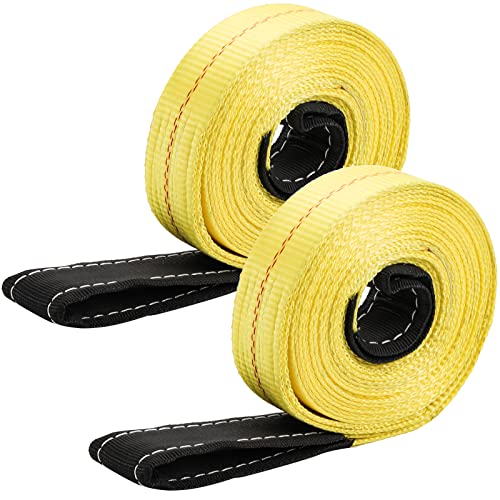
TOPZEA offers a two-pack of durable nylon lifting slings, each 20 feet long and 2 inches wide. The product is designed to handle a range of shapes, including vehicles, boats, furniture, structural steel, and other heavy loads, making it versatile for towing, recovery, and crane-assisted lifting. The straps provide multiple load configurations: vertical, choker, and basket, with a maximum basket rating of 9400 lbs. Users must carefully evaluate how the load will be attached to ensure the appropriate working load limit is selected for a given task. The long length helps keep operators safely away from the load while applying force, which is especially useful during vehicle recovery or pulling operations in difficult terrains.
Key considerations:
- 2-inch width reduces risk of cutting or abrasion on sharp edges, but inspect for wear after use.
- Heavy-duty nylon construction offers good flexibility and strength, with versatility for different load shapes.
- Always verify the attachment method aligns with the basket rating to avoid overstressing the sling.
Kivomot 2-Pack 3″×10ft Polyester Lifting Sling

Kivomot’s double-layer polyester lifting slings measure 3 inches in width and 10 feet in length, delivering robust performance for crane operations, hoists, and cargo handling. With a rated capacity of 6600 lbs and a 5:1 safety factor, these slings are built to handle demanding industrial lifting jobs while maintaining stability and minimizing stretch under load. The reinforced eye-to-eye loops are designed for secure attachment to lifting hooks and cranes, helping to reduce wear on the webbing and extend service life. For projects requiring longer reach or larger loads, these slings offer a reliable balance between strength and maneuverability.
Key considerations:
- Polyester webbing provides excellent resistance to abrasion and UV exposure.
- Eye-to-eye loops are reinforced for better longevity under heavy use.
- Ensure the load’s geometry suits a 3-inch wide strap to maximize stability.
3″ x 6′ FT Poly Web Lifting Sling

This 3-inch by 6-foot lifting sling offers a vertical rating of 9,600 pounds and a choker rating of 7,680 pounds, representing a solid option for smaller to medium loads. The rope-like geometry of a 2-ply webbing in polyester provides dependable strength with a compact profile, making it suitable for limited space crane rigging, rigging points, and edge protection when used with softeners. The product is designed for professional settings where rapid setup and consistent performance are required, such as crane rigging and light industrial lifting tasks.
Key considerations:
- 3″ width improves load stability but increases weight; verify crane capacity accordingly.
- 2-ply construction emphasizes durability under repeated cycles.
- Always inspect for fraying, cuts, and edge wear before each lift.
Dawnerz Heavy Duty 18 ft Lifting Strap

This Dawnerz lifting strap is designed for heavy-duty use, offering an 8800 lbs vertical WLL and an extended 18-foot length. The strap is suitable for cranes, hoists, and boats, with heat resistance and resistance to oils and greases. The long length enables safer operation by keeping personnel clear of the load and providing ample working clearance. The construction emphasizes consistency in performance across harsh environments, making it a preferred option for long-reach lifting tasks, outdoor job sites, and marine applications.
Key considerations:
- Long length provides flexibility for larger or difficult-to-reach loads.
- Resistance to environmental factors such as saltwater and oils extends service life in harsh conditions.
- Verify the load alignment to ensure the vertical WLL is not exceeded during operation.
Dawnerz Industrial Lifting Sling 11000 LBS, 10 ft

With a 11000 lbs vertical WLL and a 5:1 safety factor, this 10-foot Dawnerz lifting sling is designed for high-demand crane and construction environments. The eye-to-eye flat polyester webbing is engineered for reliability and longevity, offering robust performance even under sustained use. The product emphasizes European craftsmanship and resilience, boasting strong resistance to wear and a wide operating temperature range from -40 °F to +200 °F. This makes it suitable for extreme cold or heat setups, in additions to standard shop environments.
Key considerations:
- High WLL supports heavy loads with ample safety margin.
- Flat polyester webbing reduces snagging and improves load stability.
- Authorization and standard compliance should be checked for critical projects.
Generic 4″ x 6′ Lifting Sling 25,600 Lbs Basket
This broad sling measures 4 inches by 6 feet with a vertical rating of 12,800 pounds and a choker rating of 10,240 pounds, delivering strong performance for larger loads and heavier rigging tasks. The 2-ply polyester construction provides adequate durability for routine crane rigging and rigging work where wider contact surfaces can help distribute stress and minimize sling wear. It is designed for professional use with a focus on generous load capacity and robust construction.
Key considerations:
- Width improves load distribution but requires compatible attachment points.
- Large basket capacity supports multi-point lifting scenarios.
- Inspect for mechanical damage after each lift to prevent failures.
Buying Guide: Key Purchase Considerations
When selecting a material lifting sling for crane work, consider the following to ensure safe, efficient, and cost-effective use:
- Load rating and safety factor: Always align the sling’s working load limit with the actual load and required safety margin. A higher safety factor reduces risk in dynamic lifts or edge-loading.
- Material and construction: Polyester is common for durability and UV resistance, while nylon offers excellent elongation properties. Consider the environment, edge sharpness, and repeated-use requirements.
- Length and width: Longer slings provide reach and clearance, while wider slings protect load edges and improve stability. Choose dimensions that match crane hooks, rigging points, and load geometry.
- Attachment points: Eye-to-eye vs. end loops – reinforced loops extend life and reduce wear. Verify compatibility with crane hooks and shackles to avoid slippage or detachment.
- Edge protection and wear: Use edge protectors and inspect for cuts, abrasions, and fraying after each job. Damaged slings should be removed from service immediately.
- Temperature and chemical exposure: Some slings tolerate extreme temperatures and resist oils; others may degrade quickly in harsh environments. Match the sling to site conditions.
- Compliance and certification: Look for industry-standard certifications and manufacturer assurances regarding webbing quality and load testing.
- Storage and maintenance: Store in a dry, shaded area away from direct sunlight. Clean slings after use to extend life and prevent chemical damage.
In practice, select slings based on the typical load sizes you handle, the frequency of use, and the working environment. For urban construction sites, long nylon or polyester slings with reinforced loops offer versatility and safety. For marine or extreme-temperature jobs, choose slings with corrosion resistance and broad temperature tolerance. Always conduct a pre-lift inspection and follow manufacturer guidelines for rigging and signaling to maintain safe operation on every lift.