Need a reliable L-Port ball valve for selective flow direction in plumbing, irrigation, or industrial setups? This guide highlights five solid options, explains who they’re best for, and why they’re good fits for different systems. Each product is evaluated on port design, materials, and compatibility to help you choose with confidence. The top picks cover forged brass, stainless steel, and brass variants to suit varied temperatures and media.
Top picks overview:
- QWORK Series 3-Way (L-Port) Ball Valve — forged brass, durable long-life seat and chrome-plated ball.
- 1″ 3 Way Female NPT 304 SS Type L Port Ball Valve — corrosion-resistant stainless steel body, standard API-style design.
- BesNPT 3 Way (L-Port) Brass Forged Ball Valve — compact 1/4″ G female thread, solid brass construction.
- QWORK 2 Pack 1/4″ NPT Brass Instrument 3 Way Ball Valve — compact, brass, panel-mounted variant for instrumentation lines.
- DERNORD 3-Way Ball Valve with L Mounting Pad — stainless steel 304 body, versatile installation options.
QWORK Series 3-Way L-Port Ball Valve — Forged Brass

Best for high-durability, long-service life in basic fluid routing. The forged brass body and chrome-plated ball offer solid resistance to wear. PTFE seats provide wear and corrosion resistance, supporting reliable operation in lower- to medium-pressure systems. Designed with an L-Port to direct flow between two outlets while maintaining a closed path for the third port.
- Best for: small to mid-size plumbing or industrial lines requiring a durable L-Port control.
- Why selected: robust forged brass construction with long-lasting PTFE seals and a corrosion-resistant ball.
- Caution: verify compatibility with the intended media temperature to avoid PTFE seat damage at extreme heat.
1″ 3 Way Female NPT 304 SS L Port Ball Valve

Best for stainless steel systems needing API-standard design and corrosion resistance. The 304 SS body offers durability in potable water, chemical, or oil-related applications. L-Port configuration supports straightforward flow splitting or rerouting in line with system requirements.
- Best for: setups requiring stainless-steel robustness and API-aligned design.
- Why selected: corrosion resistance and a recognizable, standard-friendly configuration.
- Caution: size and port arrangement must match your existing fittings to ensure proper threading and seal integrity.
BesNPT 3 Way L-Port Brass Forged Ball Valve — 1/4″ G Female

Best for compact instrumentation lines or tight spaces where a small L-Port valve is needed. Brass forged construction ensures durability with good heat tolerance, and the L-Port design supports controlled routing in smaller systems. The 1/4″ G female thread size supports common miniature fittings.
- Best for: compact plumbing or instrumentation lines needing a precise L-Port path.
- Why selected: solid brass build and small footprint for constrained layouts.
- Caution: ensure thread type and ID match your fittings to avoid leaks due to mismatched threads.
QWORK 2 Pack 1/4″ NPT Brass Instrument L-Port Ball Valves
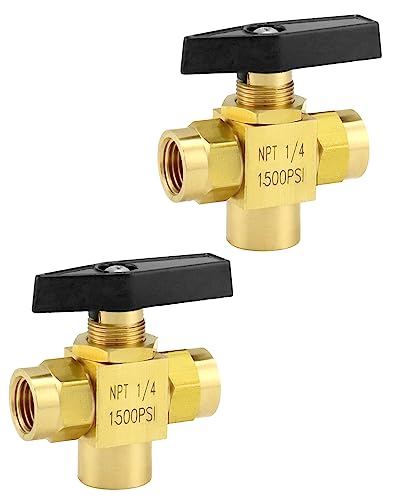
Best for instrumentation panels needing a compact, secure L-Port valve with multiple NPT ports. The 1/4″ NPT brass valves are designed for instrument fittings and offer durable brass construction with corrosion resistance. The three NPT ports support straightforward integration into panel-based setups.
- Best for: instrumentation and panel-mounted installations requiring a compact L-Port valve.
- Why selected: two-pack option provides redundancy or multiple-line control in instrumentation panels.
- Caution: panel mounting requires secure fasteners and proper alignment to avoid leaks at the inlet/outlet seals.
DERNORD 3-Way L Mounting Pad Ball Valve — Stainless 304

Best for versatile mounting and medium-pressure applications in water, oil, and gas lines. The stainless steel 304 body supports general-purpose fluid transfer and easy disassembly for maintenance. The L mounting pad adds flexibility for installing in tight or retrofit environments.
- Best for: systems needing versatile mounting options and corrosion resistance for varied media.
- Why selected: robust stainless construction with an L mounting pad for adaptable installations.
- Caution: ensure the mounting hardware and pad tolerances align with your frame or enclosure to prevent misalignment.
Buying Guide: How to Choose the Right L-Port Ball Valve
Key questions to guide your decision:
- What media will flow through the valve? For water and non-corrosive liquids, brass or stainless options work well; for aggressive chemicals, check material compatibility.
- What temperature range will the system experience? PTFE seats are common and wear-resistant, but high-heat environments may require alternative seat materials.
- What is the pipe size and thread type? Match the valve port size and thread type (NPT, G, etc.) to your piping system for a proper seal.
- Is mounting space limited? L-Port valves with mounting pads or compact brass variants may fit tighter layouts.
- Is serviceability important? Valves designed for easy disassembly benefit maintenance and inspection.
- What is the expected flow path? L-Port designs direct flow between two ports while closing off the third; confirm this aligns with your routing needs.
Practical tips for installation and use
- Always verify thread fittings and sealant compatibility before assembly.
- Use appropriate torque specifications to protect seals and prevent leaks.
- Consider a corrosion-resistant coating or protective environment for outdoor or harsh settings.
FAQ
- What is an L-Port ball valve? A valve with a Y-shaped L-Port that directs flow between two ports while isolating the third, enabling selective routing.
- Which material is best for drinking water applications? Stainless steel (304/316) or brass variants with food-grade seals, depending on temperature and pressure.
- Are L-Port valves suitable for high-pressure systems? They can be, but always check the pressure rating for each model and ensure compatibility with media.
- Do these valves require special tools for installation? Typical hand tools are enough; panel-mounted or instrument variants may require mounting hardware per kit instructions.
- Can I reuse PTFE seats after disassembly? Reuse is not recommended; replace seats to maintain a proper seal.
- What maintenance is recommended? Periodic inspection of seals and threads; replace worn seals promptly to avoid leaks.