Answering the practical needs of on‑site fueling, these best‑in‑class job site fuel tanks and pumps are designed for quick, safe, and spill‑free refueling in rugged environments. Ideal buyers include fleet maintenance teams, construction crews, and agricultural operators who need portable fuel storage or fast transfer capabilities without downtime. The selections below emphasize durability, portability, and integrated pumping options to keep equipment moving on busy worksites.
| Product | Capacity | Best For |
|---|---|---|
| Ensurix 12V Fuel Transfer Pump Kit | Not specified; on‑site 18 GPM pump | Heavy equipment refueling in the field |
| 50 Gallon Portable Storage Caddy | 50 gallons | Transporting and dispensing fuel on the go |
| Scepter Flo ’N Go 14 Gallon | 14 gallons | Small jobs, lawn care, farm use, quick fills |
| VEVOR Portable Diesel Tank | 58 gallons | High‑volume diesel transport and refueling |
| 48 Gallon Portable Fuel Transfer Tank | 48 gallons | General diesel transfer for trucks and tractors |
Ensurix 12V Fuel Transfer Pump Kit 18 GPM

The Ensurix kit provides an on‑site 12V transfer pump with 18 GPM flow, enabling rapid field refueling directly from tanks to tractors, excavators, and trucks. It includes a 2″ NPT bung mount and auto shut‑off nozzle to minimize spill risk and operator attention. Best for fleets needing fast, controlled transfers on rough terrain and in remote job sites.
Who it’s best for: operations prioritizing speed and spill prevention when refueling heavy equipment away from a shop, such as construction crews and farm fleets. Caution: continuous operation may require adequate ventilation and pairing with a weather‑proof power setup to prevent overheating in extreme conditions.
50 Gallon Portable Storage Caddy with Manual Transfer Pump

This 50‑gallon wheeled caddy combines large capacity with mobility. Built from rugged stainless steel, it resists UV exposure and corrosion, making it suitable for garages, truck beds, or outdoor sites. It includes a two‑way manual pump for dispensing or siphoning, and a visible level gauge to help prevent shortages during multi‑day operations.
Best for: teams needing a portable refill station that can move around a job site with ease and manage fuel levels at a glance. Better for: low‑tech setups where manual pumping is acceptable. Limitation: manual pump action may be slower than electric transfer in larger refueling tasks.
Scepter Duramax Flo ’N Go 14 Gallon Gas Caddy

The Scepter Flo ’N Go is a compact, 14‑gallon gasoline caddy with wheels and a pump. Its dual fueling modes—gravity flow and manual pump—support different refueling scenarios, including elevated transfers or ground‑level siphoning. It is well suited for lawn care fleets, small farms, and golf‑course maintenance where quick, portable fueling matters.
Best for: smaller jobs or spaces where portability and simple operation are paramount. Choose this if you need a lightweight, ready‑to‑roll solution. Caution: lower capacity means more frequent refills for larger equipment fleets.
VEVOR Portable Diesel Tank, 58 Gallon

VEVOR’s 58‑gallon diesel transfer tank features a 12V pump and a strong polyethylene body designed for weather resistance and theft protection with a copper lockable lid. It includes a 13.1‑foot hose and a duplex filter system to help reduce impurities during transfer. Best for: on‑site refueling of trucks, generators, and heavy equipment in varied weather. Limitation: higher capacity may reduce portability compared to smaller caddies.
48 Gallon Portable Fuel Transfer Tank with 12V Pump
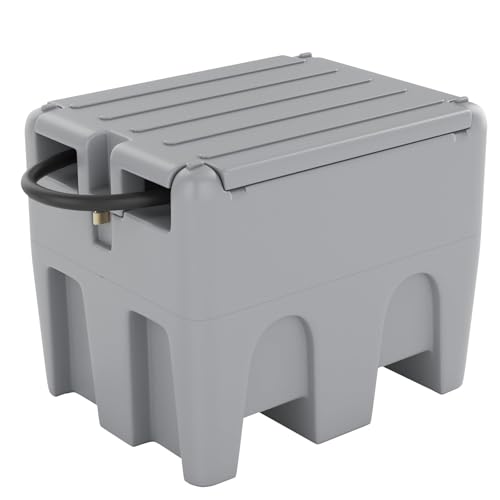
This gray 48‑gallon tank uses a 12V electric pump to deliver up to 10 GPM, with a 13‑foot hose and auto nozzle for convenient, controlled fueling of trucks, tractors, and boats. The durable polyethylene body is designed to withstand job‑site conditions. Best for: mid‑size fueling needs where a balance of capacity and portability is required. Limitation: may not be ideal for continuous high‑volume refueling due to fixed pump speed.
Buying Guide: Key Considerations For Job Site Fuel Tanks
- Capacity vs. mobility: Larger tanks store more fuel but weigh more and are harder to move. Balance your daily refueling needs with your site layout.
- Pump type and flow rate: Electric vs. manual pumps have different maintenance and speed implications. Higher GPM speeds refueling but may require power sources and heat management.
- Spill prevention features: Auto shut‑off nozzles, anti‑drip mechanisms, and swivel adapters help minimize spills and environmental impact.
- Durability and weather resistance: Look for UV‑resistant plastics or corrosion‑resistant metals, plus secure lids and theft protection where applicable.
- Filters and fuel cleanliness: Duplex or effective filtration helps reduce contaminants reaching equipment, especially with reused containers.
- Mounting and portability: Bung mounts, wheels, and handles determine how easily you can deploy or relocate the tank on site.
- Compatibility and fittings: Confirm NPT sizes and hose categories to ensure compatibility with your existing equipment and hoses.
- Safety and regulations: Ensure that your setup complies with local environmental and fueling safety guidelines, including spill containment and ventilation considerations.
Frequently Asked Questions
- What is the best fuel tank for heavy equipment refueling on a remote job site?
– A high‑capacity, weather‑resistant tank with a reliable 12V pump and auto nozzle is best, as it minimizes trips and reduces spill risk on rugged terrain. - Should I choose electric or manual pumping for on‑site fueling?
– Electric pumps offer quicker transfers for larger volumes, while manual pumps are simpler and less prone to power issues in remote areas. - How important is a visible fuel gauge on a portable tank?
– Very important; it prevents unexpected shortages and helps schedule timely refills during multi‑day operations. - Are spill‑prevention features essential?
– Yes. Auto shut‑off nozzles and swivel adapters reduce spill risk and improve on‑site safety. - Can a portable fuel tank double as a stationary storage unit?
– Some designs are mobile but can be stowed for stationary use; check portability features and lid security for long‑term storage. - What maintenance is needed for fuel transfer tanks?
– Regularly inspect hoses, seals, filters, and mounts; clean external surfaces and store in a dry, ventilated area when not in use.