Looking for an industrial wet vacuum with a pump-out feature? This guide highlights five options designed for heavy-duty water removal and continuous operation on job sites. These models are best for contractors, facilities crews, flood recovery teams, and workshop professionals who need reliable liquid transfer without stopping the vacuum. Each entry explains who it’s best for, why it was selected, and any notable limitations to consider before you buy.
Summary of selected products:
| Product | Best For | Why It Stands Out |
|---|---|---|
| Shop-Vac 9601806 | General contractors and workshops | Solid 18-gallon tank with 6.0 peak HP and pump-out capability using a garden hose |
| Mastercraft Pump-Out Flood Vacuum 20 Gal | Flood response and continuous pumping | Continuous discharge while vacuuming with a 50 ft hose |
| IPC GC 190 Auto-Discharge | Flood recovery crews | 24-gallon tank and submersible pump for fast drainage |
| Hamwesh 20L Pneumatic Industrial Vacuum | Workshops with noisy environments | Pneumatic drive and low noise |
| MANTARAY Water-Powered System | Industrial operations needing stand-up pump-out | Integrates pump-out with polishing/roughing workflow |
Shop-Vac 9601806 18 Gallon Pump-Out Wet/Dry Vacuum

- Best for: General contractors and workshop cleanup requiring liquid removal with pump-out capability.
- Why selected: Large 18-gallon tank, 6.0 peak HP, 130 CFM, and a pump-out feature that drains via a garden hose (hose not included). Suitable for wet or dry pickups on job sites.
- What to know: Comes with two hoses, including a 2-1/2 in. x 6 ft. hose and a 1-1/4 in. x 8 ft. hose. Ensure you have a garden hose on site for pumping liquids out.
- Limitations: No included garden hose; real-world pumping performance depends on hose routing and drainage availability.
Mastercraft Pump-Out Flood Vacuum 20 Gal
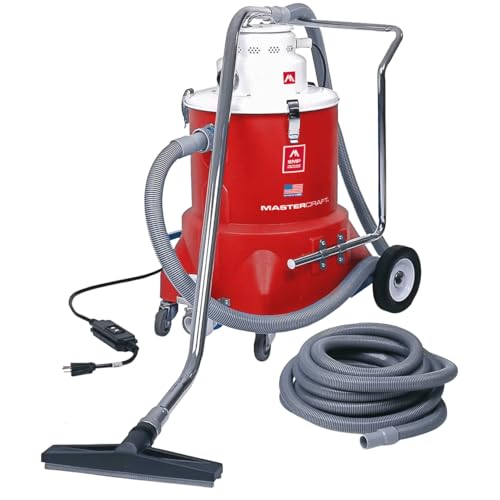
- Best for: Flood recovery and continuous water removal during pumping tasks.
- Why selected: The feature that sets this unit apart is continuous discharge while vacuuming, enabling nonstop water transfer to a drain via the 50 ft discharge hose.
- What to know: 1.3 HP bypass motor provides 94 CFM and 84″ water lift for fast pickup; designed to operate with minimal interruption during dewatering tasks.
- Limitations: Boasting a specialized pump system; ensure you have appropriate discharge routing and safe setup for unattended operations.
IPC GC 190 Auto-Discharge Pump-Out Vacuum

- Best for: Flood recovery teams handling large water removal tasks.
- Why selected: 24-gallon tank with a built-in auto-discharge feature supports pumping water out through a 1.5″ hose, combining power and convenience for continuous operation.
- What to know: Motor delivers 1,000 watts, producing 101 CFM and 87″ water lift for effective cleanup.
- Limitations: Larger setup may require more storage and drainage management on site.
Hamwesh Wet Dry Vacuum 20L Pneumatic

- Best for: Environments needing low-noise operation and heavy liquid pickup in industrial settings.
- Why selected: Pneumatic drive with a 20L tank and a float mechanism to prevent overflow. Suitable for recovering liquids with viscosity up to 3000 cP and debris separation.
- What to know: Low-noise performance makes it practical for noise-sensitive work areas.
- Limitations: Pneumatic systems require compressed air supply; verify your shop has adequate air lines and fittings.
MANTARAY Water-Powered Pump-Out Vacuum System

- Best for: Stand-up pump-out vacuum integration within a water-powered workflow.
- Why selected: Combines pump-out capability with a vacuum system that can align with polishing/roughing tasks in industrial operations.
- What to know: Model supports pump-out operations via water power, which may necessitate specific water source connections on site.
- Limitations: Availability and on-site plumbing considerations may affect setup and performance.
Buying Guide: Key Considerations For Industrial Pump-Out Vacuums
- Tank size vs. job scale: Larger tanks reduce downtime but require more storage space and heavier handling on site.
- Pump-out mechanism: Continuous discharge vs. manual dumping changes workflow and productivity. Choose based on drainage accessibility and workload.
- Motor and airflow: Look for CFM and water lift ratings that match your liquid type and depth. Higher figures generally indicate faster pickup for standing water.
- Discharge hose length: Extended hoses enable drainage to distant locations but may add pressure drop and handling complexity.
- Durability and construction: Poly tanks are common and corrosion-resistant; metal components may offer extra protection in harsh environments.
- Power source compatibility: 120V units are standard, but some models use bypass or pneumatic motors; ensure your site power and air supply align with the unit.
- Maintenance needs: Check for easy filter access, float-valve protection, and pump-line cleanliness to prevent clogs and overheating.
FAQ
- What is a pump-out vacuum? A pump-out vacuum includes a built-in mechanism to transfer collected liquids from the tank to an external drain or location while the unit continues to operate.
- Which vacuum is best for flood recovery? Models with continuous discharge and higher water lift are suited for flood scenarios, such as the Mastercraft unit and the IPC GC 190.
- Do I need a garden hose for pump-out? Some units require a garden hose for discharge, while others include long discharge hoses; confirm hose availability and compatibility before purchase.
- Can pneumatic vacuums operate quietly? Pneumatic vacuums can have lower audible footprints, but require an adequate air supply; check your shop’s air line capacity.
- Is a larger tank always better? Not always—the best size depends on site drainage access, power availability, and the duration of tasks between pump-outs.
- Are these units suitable for industrial chemical liquids? Some units feature corrosion-resistant construction, but confirm chemical compatibility with your specific liquids before use.