Answering the need for reliable dust control, these industrial vacuum dust collectors are designed to manage woodshop debris, drywall dust, and other particulates. The top picks below suit different shop sizes, tool loads, and budget preferences. Choose this guide if you want clearer airflow, better filtration, and easier maintenance for a busy workshop. The buyer’s table summarizes key details to compare quickly.
| Product | Best For | Key Benefit | Notes |
|---|---|---|---|
| JET Cyclone Dust Collector (JCDC-1.5) | Medium to large shops | Two-stage separation for higher CFM | 20-gallon drum; direct-mounted filter |
| JET Vortex Cone Dust Collector (DC-1100VX-CK) | Quiet operation seekers | Durable motor; quick bag setup | Single-stage, economical |
| Oneida Supercell High-Pressure Dust Collector | Professional shops | Very high suction and filtration | HEPA-GFM filter; large hose range |
| Mullet Cyclone Dust Collector | Budget-friendly setups | Pre-separator for better vac performance | Rigid, fixable connections |
| DEWALT Dust Separator DXVCS003 | Versatile, multi-material cleanup | High-efficiency cyclone with stainless tank | Wide material compatibility |
JET Cyclone Dust Collector, 2-Micron Filter, 1-1/2 HP

The JCDC-1.5 uses a two-stage cyclone to maximize airflow at a given horsepower, pulling heavier debris into a 20-gallon drum before it hits the filter. This design reduces filter loading and helps keep suction steady across longer jobs. It’s best for shops with multiple tools generating significant chip and dust load. Choose this if you want higher effective CFM per watt and a direct-mounted filter to minimize airflow losses from hoses and bends.
Best for: Medium-to-large shops with frequent dust production from planers, table saws, and grain-out tasks. Limitation: The 20-gallon drum may require more frequent emptying on heavy-duty days.
JET Vortex Cone Dust Collector with 2-Micron Canister Filter

The DC-1100VX-CK offers durable motor design and quick-connect collection bags, facilitating easy maintenance. It operates as a single-stage unit, which can be economical and quieter than multi-stage competitors. This model is best for smaller shops or setups where quiet operation and straightforward bag changes are priorities. The quick-bag system helps minimize downtime between jobs.
Best for: Hobbyists and small shops seeking a compact, low-maintenance dust collector. Limitation: Single-stage design may be less efficient at pre-separating larger debris than cyclone-based systems.
Oneida Air Systems Supercell High-Pressure HEPA-GFM Dust Collector

The Supercell stands out with 10x higher suction power and a combination of high static pressure and CFM, enabling dust capture from multiple tools and large work areas. Its universal collection design supports hoses from 1″ to 5″ and can handle long runs. It uses a premium HEPA-GFM filtration with an internal pulse cleaner to minimize clogs. This makes it ideal for professional shops needing robust air movement and superior filtration.
Best for: Professionals or serious hobbyists who require high performance across many tools, including CNC routers and planers. Limitation: Higher complexity and potentially larger footprint than entry-level units.
Mullet High-Speed Cyclone Dust Collector
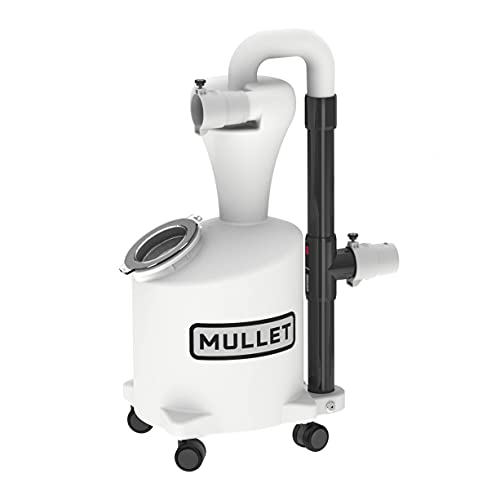
The Mullet unit emphasizes rapid separation with a parabolic design that accelerates dust in the airstream, resulting in better capture and less clogging of filters in shop vacs or dust extractors. It also offers a rigid, cut-to-fit PVC connection to minimize leaks and simplify installation. Best for budget-conscious users who still want high separation efficiency and a clean interface to their existing vac system.
Best for: Budget setups that still need strong separation and easy integration with a shop vac. Limitation: May require additional adaptation for larger tool collections or long duct runs.
WEN Woodworking Dust Collector (DC3401)
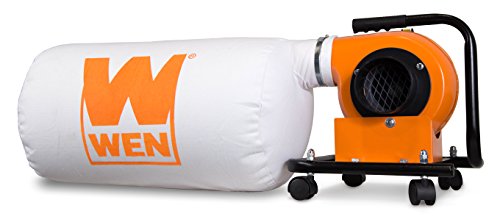
The WEN DC3401 features a 5.7-amp motor and a 12-gallon bag with a mobile base for portability. Its compact design makes it suitable for smaller workshops or spaces with limited floor area. It’s best for users who need a lightweight, movable option that still delivers a respectable airflow, suitable for a few tools at a time.
Best for: Small to medium home shops needing mobility and a compact footprint. Limitation: Lower overall CFM compared to larger, more powerful systems.
WEN DC1300 1300 CFM Dust Collector

The DC1300 models move up to 1,300 CFM and include dual 4-inch inlets to support two tools simultaneously. The 50-gallon collection bag adds capacity for longer runs without frequent bag changes. This unit is best for larger shops or setups where multiple tools operate at once and space allows a bigger dust collection system.
Best for: Shops needing higher airflow with simultaneous tool connections. Limitation: Larger footprint and potentially higher cost than entry-level units.
Shop Fox W1666-2 HP Dust Collector
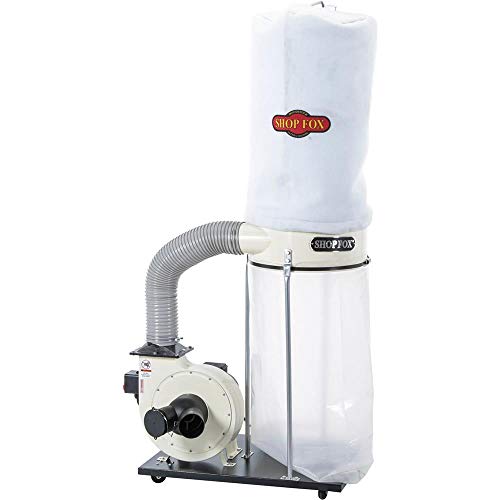
The Shop Fox W1666 is a 2 HP dust collector designed for reliability in woodshops. With a straightforward design, it is easy to operate and suitable for users who want a solid, mid-range dust collection setup. It’s best for hobbyists expanding from smaller units who still want robust performance in a familiar brand ecosystem.
Best for: Hobbyists or small shops seeking dependable, brand-backed performance. Limitation: May not match the highest-end models in suction power or filtration.
DEWALT Dust Separator with 10 Gallon Stainless Tank

The DEWALT DXVCS003 uses a 10-gallon stainless tank with a high-efficiency cyclone design to pre-separate debris before it reaches the main vacuum. It supports 1-7/8″ or 2-1/2″ ports and is compatible with most vacuum cleaners. Best for: users needing versatile material handling and a durable, easy-to-move separator. Limitation: May require compatibility checks with specific vacuum systems.
Buying Guide
What should I consider when choosing an industrial dust collector?
- Airflow and static pressure: Look for units with high CFM and adequate static pressure to move dust through ductwork and hoses. Higher CFM helps support multiple tools.
- Filtration type and maintenance: HEPA or premium filters reduce fine dust. Consider models with easy-to-clean filters or integrated pulse cleaning.
- Storm compatibility and hose sizes: Check the inlet size and port compatibility with your tools. Larger tool arrays benefit from 4″ ducts and multiple inlets.
- Footprint and mobility: Mobile bases and compact footprints help if your workshop space is limited.
- Dust separation stage: Cyclone pre-separators reduce filter loading; two-stage systems generally perform better for heavy debris.
- Capacity and maintenance: Drum or bag capacity determines how often you empty or change bags. Consider the frequency of heavy use.
Frequently Asked Questions
- What is the main difference between cyclonic and single-stage dust collectors?
– Cyclonic systems pre-separate debris before filtration, reducing filter loading and often improving overall suction stability. - Do I need a HEPA filter for woodworking dust?
– HEPA filtration captures fine particles and can be beneficial in dust-sensitive environments, especially for fine sawdust. - How many tools can run at once with a dust collector?
– This depends on the unit’s inlet count and airflow. Some models support two tools via dual inlets; larger systems support more via additional ductwork. - What is a good size for a workshop dust collector?
– For small spaces, a compact, mobile unit with 600–900 CFM is often enough. For medium to large shops, consider 1,000–1,500 CFM or higher with cyclone capability. - Is maintenance difficult on high-end dust collectors?
– Higher-end systems may have more components (pulse cleaners, HEPA filters) that require periodic checks, but many offer straightforward cleaning cycles and bag changes. - Should I choose a unit with a 50-gallon bag or smaller drum?
– Larger bags reduce downtime between emptying, but take longer to replace. Choose based on your workflow and space for waste disposal.